
Glencore plc (LON: GLEN) is accelerating its copper expansion in the Democratic Republic of Congo even as it posts a third straight annual earnings decline and keeps dealmaking options open.
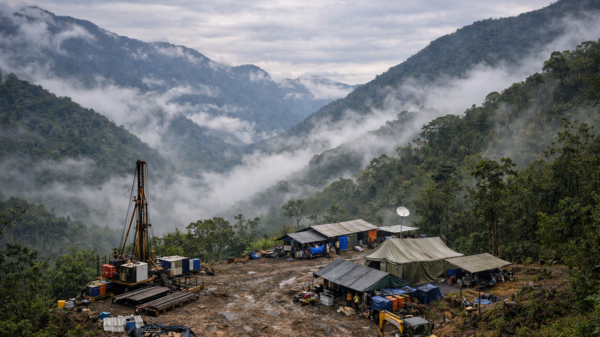
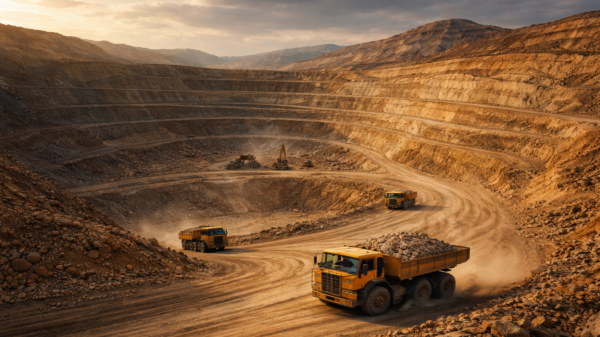
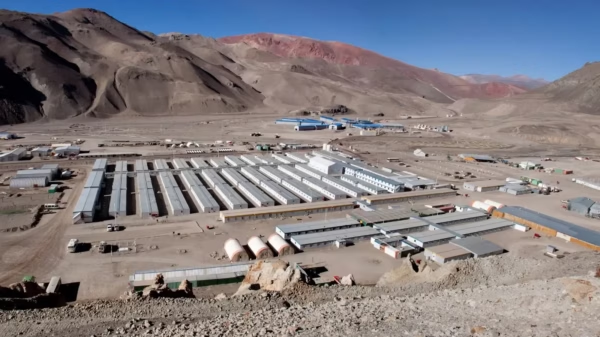
The Swiss miner finalized a land access agreement with state-owned Gecamines for its Kamoto Copper Company operations. Additionally, the deal extends the mine’s life and opens previously restricted ore zones. Management expects the added land in the Kolwezi hub to lift productivity and reduce unit costs. The company targets annual output of 300,000 tonnes at Kamoto.
Mark Davis, Glencore’s Africa chief operating officer, said the agreement allows the company to fully develop the asset. He added that the expanded footprint should carry production into the mid-2040s. Meanwhile, Bloomberg Intelligence said clearing this bottleneck removes a key barrier to higher output in the DRC. Analysts view Congo as central to Glencore’s long-term copper strategy.
The company aims to nearly double copper output by 2035. It plans to do so at a capital intensity of about USD$16,200 per tonne of copper-equivalent capacity. On a copper-only basis, that figure rises to roughly USD$20,630 per tonne. Peak development spending could reach about USD$4.5 billion in 2031. At that point, four major projects would advance at the same time. Additionally, sustaining and other capital spending may total between USD$5.5 billion and USD$6.5 billion.
Consequently, total group investment could approach USD$11 billion at peak levels. Analysts Alon Olsha and Grant Sporre outlined those projections in a research note. Management says it can fund the growth plan from internal cash flow. Consensus forecasts show EBITDA rising to between USD$16 billion and USD$20 billion by 2030. That compares with about USD$12.8 billion in 2025.
Read more: CopperTech deploys AI and space-enabled seismic tools at Zambia’s Konkola mine
Read more: S&P Global predicts major rise in copper demand brought on by AI
Glencore may bring in partners on large projects
Higher volumes in the DRC and at Collahuasi are expected to drive that increase. Additionally, firmer copper prices could support margins. However, investors remain cautious after years of uneven performance. Production stands roughly 40 per cent below 2018 levels.
Chief executive Gary Nagle said 2026 should mark the low point for output. He expects volumes to begin climbing from 2027. Analysts say the company holds roughly 1 million tonnes of copper optionality. However, they want to see those resources converted into steady production growth.
To manage risk and funding pressure, Glencore may bring in partners on large projects. Additionally, analysts see potential minority sales at Agua Rica and a joint venture at El Pachon. The copper push comes as the company reported adjusted EBITDA of USD$13.51 billion for 2025. That figure fell 6 per cent from a year earlier as weaker energy and steelmaking coal prices weighed on results.
However, the result beat analysts’ consensus estimate of USD$13.3 billion. Shares rose 4.2 per cent in afternoon London trading. The stock has climbed about 24 per cent this year. The company now carries a market value near £60 billion, or about USD$81 billion.
Nagle said performance improved in the second half. Core profit rose 49 per cent in H2 as metals prices strengthened and copper volumes increased. Additionally, Glencore will return USD$2 billion to shareholders, equal to 17 cents per share. Last year’s payout stood at 18 cents per share.
The distribution includes a 10-cent base payment from 2025 cash flow. Furthermore, it adds a 7-cent top-up linked to the rising value of its stake in Bunge Global SA (NYSE: BG).
Read more: Ivanhoe and SQM launch copper exploration push in northern Chile’s Atacama
Read more: Copper miners turn to waste piles and microbes as prices hit record highs
Talks broke down over valuation
Net debt held steady at USD$11.2 billion. That figure includes USD$1 billion in marketing lease liabilities.
However, debt remains above the company’s USD$10 billion target. Management says it will balance shareholder returns with balance sheet discipline. The results follow the collapse of takeover talks with Rio Tinto Group (NYSE: RIO) (ASX: RIO). The companies had explored combining into a group valued near USD$240 billion.
Talks broke down over valuation and ownership structure. However, Nagle said his position on consolidation has not changed. He told reporters that larger combinations can create value for shareholders on both sides of a deal. He added that Glencore will stay open to transactions that meet its criteria.
Since taking the helm in 2021, Nagle has divested or closed 35 operations. Those moves have raised about USD$6.5 billion. Meanwhile, Glencore is discussing the sale of a 40 per cent stake in its DRC copper and cobalt business. A US-backed consortium has shown interest in the minority position.
Additionally, the company continues to reshape its portfolio while expanding copper exposure. It views the metal as critical to electrification and energy transition trends. Investors now watch whether management can deliver growth without straining the balance sheet. Consequently, execution in the DRC and other flagship projects will remain under close scrutiny.
.