Gelion reports 92% reference capacity at higher rate in US battery tests
Coin-cell testing supports a move to larger pouch prototypes, while government and defence procurement qualification remains a longer-term goal.
 Ines Halvorsen
Preliminary U.S. laboratory results reported on Monday showed cells retaining 92 per cent of reference capacity at a higher cycling rate, Gelion plc LONGELN OTCMKTSGELNF said. The independent tests increased the cycling rate 20-fold.
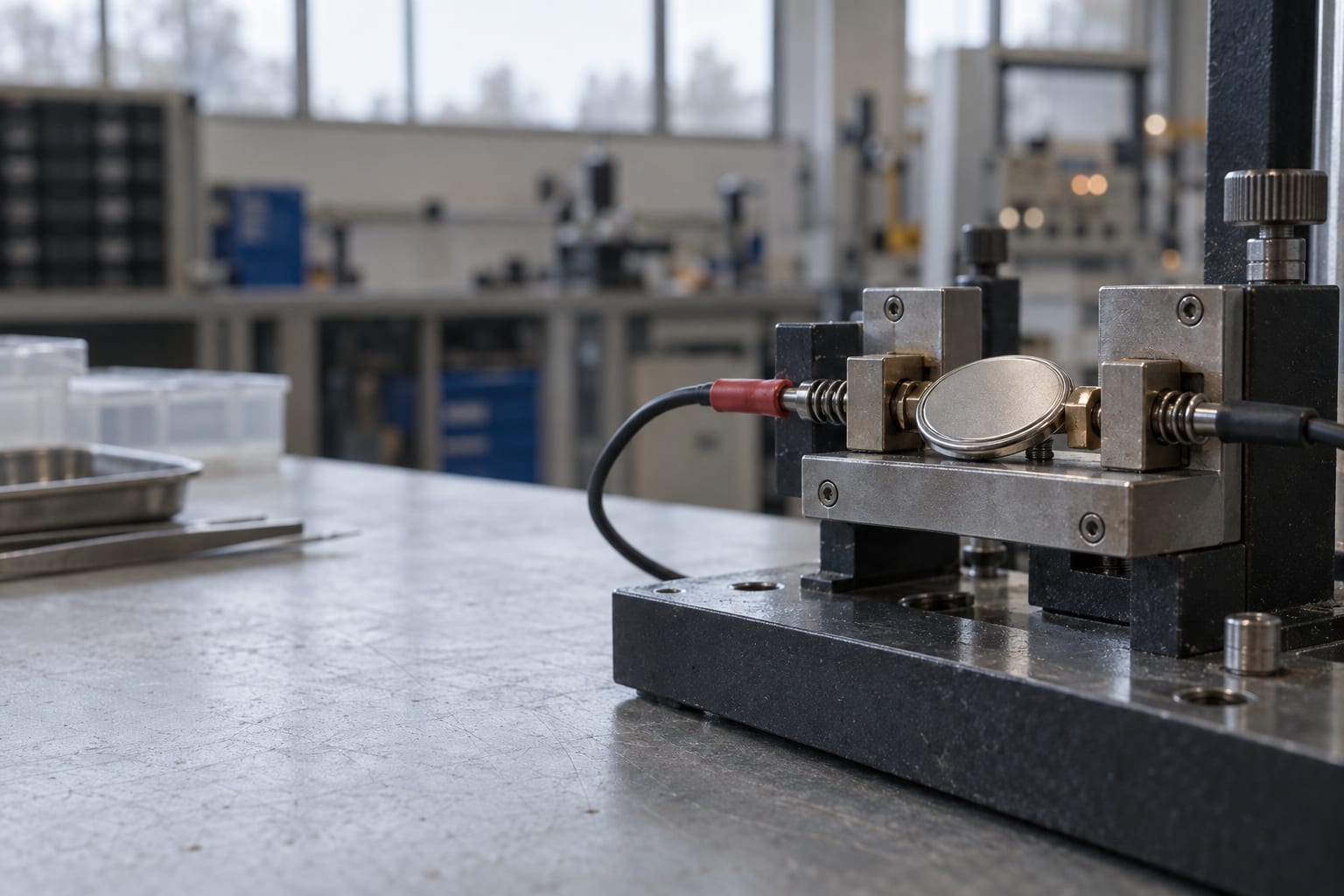
The National Laboratory of the Rockies tested the developer's Nano-Encapsulated Sulfur cathode material in small coin cells. It compared capacity at a reference rate of 0.1C with capacity at 2C.
That result measures capacity retained at a higher cycling rate. Monday's announcement does not specify the cycle count behind the U.S. result, cell energy density or a commercial battery lifetime, and offers no comparison against a conventional lithium-ion cell.
The next stage is development and validation of larger pouch-cell prototypes. Gelion describes qualification for U.S. government and defence procurement as a longer-term goal, leaving further testing between these preliminary results and potential commercial adoption.
The laboratory fabricated electrodes from Gelion's material and assembled the cells using the developer's baseline lithium-metal anode platform. Gelion said the laboratory independently reproduced voltage profiles, sulfur utilisation and capacity fade previously observed in its internal testing.
"These are very encouraging results, demonstrating both the reproducibility and strong high-rate performance of Gelion's NES™ material," Matthew Keyser, electrochemical energy storage lead at the laboratory, said in Gelion's release.
Gelion develops sulfur-based cathode materials designed to replace conventional critical-mineral cathodes while remaining compatible with existing battery manufacturing infrastructure. Independent electrode fabrication and cell assembly test whether another organisation can reproduce performance outside the developer's facilities.
Read more: Kodal Minerals signs Ghana lithium earn-in for up to 80 per cent stake
Larger Cells Precede U.S. Qualification
Gelion's June 30 collaboration announcement set out materials development, pouch-cell prototyping and testing at the laboratory in Golden, Colorado. The programme also envisages a domestic cathode supply chain and a pilot-scale U.S. materials plant.
A separate development agreement announced Aug. 7 provides £2 million in staged payments linked to milestones. The counterparty is Mitsui Kinzoku Co Ltd TYO5706; Gelion's announcement did not disclose the agreement's duration. The paid collaboration covers validation in liquid and solid-state sulfur battery cells and work to scale cathode material fabrication ahead of future commercial adoption.
In its own Aug. 7 release, Mitsui Kinzoku said the agreement was executed on Aug. 3. It combines Gelion's cathode material with Mitsui Kinzoku's sulfide-based solid electrolyte to evaluate battery characteristics, while identifying performance and mass production as issues requiring verification.
Gelion separately announced a co-funded evaluation agreement on Oct. 13 with an unnamed global automotive manufacturer. That programme evaluates cells with a graphitic anode, a different configuration from the lithium-metal platform used in the U.S. tests.
The automotive partner contributes engineering expertise, testing facilities and programme funding. Gelion did not disclose the contribution's value or a completion date in that announcement, so the agreement supplies development support without a disclosed commercial delivery timetable.
The June collaboration targeted progress to qualification of battery-cell manufacturing within 12 months, pointing to June 2027. Monday's update sets larger pouch-cell validation as the next step but gives no completion date for that stage.