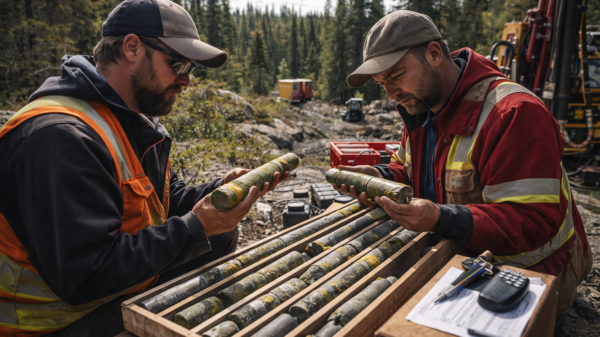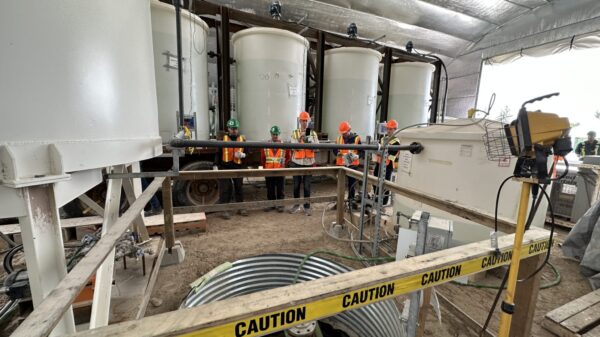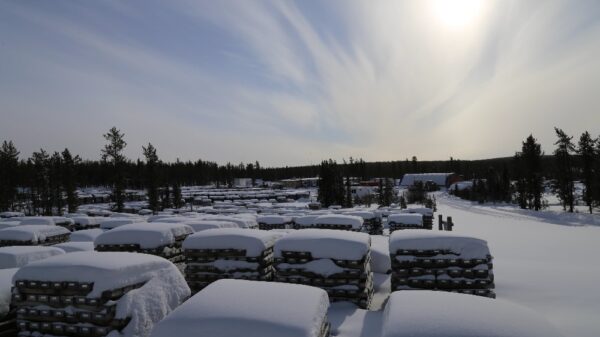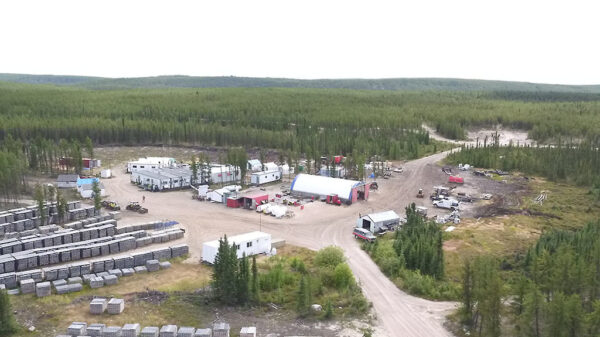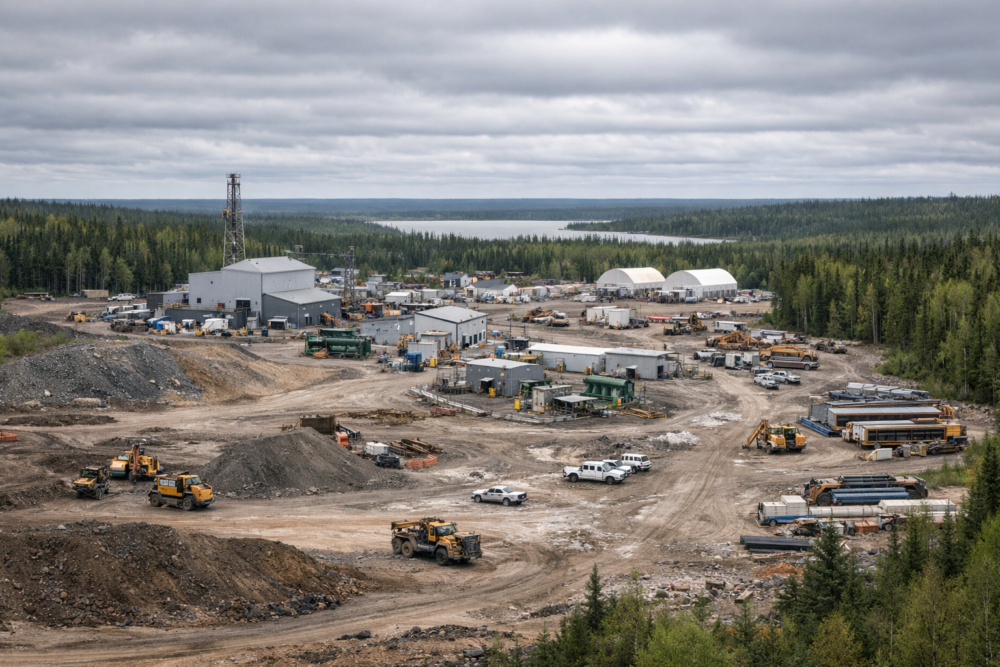

Denison Mines Corp. (TSE: DML) (NYSE American: DNN) will begin construction of its proposed Phoenix uranium mine in northern Saskatchewan after securing board approval, a federal construction licence and support agreements with several nearby Indigenous communities.
The Toronto-based company plans to start site preparation in March. Additionally, it estimates initial capital costs at about USD$600 million. The project sits at Wheeler River in the Athabasca Basin, within Treaty 10 territory.
Denison’s board made its final investment decision this week. Consequently, the company will move ahead with early works and full construction planning. Earlier this month, the Canadian Nuclear Safety Commission granted a licence to prepare the site and build the mine and mill.
However, Denison must still obtain a separate operating licence before it can produce uranium. The company expects to apply for that approval once construction nears completion. Chief executive David Cates said production could begin in 2028 if timelines remain on track.
Cates said few large uranium mines are advancing globally. Furthermore, he argued Phoenix may represent the only significant new uranium supply before the 2030s. That position, he said, gives Denison a rare opportunity in a tightening market.
Denison plans to operate Phoenix for roughly 10 years. The company estimates proven and probable reserves at 56.7 million pounds of uranium. Additionally, Saskatchewan approved the project in August 2025 after completing its environmental review.
If built as designed, Phoenix would become the first uranium mine in Canada to use in-situ recovery. That method injects a mild acidic solution underground to dissolve uranium. Operators then pump the solution back to the surface for processing.
Read more: Alarming report finds that 18% of Canadian homes have unsafe levels of radon
Read more: Radon: the silent, invisible and odourless killer
Communities remain vigilant as proposals emerge
Support for the project varies across the region. Before regulatory hearings, Denison signed impact benefit agreements with English River First Nation, Métis Nation—Saskatchewan and Ya’thi Néné Lands and Resources. Additionally, those agreements typically include job commitments, training programs and business contracts.
Ya’thi Néné Lands and Resources represents several Athabasca Basin communities. It endorsed the project after reviewing environmental protections and mitigation plans. Executive director Garrett Schmidt said the group believes Denison addressed its main concerns.
However, Schmidt added that communities remain vigilant as more development proposals emerge. Furthermore, he said clean water, intact ecosystems and healthy land remain essential to local culture and livelihoods. He indicated the group will continue monitoring activity in the basin.
Ya’thi Néné Lands and Resources is jointly owned by Hatchet Lake Denesułiné First Nation, Black Lake Denesułiné First Nation, Fond du Lac Denesułiné First Nation and several northern municipalities. Those include Stony Rapids, Uranium City, Wollaston Lake and Camsell Portage. Additionally, the organization negotiates agreements and reviews projects on behalf of its members.
Other Indigenous communities have raised objections. Submissions from Birch Narrows Dene Nation and Peter Ballantyne Cree Nation did not support the mine during regulatory hearings. Meanwhile, Peter Ballantyne Cree Nation launched a court challenge last year against Saskatchewan and Denison over consultation and environmental assessment issues.
Cates said Denison continues discussions with both communities. However, he acknowledged that engagement does not end once permits are issued. He said the company intends to expand outreach and refine programs throughout the mine’s life.
Read more: NASA reauthorization bill could unlock commercial space nuclear power
Read more: NextEra explores nuclear growth as AI drives record U.S. electricity demand
Cameco began construction at its Cigar Lake operation
The Canadian Nuclear Safety Commission held public hearings in Saskatoon in December and in Gatineau, Quebec, in October. Additionally, the commission has published submissions from Denison, Indigenous groups and members of the public on its website.
Phoenix could mark the first new uranium mine approved in Saskatchewan in about two decades. In 2005, Cameco began construction at its Cigar Lake operation, the last uranium mine approved in the province. Additionally, Cameco Corp. (TSE: CCO) (NYSE: CCJ) remains the province’s dominant uranium producer.
Denison is not the only company pursuing new supply in the region. NexGen Energy Ltd. (TSE: NXE) (NYSE: NXE) is awaiting a construction licence decision for its proposed Rook I underground mine, also in the Athabasca Basin. Meanwhile, global demand forecasts for nuclear power have strengthened as countries seek low-carbon energy.
Cates said the limited pipeline of new projects creates urgency. Furthermore, he argued Phoenix’s timeline positions Denison ahead of many competitors. Construction will begin with site clearing, infrastructure installation and wellfield development.
The company will build processing facilities and supporting infrastructure over the next several years. Additionally, Denison will hire workers and contractors as construction ramps up. Provincial and federal regulators will monitor compliance throughout the build phase.
The operating licence decision will ultimately determine when uranium production can start. However, Denison’s board approval and construction licence now move Phoenix from planning into execution. Meanwhile, debate over environmental protection and long-term development in the Athabasca Basin continues among communities and industry alike.
.