Ainos deploys 'AI Nose' tech for environmental monitoring in Taiwan ER
These devices have already proven their worth for environmental monitoring in advanced manufacturing
 Rowan Dunne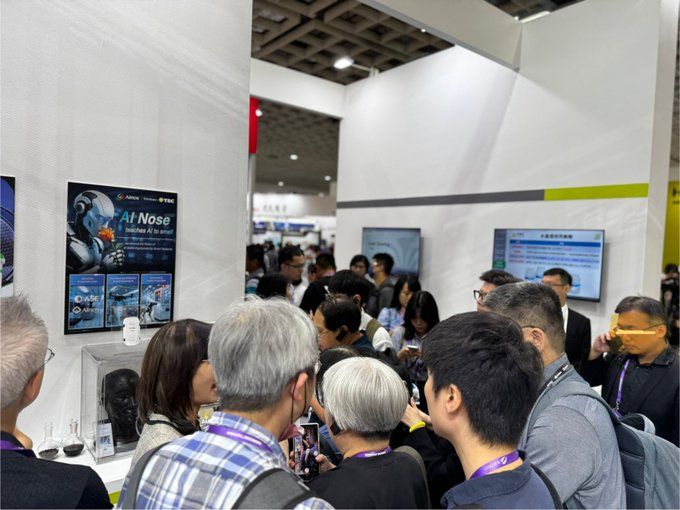
Volatile organic compounds drift through the air like invisible stories. When the right technology is employed, they can reveal clues about everything from factory leaks to the hidden signals in a crowded room or even a person’s breath.
In a new development, Ainos Inc (NASDAQ: AIMD) (FRA: FZXO) has struck an agreement to deploy its AI Nose devices inside an emergency department at National Taiwan University Hospital. The project places sensors in waiting areas, treatment zones and observation spaces. They will monitor air patterns linked to crowd levels and signs of respiratory issues in the environment.
The company’s AI Nose uses small sensor arrays built with semiconductor techniques. These detect volatile organic compounds at very low levels. The system turns the readings into digital “Smell ID” data. A special Smell Language Model then learns and classifies the patterns. In the ER setting, it aims to spot overcrowding risks early and track broader environmental changes without testing individual patients.
The company maintains a strong base in Taiwan, including an office in Hsinchu County. It has built ties across the island’s tech and healthcare scenes. Ainos has worked with partners like MacKay Memorial Hospital in Taipei and Topco Scientific Co Ltd (TPE: 5434) on environmental monitoring in hospital settings.
This marks an expansion for Ainos, which first developed the tech with medical uses in mind but has applied it heavily in sensitive semiconductor manufacturing settings. Ainos has secured commercial deployments — including a notable order for 1,400 units with ASE Technology Holding Co Ltd (NYSE: ASX) (FRA: 2DQ) in Taiwan — to monitor air quality, detect contamination and protect sensitive production processes in fabs and advanced packaging facilities.
“Our deployments in semiconductor facilities have taught AI Nose how to recognise abnormal environmental changes inside highly sensitive, high-risk environments,” said Ainos chief executive Eddy Tsai.
The firm traces roots to earlier biotech work but now focuses on smell digitisation and other initiatives. Taiwan serves as a key hub for its sensor development, drawing on local semiconductor strengths.
Ainos stands out in the field of air analysis but does not work alone. Abroad, other groups are actively exploring breath contents for useful signals and making considerable progress.
In the United States, Breath Diagnostics is in the advanced stages of development with a test that examines breath for signs of disease with high accuracy. In India, researchers in Dr. Dang’s Lab advance breath analysis techniques; and in England, Bedfont Scientific offers devices that measure gases in breath to support health checks.
Efforts like these show growing interest in turning exhaled air into practical and useful information.
Read more: Breath Diagnostics advances pre-op pneumonia screening with FDA breakthrough designation
Follow Rowan Dunne on LinkedIn
rowan@mugglehead.com