
AI’s growing role in cancer research is drawing both bold predictions and sharp skepticism, as researchers race to turn computing power into real treatments.
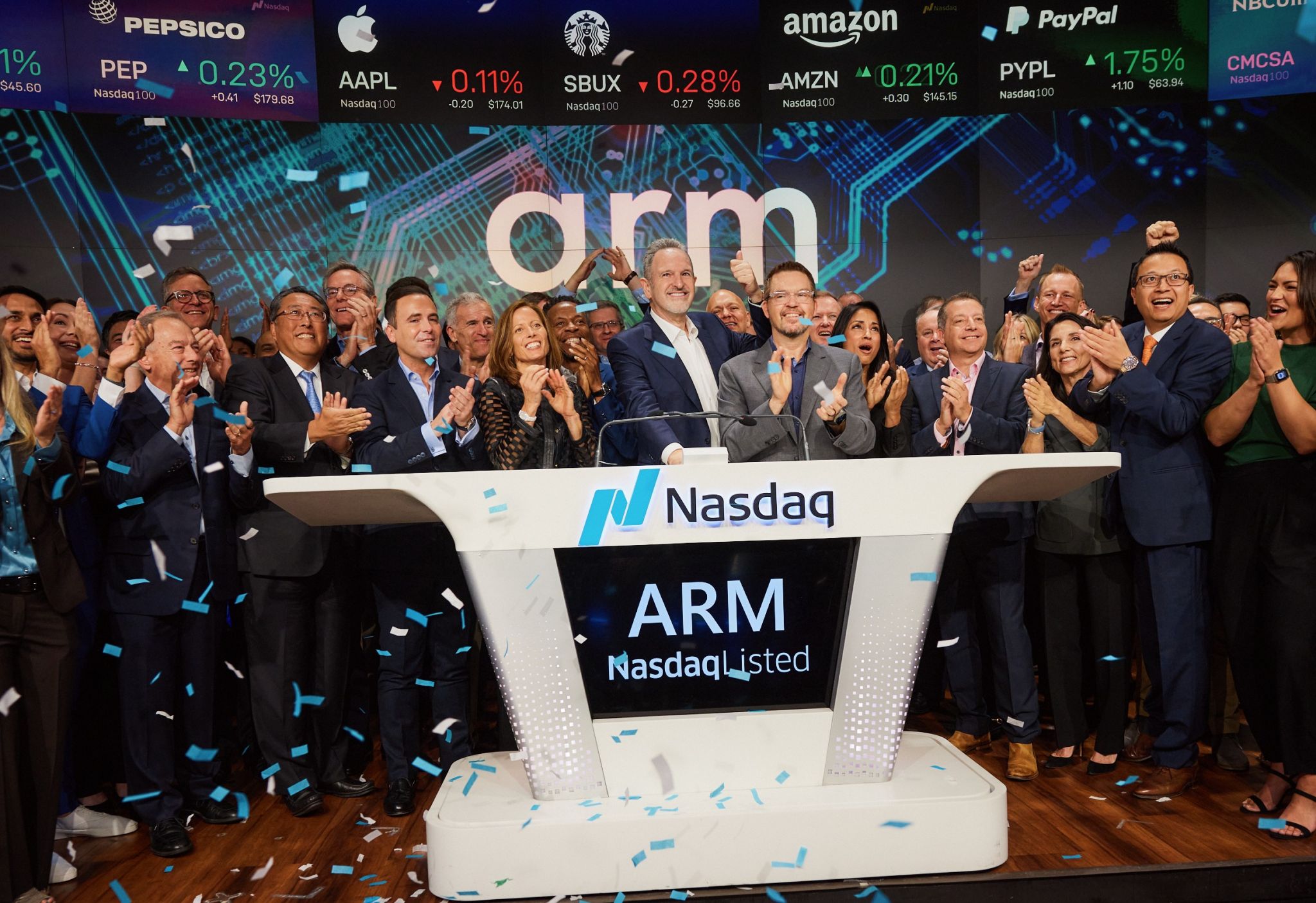
The latest bold projection came from Rene Haas, chief executive of Arm Holdings PLC – ADR (NASDAQ: ARM), in a BBC interview released in early September. Haas said AI will help find a cure for cancer within our lifetimes by tackling problems too complex for people or today’s computers, such as modelling how cancer affects DNA markers. As computers grow more powerful and take in more data, he believes they will solve these challenges.
“AI is not only going to shorten the amount of time that [cancer] drugs can be invented, it will also shorten the amount of time it takes to test them while some trials are replaced by AI,” Haas said. “I believe in our lifetime, AI will help cure cancer.”
Arm designs the basic technology inside chips used in almost every smartphone and a rising number of AI systems. Haas previously served on the board of the drug company AstraZeneca PLC (NYSE: AZN) (FRA: ZEG) too, which has given him a clear view of both computing power and medicine.
That background likely shapes his confidence that better chips and models will transform health research.
Similar sentiment attracts criticism
Recent forecasts from other tech leaders have drawn strong pushback. OpenAI’s Sam Altman, Google DeepMind’s Demis Hassabis and Anthropic’s Dario Amodei have all spoken of AI curing cancer or most diseases in a matter of years.
Experts — such as cardiologist Eric Topol, biologist Lior Pachter and physician Emilia Javorsky — have been highly critical of these predictions though. They argue that cancer is not one disease but hundreds, that real-world testing takes far longer than computer work, and that more computing power alone cannot overcome the limits of biology.
In a 2025 interview, Hassabis suggested that AI could one day cure all disease, possibly within the next decade. Amodei went even further last month, saying it will actually be possible to cure most human disease in about five to 10 years, even if that sounds crazy to ordinary people and biologists. Altman has repeatedly pointed to curing cancer as a key reason to develop more advanced AI systems.
But Topol, who supports AI in medicine, called these cure projections wildly off-base and impossible. Moreover, Javorsky argued in a March essay that biological truth cannot be computed, pointing out how much cancer differs from person to person. Pachter has noted that we do not even know what all the human diseases are.
Read more: Breath Diagnostics advances pre-op pneumonia screening with FDA breakthrough designation
Drug development leader criticises infrastructure build out
Chris Bakal, chief executive of the AI-assisted drug development firm Sentinal4D and a professor at the Institute of Cancer Research, responded directly to Haas in a popular post on LinkedIn last week. He agreed that AI is already changing cancer research but insisted that building ever-larger data centres is not the path to progress.
Curing cancer with “bigger and bigger models that require more and more chips” is an ineffective brute force approach that Big Tech is currently pursuing, in his view.
“I believe we CAN make huge leaps and help patients in our lifetimes with AI. In this I agree with Haas. And we will cure some cancers,” Bakal stated. “But this will only happen if we generate dynamic, patient-specific ground truth paired with targeted, light architectures.”
Actual advances thus far and their limitations
Artificial intelligence has already delivered useful results. Google DeepMind’s AlphaFold programme currently predicts the shapes of proteins with high accuracy, helping scientists understand how cancer cells work.
A drug candidate called BBO-10203, created with help from AI and supercomputers at California’s Lawrence Livermore National Laboratory and biotech company BridgeBio, has reached human trials and shows promise against certain tumours without some common side effects. Researchers at the University of Pennsylvania have also used AI to spot promising targets for cell therapies that train the body’s own defences to attack cancer.
These are top examples of notable steps, but they remain significantly limited at the moment. AlphaFold does not yet produce approved medicines on its own and new drug candidates still need years of careful testing in people. Cancer varies widely from patient to patient, and most promising ideas fail when they leave the lab.
Read more: Prestigious medtech intelligence firm recognizes Breath Diagnostics for innovation
Follow Rowan Dunne on LinkedIn
rowan@mugglehead.com