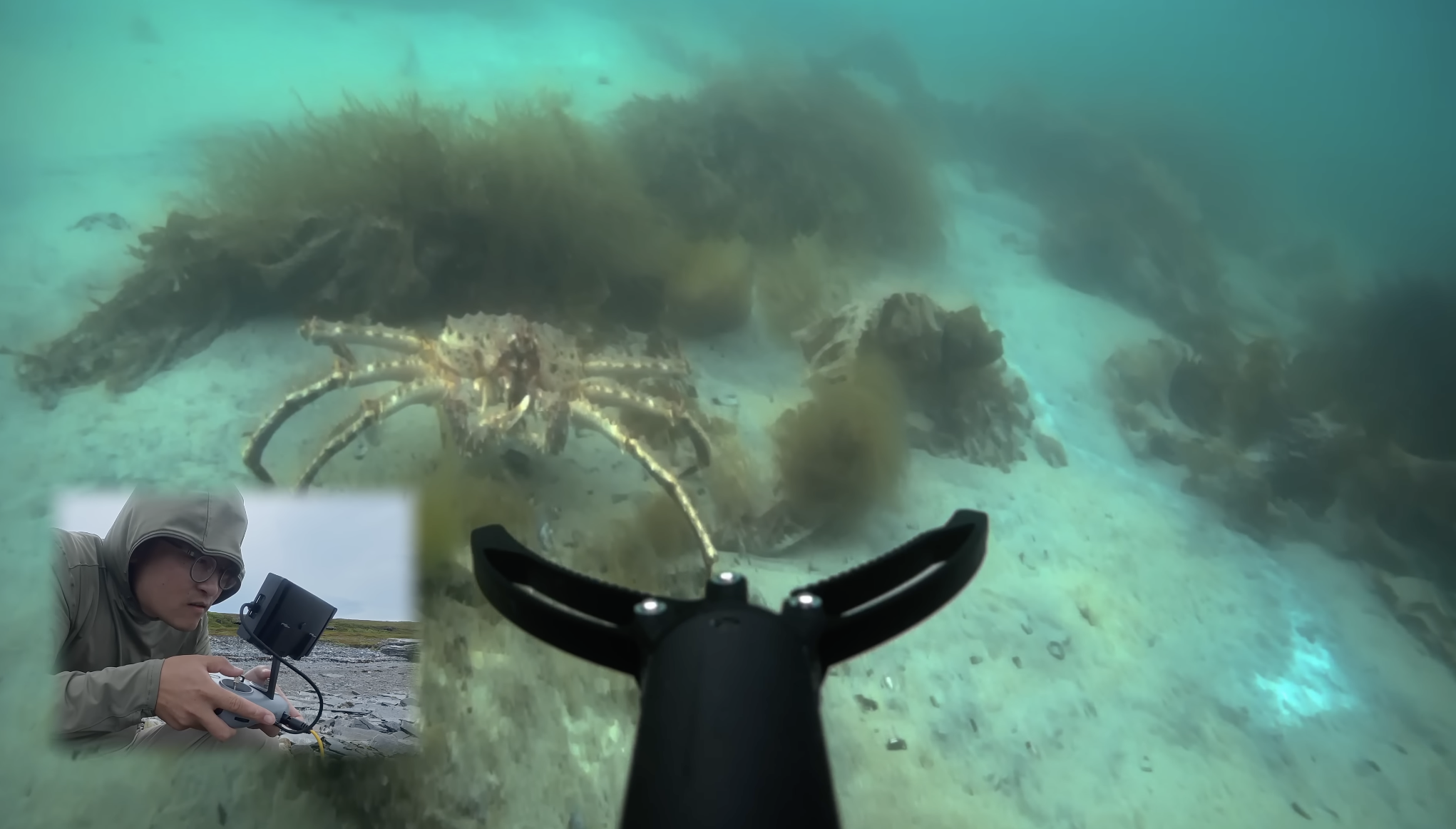

Remote-controlled underwater drones now let people scan the seabed with high definition video feed, pick their targets and pluck them from the depths without leaving dry land.
A Chinese vlogger known as FJ attracted attention this month for doing so. His footage of camping under Norway’s midnight sun and steering an underwater drone fitted with a claw to catch king crabs has gone viral. The compact craft glides across the seafloor, spots the large crustaceans and grips them before returning to the surface.
He used a Chasing M2 S model to grab his seafood dinner before filming himself cook it over a fire. His Bilibili and YouTube videos have drawn wide attention for showcasing both its success and novelty.
Chasing Innovation is a market leader for claw-equipped underwater drones of this type. Its machines stream clear video and support robotic arms that clamp with several kilograms of force. Chasing likes to describe the M2 S as an industrial-grade revolutionary underwater robot.
China’s QYSEA offers the closest rival through its FIFISH range, including the V6 Expert, which also pairs multidirectional movement with optional arms for retrieval. Other makers have created similar drones with harpoon attachments so operators can spear targets instead of gripping them.
Traditional crab fishing works without screens or batteries. Crabs live on the seabed and people catch them by lowering baited cage-like traps, known as pots, to the bottom and leaving them for hours so the animals walk inside and cannot easily leave. Others dive into the water, locate the crabs by hand or torchlight and lift them up, or use nets from a boat. The work depends on tides, local knowledge and often physical effort in cold conditions.
The drone approach has its advantages. Operators stay dry and warm, avoid the chill of Arctic water, inspect each crab live and choose exactly which ones to take. It turns the task into a precise, screen-based activity.
Drawbacks remain, however. The kits cost thousands of dollars, batteries last only a few hours and currents or murky water can make control tricky. Traditional traps often gather larger numbers with less active work, and local rules still limit what anyone may keep. Operating the controller also needs practice.
The technology expands the hobby rather than replacing older methods, giving more people a direct view below the surface.
NEW SKILL: Underwater drone crab fishing 🦀
I recently went through a Bilibili (kind of Chinese Youtube) rabbit hole, and found the craziest things.
For example here, a Chinese vlogger, who produces content about hiking and camping, showing off his crab fishing skills using an… pic.twitter.com/y2CYCKVfgc
— Léo (@LeoKharon) September 5, 2026
Read more: Florida divers recover rare silver bar from shipwreck site
Follow Rowan Dunne on LinkedIn
rowan@mugglehead.com