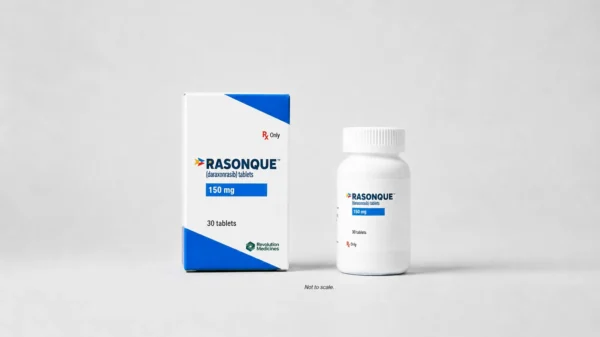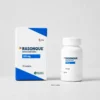

Revolution Medicines Inc. (NASDAQ: RVMD) has reported encouraging lung cancer results for its experimental cancer pill daraxonrasib.
The drug shrank tumours in about one-third of previously treated patients with advanced disease, while easing symptoms among those who responded. The results were published Wednesday in the New England Journal of Medicine. The University of Texas MD Anderson Cancer Center led the study, while Revolution Medicines funded it.
The Phase 1/2 trial involved 136 patients with advanced non-small-cell lung cancer carrying changes in the RAS family of genes. Most participants had already received chemotherapy and immunotherapy before taking the once-daily pill.
Non-small-cell lung cancer accounts for most lung cancer diagnoses. Additionally, about 30 per cent of those tumours carry KRAS mutations, including people worldwide who never smoked cigarettes.
KRAS belongs to the broader RAS gene family and helps control cell growth. However, mutations can leave the cellular switch permanently active, allowing cancer cells to multiply unchecked.
Daraxonrasib blocks active RAS proteins inside cancer cells. In addition, the drug can target several RAS mutations instead of focusing on one specific variant.
About one-third of all trial participants saw their tumours shrink. Furthermore, patients whose tumours responded reported less pain, milder coughing and other symptom improvements.
Stronger results were observed among 38 patients who received doses selected for the ongoing and much larger multinational Phase 3 clinical trial. In that group, 42 per cent experienced measurable tumour shrinkage.
Those responses lasted a median of 11.5 months. Meanwhile, patients went a median of 8.3 months before their cancer worsened and lived a median of 16 months overall.
Read more: Prestigious medtech intelligence firm recognizes Breath Diagnostics for innovation
Read more: Breath Diagnostics completes install of advanced mass spectrometry system
Side effects were in evidence with every participant
Dr. David Hong called the findings encouraging because existing choices offer limited benefits after chemotherapy and immunotherapy stop controlling the disease. However, he said researchers must balance the drug’s activity against its notable toxic effects.
Virtually every participant experienced at least one side effect. Also, rash, diarrhea, nausea, vomiting and mouth sores each affected roughly 30 per cent or more of patients receiving the drug.
Rash can become particularly painful for some people taking the medicine. Former Nebraska senator Ben Sasse, who takes daraxonrasib for pancreatic cancer, publicly described his painful drug-related rash as “nuclear” in an essay.
Pneumonia was reported in the lung cancer study, although researchers did not observe it during the pancreatic cancer trial. Outside specialist Dr. Rachna Shroff said lung cancer patients may already face greater infection risks.
Docetaxel commonly serves as the next treatment after platinum chemotherapy and immunotherapy fail. However, historical studies show that it shrinks tumours in only about 9 to 14 per cent of comparable patients in this setting.
Docetaxel can drive white blood cell counts dangerously low. Consequently, patients may develop serious infections alongside potentially life-threatening stomach or bowel complications.
University of North Carolina pharmacologist Channing Der described daraxonrasib as a significant improvement over docetaxel. Nevertheless, larger comparative studies must determine whether the pill helps patients live longer with manageable side effects.
Revolution Medicines is now comparing daraxonrasib directly against docetaxel in the randomized Phase 3 RASolve 301 trial. Researchers expect initial data from that global study in 2027.
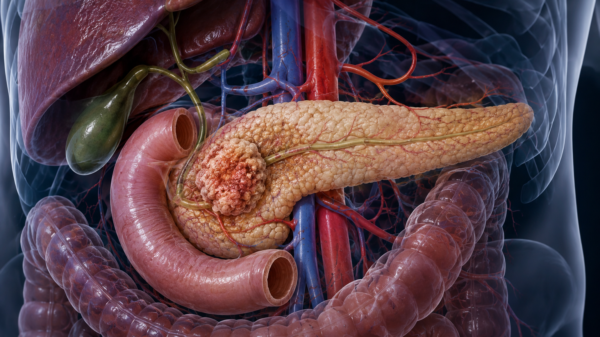
Daraxonrasib has already shown activity against pancreatic cancer. Scientists also see possible applications in other RAS-driven diseases, including colorectal and ovarian cancers.
.