
Researchers at Tel Aviv University and collaborating medical centres have developed a blood test that identifies chemical fingerprints linked to lung cancer.
Announced on Saturday, the test examines methylation patterns on fragments of DNA that tumors release into the bloodstream. Researchers say the approach could eventually complement CT scans, identify tumor types and track whether treatments are working.
DNA methylation involves chemical tags that can affect gene activity without changing the underlying genetic sequence. Cancer cells often carry abnormal methylation patterns, giving researchers a potential molecular marker for detecting the disease in blood samples.
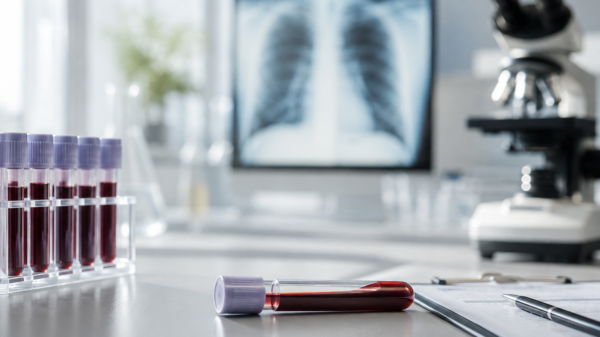
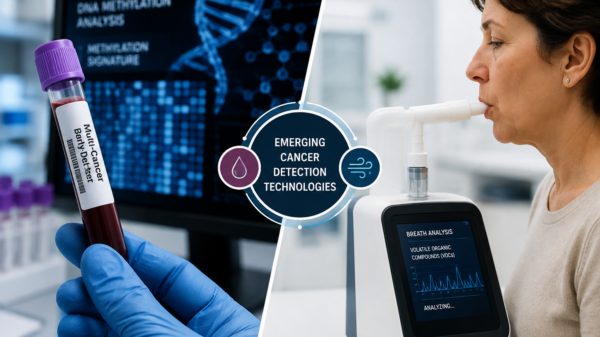
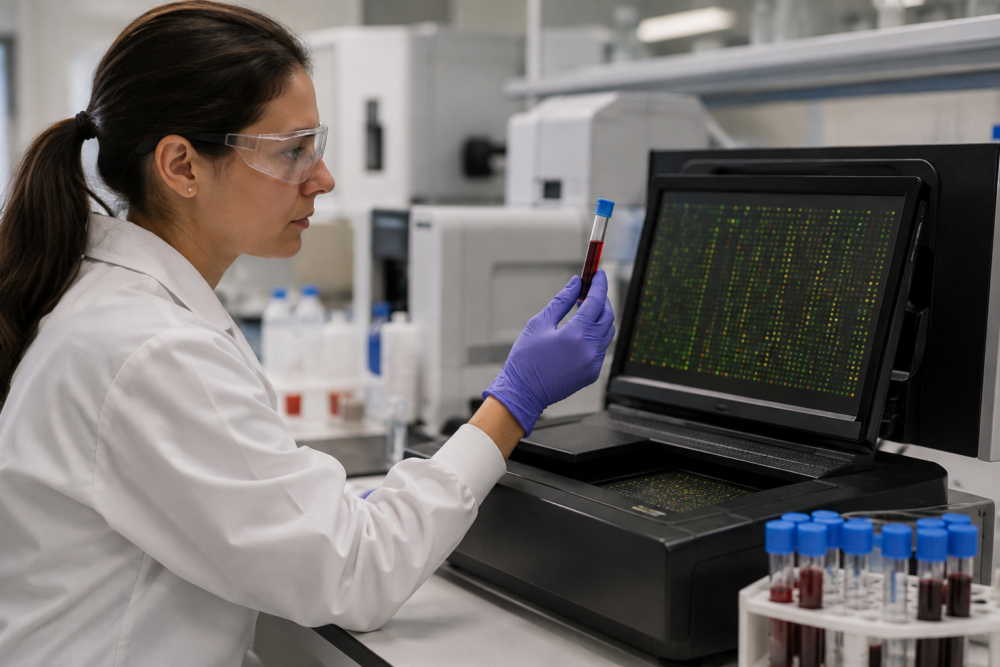
The team extracts cell-free DNA from a blood sample and chemically processes selected sections. It then uses an engineered enzyme to attach fluorescent markers to methylated sites.
Researchers place the labeled DNA on a microarray and scan it with light. The resulting fluorescent pattern can show whether the sample carries a methylation signature associated with lung cancer.
In the proof-of-concept study, researchers examined 103 people, including 51 lung cancer patients and 52 healthy participants. They developed a diagnostic signature using 170 regions of the genome.
Subsequently, the team tested that signature in a separate blinded validation group. Among patients with stage 2 through stage 4 lung cancer, the test reached 93.1 per cent sensitivity.
It also achieved 90.3 per cent specificity in the validation group. Sensitivity measures how often a test correctly identifies people who actually have the disease being investigated.
Conversely, specificity measures how often it correctly identifies people who do not have the disease. Those measurements matter because screening tests must find cancers without sending too many healthy people for unnecessary follow-up procedures.
Read more: Breath Diagnostics leaders promote their mission at Miami investment conference
Read more: Breath Diagnostics advances pre-op pneumonia screening with FDA breakthrough designation
Lung cancer is most commonly diagnosed cancer in the world
Additionally, researchers found different methylation patterns in adenocarcinoma and squamous cell carcinoma. Those are the two major forms of non-small cell lung cancer.
The finding could eventually allow doctors to gain information about tumor type from the same blood sample. However, researchers will need much larger studies before doctors can rely on that capability in everyday clinical practice.
Lung cancer remains the world’s most commonly diagnosed cancer and its leading cause of cancer death. GLOBOCAN estimates indicate roughly 2.6 million people received lung cancer diagnoses worldwide in 2024.
About 1.9 million people died from the disease that year. Earlier and more accurate detection could therefore have a substantial effect on treatment options and patient survival.
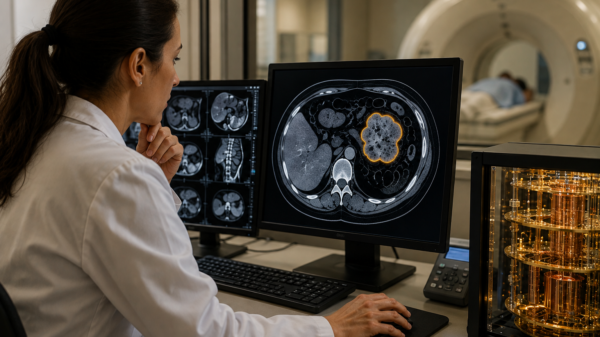
Low-dose CT screening already reduces lung cancer deaths among people at elevated risk. However, CT scans frequently detect suspicious nodules that later turn out to be benign rather than cancerous.
False positives can lead to repeated imaging and, in some cases, invasive follow-up procedures. Consequently, researchers see the blood test as a potential companion to imaging rather than a replacement.
A doctor could potentially use molecular information to help judge whether a suspicious finding warrants closer investigation. Additionally, that could make screening more precise if larger clinical trials confirm the initial results.
Breath Diagnostics is also developing non-invasive technology aimed at improving lung disease detection. The company uses breath analysis rather than blood-based DNA methylation, offering another approach to identifying molecular signals associated with disease.
The Tel Aviv method also avoids next-generation genetic sequencing, which many liquid-biopsy approaches use. Sequencing can require expensive laboratory equipment alongside substantial computational resources for processing and interpreting the resulting genetic information.
Read more: Prestigious medtech intelligence firm recognizes Breath Diagnostics for innovation
Read more: Breath Diagnostics completes install of advanced mass spectrometry system
Research remains preliminary and requires confirmation
Instead, the new assay relies on fluorescent labeling, microarrays and optical scanning. Researchers say standard clinical laboratories could implement the underlying technology more easily than sequencing-dependent approaches.
Additionally, the test currently takes about two to three days to complete. Researchers put its cost at approximately USD$60 per sample.
The study also examined whether methylation patterns could track patients during treatment. In patients who responded, their blood-based molecular profiles shifted toward patterns researchers observed among healthy participants.
Meanwhile, researchers did not observe a comparable shift among patients whose tumors failed to respond. Medical imaging showed similar changes, suggesting the blood test may eventually provide another way to monitor treatment.
However, that part of the research remains preliminary and requires confirmation in larger groups. The study’s small overall size also limits how broadly researchers can apply its findings to the wider population.
The strongest reported performance involved stage 2 through stage 4 cancers rather than the earliest tumors. Researchers therefore still need to establish how well the assay detects stage 1 lung cancer.
Furthermore, future studies must test people undergoing routine screening and patients with other medical conditions. Such conditions could potentially alter DNA methylation patterns and make it more difficult for the assay to distinguish cancer accurately.
Prof. Yuval Ebenstein of Tel Aviv University led the research with scientists and physicians from several organizations. Collaborators included JaxBio Technologies, Bnai Zion Medical Center, Sheba Medical Center and other research institutions.
Ebenstein said the team wants to make cancer blood testing simpler, cheaper and more accessible without sacrificing accuracy. Instead of sequencing genetic code, the approach uses light to identify what he described as the tumor’s chemical fingerprint.
.
joseph@mugglehead.com