
The hunt for rare earths and critical minerals is driving explorers into some of Earth’s harshest places, from frozen Arctic wastes to the black depths of the ocean floor.
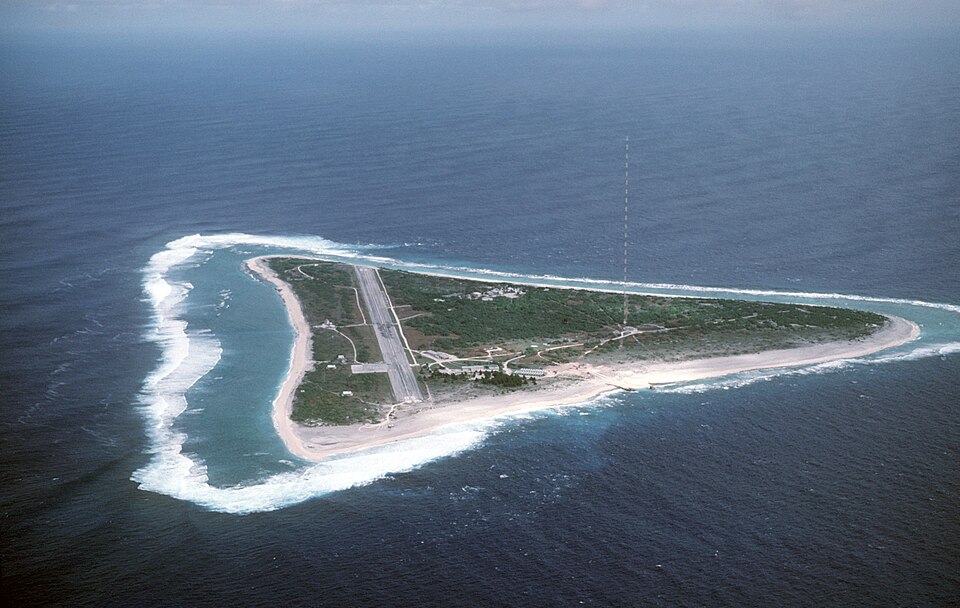
The United States and Japan have turned their attention to the world’s deepest planned undersea mine near Minamitorishima, a tiny remote island about 1,900 kilometres southeast of Tokyo. The site lies inside Japan’s exclusive economic zone — the stretch of sea where the country holds special rights to explore and use natural resources, reaching 200 nautical miles from its coasts.
Researchers first found the rich rare-earth mud near Minamitorishima in 2012. A 2018 University of Tokyo study then estimated the deposits hold more than 16 million tonnes of yttrium and other rare earth elements. There is estimated to be enough yttrium alone to cover global demand for centuries. In February Japan’s research ship Chikyū successfully lifted test samples from around 5,850 metres down. Those samples held high levels of yttrium along with mineralisation of heavy rare earths gadolinium and dysprosium.
More drilling is under way, with a large-scale trial planned for 2027 and a commercialisation plan optimistically targeted for 2028. After their March summit, the two governments signed a memorandum of understanding on deep-sea mining. American firms, led by Houston-based Deep Reach Technology, have held early talks with Japanese officials. The United States brings valuable oil and gas deep-drilling know-how and is speeding up permits to help create a shared mine-to-magnet supply chain.
“The project to mine its heavy rare earths-rich deep sea mud will be expensive and risky,” said William Chou, a Hudson Institute senior fellow with an interest in the endeavour. “But if successful, it would give Japan and the U.S. direct access to such minerals.”
Japanese companies expected to take part include Toyo Engineering Corp (TYO: 6330) for the slurry pumping systems, Mitsui Ocean Development for marine production tech and Toa Corp (TYO: 1885) for mud-loosening methods.
Read more: NevGold appoints Nevada government affairs veteran Scott Bensing to board
Why these elements matter
Japan and the United States need these heavy rare earths to build stronger, more reliable magnets and advanced electronics.
Dysprosium helps permanent magnets keep their power at high temperatures, so electric vehicle motors and wind turbine generators work better and last longer. Yttrium goes into LED screens, semiconductor tools and specialised lasers used in industry and defence. Gadolinium improves medical MRI scans and helps control nuclear reactors.
Together the metals support clean-energy goals, high-tech manufacturing and military systems. Both countries currently rely heavily on China for these materials. A secure supply from their own waters would reduce that dependence and protect future industries.
Risks and earlier Japanese efforts
Mining at six kilometres brings extreme water pressure, about 600 times that at the surface, and still-unknown effects on deep-sea life. Sediment clouds, noise and habitat destruction could last for decades or longer, because ecological recovery of seabed life and habitats in such cold, dark places is very slow.
Tokyo’s Japan Organization for Metals and Energy Security (JOGMEC) has already tested shallower mining. In 2020 it successfully excavated cobalt-rich crusts from the Takuyo No. 5 Seamount in Japan’s exclusive economic zone at depths of 800 to 2,400 metres. Earlier, it trialled mixed-metal sulphide ores.
The Minamitorishima project is far deeper and targets soft rare earth mud rather than hard crusts or nodules, so the engineering and environmental challenges are greater. Careful monitoring and new technology will be essential if the venture is to succeed without lasting damage.
🇺🇸🇯🇵LATEST: U.S. and Japan team up for the world's DEEPEST rare-earth mine, challenging Chinese dominance.
The project aims to extract rare-earth-rich mud from nearly 6,000 meters below the Pacific Ocean near Japan’s remote Minamitorishima Island.
The two nations are betting… pic.twitter.com/OQiJaR3yHN
— Coin Bureau (@coinbureau) August 13, 2026
Read more: Strategic U.S. antimony resource emerges in NevGold’s Nevada MRE
Follow Rowan Dunne on LinkedIn
rowan@mugglehead.com