
Creatine, a supplement best known for helping athletes build muscle and recover after workouts, could eventually strengthen cancer immunotherapy by boosting key immune cells that coordinate the body’s attack on tumours, according to new research from the University of California, Los Angeles (UCLA).
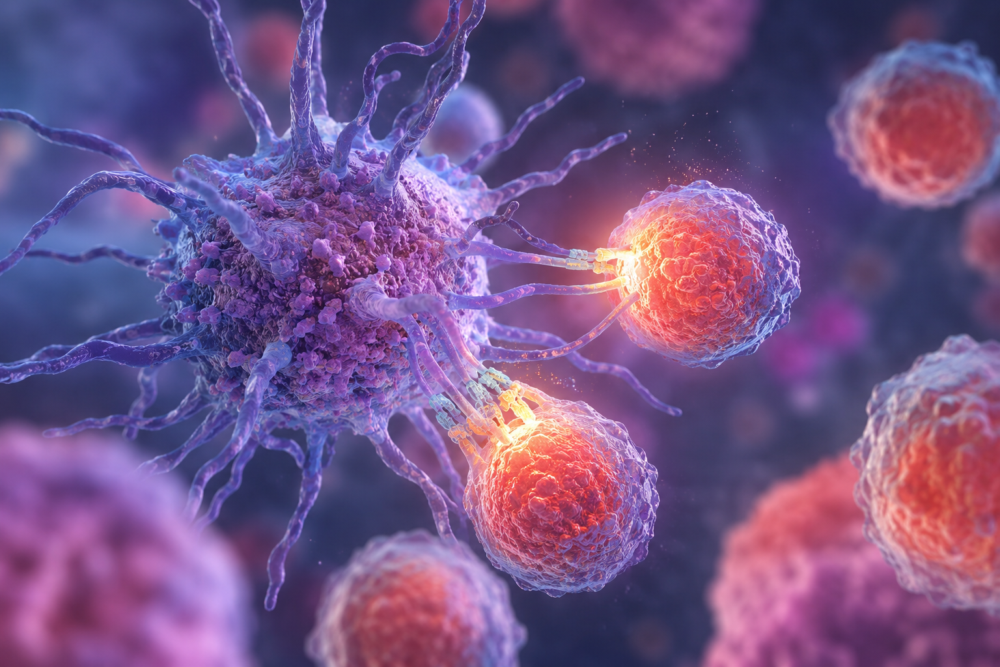
The findings, published on Friday in iScience, suggest creatine supports specialized immune cells called dendritic cells, which detect cancer and activate killer T cells that destroy tumour cells. Researchers believe the discovery could eventually improve existing immunotherapies and enhance certain cancer vaccines, although they caution the work remains in its early stages.
The UCLA team previously found that creatine increased the activity of killer T cells. However, the new study examined whether the supplement also benefits the immune cells that organize and direct those cancer-fighting responses.
Senior author Lili Yang, a professor of microbiology, immunology and molecular genetics at UCLA, said the research showed creatine does more than strengthen T cells. She said it appears to provide energy to the broader immune network that helps those cells identify and attack cancer, making it a promising candidate for supporting modern immunotherapies.
Researchers began by studying dendritic cells taken from mice. They compared cells that had infiltrated tumours with those collected from healthy tissue.
The tumour-associated dendritic cells produced much higher levels of a protein called the creatine transporter, or CrT. That transporter carries creatine into cells, where it helps generate energy.
Read more: Breath Diagnostics opens Respiratory Innovation Summit with captivating presentation
Read more: Breath Diagnostics leader speaks at lung cancer education event in Louisville
Researchers engineered cells that lacked integral protein
Creatine occurs naturally in the body and plays an important role in producing adenosine triphosphate, better known as ATP. ATP supplies the energy that powers nearly every cellular process.
People produce some creatine naturally, while food sources such as meat and fish provide roughly half of normal daily requirements.
Additionally, the researchers engineered dendritic cells that lacked the CrT protein. Those modified cells struggled to survive and performed far worse than normal dendritic cells.
The creatine-deficient cells also failed to prepare killer T cells effectively. As a result, the T cells multiplied less efficiently and released fewer signalling molecules needed to mount a strong immune response against cancer.
Consequently, the findings suggested that poor creatine uptake weakens the ability of dendritic cells to regulate the immune system’s attack on tumours.
The researchers then tested whether supplying creatine could reverse those problems.
They found that creatine increased ATP production inside dendritic cells, effectively giving them a larger reserve of usable energy.
Furthermore, the research team compared that effect to charging a rechargeable battery. The additional energy allowed dendritic cells to store and use fuel more efficiently while responding to cancer.
That energy boost translated into stronger anti-cancer activity during experiments involving mice.
Researchers administered daily creatine injections to mice with tumours. Those animals experienced slower tumour growth than untreated mice.
Additionally, scientists observed more dendritic cells moving into tumours after creatine treatment. Those immune cells also became more active once they reached the tumour environment.
The activated dendritic cells released higher amounts of chemical signals that attracted additional immune cells into tumours. That coordinated response strengthened the body’s overall immune attack against cancer.
Read more: Breath Diagnostics leaders promote their mission at Miami investment conference
Read more: Breath Diagnostics advances pre-op pneumonia screening with FDA breakthrough designation
Research points toward two potential applications
The researchers also wanted to determine whether the same effects occurred in human immune cells.
They isolated human dendritic cells and exposed them to creatine in laboratory experiments.
The treated cells became more active and demonstrated a greater ability to activate T cells against cancer-related targets.
Additionally, the researchers noted that these laboratory-grown dendritic cells resemble the type commonly used to manufacture certain cancer vaccines.
That finding raised the possibility that creatine could improve those vaccines before doctors administer them to patients.
Study author James Elsten-Brown, a UCLA graduate student, said the research points toward two possible applications. He said creatine might strengthen immune responses in patients already receiving immunotherapy, while also improving dendritic cell-based vaccines during manufacturing.
Cancer immunotherapy has transformed treatment for several cancers over the past decade. Unlike chemotherapy, which directly attacks rapidly dividing cells, immunotherapy helps the immune system recognize and destroy cancer cells more effectively.
However, immunotherapy still fails to benefit many patients.
Current estimates suggest only about 20 to 40 per cent of cancer patients respond well to existing immunotherapies, depending on the cancer type and treatment.
Consequently, researchers continue searching for ways to improve those response rates without introducing significant additional side effects.
Yang said immunotherapy has delivered remarkable results for some patients, but many others receive little benefit. She believes improving the function of supporting immune cells such as dendritic cells could expand the number of patients who respond successfully.
Additionally, the researchers pointed to earlier population-based studies that linked higher dietary creatine intake with lower cancer rates. Those observational findings cannot prove cause and effect, but they support further investigation into creatine’s broader role in immune health.
Read more: Prestigious medtech intelligence firm recognizes Breath Diagnostics for innovation
Read more: Breath Diagnostics completes install of advanced mass spectrometry system
Current research is in mice and isolated human immune cells
The authors emphasized that people should not interpret the findings as evidence that creatine supplements treat cancer.
The current research examined mice and isolated human immune cells rather than cancer patients.
However, laboratory findings often fail to produce the same results during human clinical trials.
Researchers said clinical studies must determine whether creatine supplementation safely improves cancer treatment outcomes in patients.
They also advised anyone considering creatine supplements during cancer treatment to discuss the decision with their physician before making changes.
Additionally, the researchers believe future cancer research should examine the entire immune system rather than focusing exclusively on killer T cells.
Co-first author Elliot Kang said scientists increasingly recognize that successful cancer treatment depends on supporting the network of immune cells working together. He said improving the metabolism of dendritic cells could strengthen the broader anti-tumour response that ultimately enables killer T cells to eliminate cancer more effectively.
.