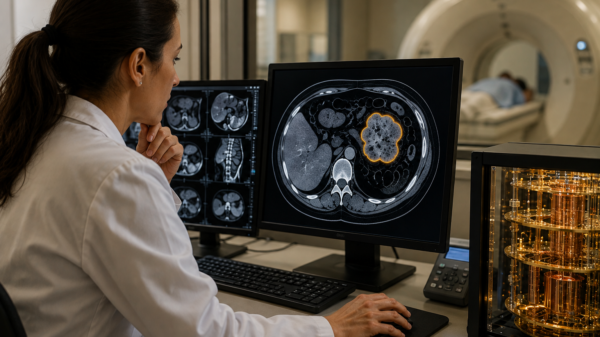

New research suggests that simple blood- and stool-based tests could reshape how doctors detect and monitor colorectal cancer, offering patients less invasive alternatives to colonoscopies and surgical tissue biopsies while supporting earlier diagnosis and more personalized treatment.
The findings come from a narrative review published in the journal Clinica Chimica Acta. Researchers examined studies published between 2010 and 2025 and found growing evidence that emerging liquid biomarkers could improve colorectal cancer screening, diagnosis, and treatment monitoring.
Colorectal cancer remains one of the world’s deadliest cancers. The World Health Organization identifies it as the third most commonly diagnosed cancer globally and the second leading cause of cancer-related deaths.
Researchers said existing screening methods have saved many lives by detecting cancer earlier. However, they noted that these approaches still face important limitations.
Colonoscopy remains the gold standard for detecting colorectal cancer. It allows doctors to examine the colon directly and remove suspicious growths during the procedure.
However, colonoscopy requires bowel preparation, sedation, and an invasive examination that many patients find uncomfortable. Those factors can discourage people from getting screened.
Fecal-based screening tests also play an important role in early detection. They offer a less invasive option than colonoscopy and are widely used in screening programs.
However, researchers said these tests depend heavily on patient participation and can produce inconsistent results in some situations.
The review points to rapid advances in molecular biology and related fields as the driving force behind new diagnostic possibilities. Scientists have increasingly explored genomics, proteomics, metabolomics, epigenetics, and microbiome research to identify disease signals that circulate in blood and other body fluids.
Read more: Breath Diagnostics tech achieves pneumonia prediction breakthrough in peer-reviewed study
Read more: Breath Diagnostics leader speaks at lung cancer education event in Louisville
These molecules reveal presence of cancer at earlier stage
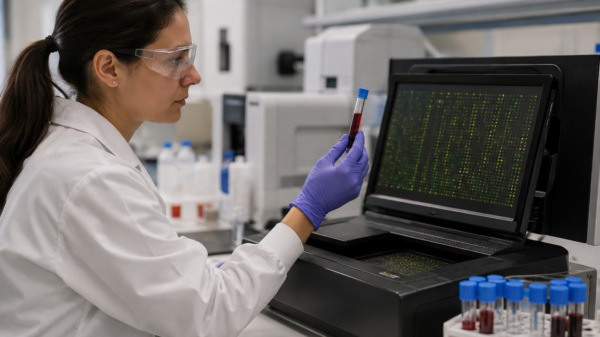
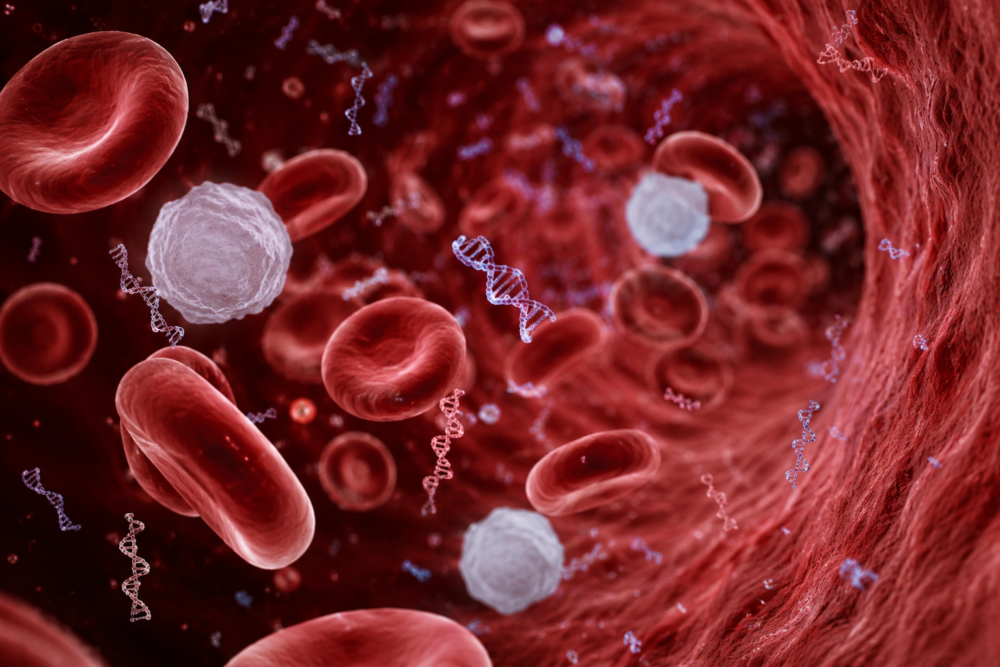
Additionally, researchers examined liquid biopsy technologies that detect biological material released by tumors into the bloodstream. These approaches may provide valuable information without requiring surgery or tissue sampling.
Among the most promising biomarkers are circulating tumor DNA, known as ctDNA, and microRNAs, or miRNAs. Scientists believe these molecules can reveal the presence of cancer at an earlier stage than many conventional methods.
Researchers also evaluated genomic, epigenomic, gut microbiome, metabolomic, and proteomic markers. Together, these technologies could provide a broader picture of how colorectal cancer develops and responds to treatment.
Furthermore, the authors said combining several biomarkers may improve diagnostic accuracy compared with relying on a single test. That approach could also support more individualized treatment decisions.
The review used a structured literature search to gather the available evidence. Researchers searched PubMed/NCBI, Scopus, and Web of Science for studies published between 2010 and 2025.
Search terms included colorectal cancer, early detection, biomarkers, ctDNA, miRNA, epigenetics, microbiome, proteomics, and metabolomics. Researchers gave priority to original studies and high-quality review papers that focused directly on colorectal cancer.
They selected publications based on scientific quality, relevance, and publication date. Additionally, they compared overlapping findings to reduce duplication and maintain an objective assessment of the available evidence.
The authors said advances in molecular technologies have opened new opportunities for detecting colorectal cancer earlier. They believe biomarker-based testing could strengthen risk assessment while helping doctors monitor how patients respond to treatment.
Researchers argued that these emerging tools represent an important step toward more personalized cancer care. They suggested that precision medicine could improve survival while reducing the need for invasive diagnostic procedures.
Read more: Breath Diagnostics leaders promote their mission at Miami investment conference
Read more: Breath Diagnostics advances pre-op pneumonia screening with FDA breakthrough designation
Colorectal cancer caused 1.9m new cases in 2022
Meanwhile, the review adds to a growing body of research supporting non-invasive molecular testing in colorectal cancer management. Scientists increasingly view liquid biopsy technologies as a practical complement to existing screening programs.
According to the researchers, biomarker-based methods have the potential to transform colorectal cancer care by improving survival and supporting precision medicine. They believe these technologies could reduce the disease’s global burden as research continues to advance.
The need for earlier diagnosis remains significant. According to the Global Cancer Observatory, colorectal cancer caused about 1.9 million new cases and approximately 904,000 deaths worldwide in 2022.
Researchers expect those numbers to climb in the coming years. They attributed the projected increase to aging populations, rapid urbanization, rising obesity rates, sedentary lifestyles, and greater consumption of red and processed meats.
However, survival outcomes differ dramatically depending on when doctors detect the disease. Patients diagnosed while the cancer remains localized have survival rates exceeding 90 per cent.
Once colorectal cancer spreads beyond its original location, survival rates fall below 15 per cent. That sharp difference reinforces the importance of detecting the disease before it advances.
Researchers said biomarkers could help identify cancer earlier while improving diagnostic precision. They also believe these tests could make screening programs more personalized for individual patients.
Additionally, many biomarkers can be detected using blood or stool samples instead of invasive procedures. Researchers said patients may find those options more acceptable than undergoing colonoscopy.
Greater patient acceptance could improve participation in screening programs. Consequently, more cancers might be detected before symptoms appear or the disease spreads.
Read more: Prestigious medtech intelligence firm recognizes Breath Diagnostics for innovation
Read more: Breath Diagnostics completes install of advanced mass spectrometry system
Multiple companies extending cancer screening
The push toward less invasive cancer screening extends well beyond colorectal cancer, with several companies developing technologies designed to detect a wide range of diseases earlier and more accurately. Additionally, researchers continue exploring methods that could reduce dependence on surgical biopsies while improving access to routine screening.
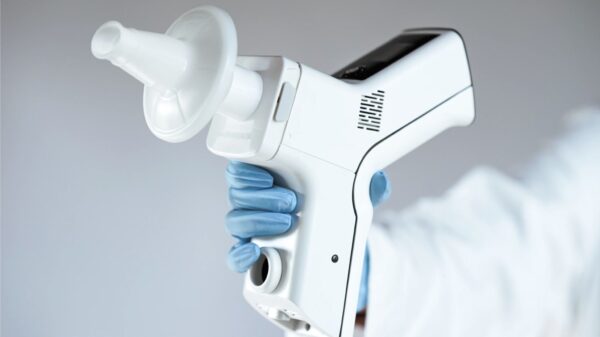
Breath Diagnostics has focused on lung cancer detection through its OneBreath platform, which analyzes compounds found in a patient’s breath. The technology aims to identify biological changes linked to lung cancer without requiring invasive procedures. Researchers believe breath-based testing could eventually complement imaging by helping physicians determine which patients need additional diagnostic evaluation.
Meanwhile, GRAIL Inc (NASDAQ: GRAL) has expanded interest in liquid biopsy through blood tests designed to detect signals from multiple types of cancer before symptoms develop. The company’s technology analyzes fragments of circulating DNA that tumors release into the bloodstream, allowing physicians to search for evidence of cancer from a single blood sample. Developers hope these tests will eventually support broader population screening and identify cancers that often remain hidden until later stages.
Artificial intelligence is also becoming an increasingly important tool in cancer care. Furthermore, AstraZeneca (NASDAQ: AZN) has invested heavily in AI-driven research to improve drug discovery, identify promising treatment targets, and help match patients with therapies based on the biological characteristics of their tumors. The company believes machine learning can accelerate research while supporting more precise treatment decisions across several cancer types.
As these technologies continue to evolve, researchers increasingly envision a future where blood tests, breath analysis, advanced imaging, and artificial intelligence work together to detect cancer earlier and guide more personalized care across multiple forms of the disease.
.
joseph@mugglehead.com