
Artificial intelligence is helping speed up lung cancer diagnoses across England as the National Health Service expands the use of AI-powered imaging tools designed to support radiologists and identify potential cancers more quickly.
The UK government is investing GBP£20 million in the technology, which will provide AI-assisted chest X-ray analysis to every NHS trust in England by 2029. Consequently, health officials expect the rollout to reduce diagnostic delays and improve outcomes for patients with lung cancer.
The government said AI-powered X-ray tools are already available in roughly half of NHS trusts across England. Additionally, the technology has helped more than four million people receive either a faster diagnosis or reassurance that no cancer was detected.
Chest X-rays remain one of the most widely used tools for identifying lung cancer. The disease is England’s leading cause of cancer-related deaths, while clinicians perform more than seven million chest X-rays through the NHS each year.
Simon Jones, a manager with Surrey and Sussex Healthcare NHS Trust, said the technology serves two primary functions. It helps prioritize scans that may require urgent review and also provides clinical decision support for radiologists.
Previously, radiologists generally reviewed X-rays in the order they arrived. However, AI systems can now assess scans before a clinician examines them and flag suspicious images for faster review.
Jones said the approach allows patients to benefit from both AI analysis and human expertise. Furthermore, radiologists retain full authority over the final report and can modify or reject AI-generated findings when necessary.
Read more: Prestigious medtech intelligence firm recognizes Breath Diagnostics for innovation
Read more: Breath Diagnostics completes install of advanced mass spectrometry system
AI is intended to assist healthcare professionals
The software also indicates areas of concern within an image and provides supporting information for clinicians. Meanwhile, radiologists use that information alongside their own assessment before reaching a diagnosis.
Jones said earlier identification of lung cancers could improve survival rates because doctors can begin treatment sooner. Consequently, more patients may receive care before the disease advances to later stages.
“Time is really important, the quicker you pick up these subtle cancers the better the prognosis for the patient,” Mike Jones, AI and digital manager at the Royal Surrey NHS Foundation Trust, says.
“There’s no way a human can look at 800 X-rays every day to tell you which ones are the most critical. To have the AI there filling in those gaps is what you can’t replace.”
Government officials stressed that AI is intended to assist healthcare professionals rather than replace them. Ian Murray, minister for digital data and modernising government, said the technology works alongside clinicians and strengthens existing diagnostic processes.
Murray pointed to stroke care as another example of AI’s potential benefits. In some cases, clinicians can identify a stroke within minutes rather than waiting nearly an hour for a diagnosis.
He also said AI and human specialists often detect different findings. Additionally, combining both assessments can improve diagnostic accuracy compared with relying on either one alone.
According to government data, radiologists using the technology can analyze scans in an average of four days. Previously, the most complex cases often required about eight days for review.
Read more: Breath Diagnostics leaders promote their mission at Miami investment conference
Read more: Breath Diagnostics advances pre-op pneumonia screening with FDA breakthrough designation
Researchers developing AI tools for multiple cancer diagnoses
By shortening reporting times, the government expects more patients to begin treatment within 62 days of a referral from their family doctor. Furthermore, officials said successful implementation will depend on training programs that help NHS staff integrate the technology into routine clinical workflows.
The initiative reflects a broader trend toward using artificial intelligence to improve disease detection across healthcare systems. Additionally, researchers are developing AI-powered tools to help identify breast cancer, colorectal cancer and other conditions through medical imaging and advanced data analysis. The technology could help clinicians manage growing patient volumes while reducing diagnostic backlogs. However, healthcare experts continue to stress that human oversight remains critical for maintaining accuracy and patient safety. Consequently, many hospitals are adopting AI as a decision-support tool rather than a replacement for trained medical professionals.
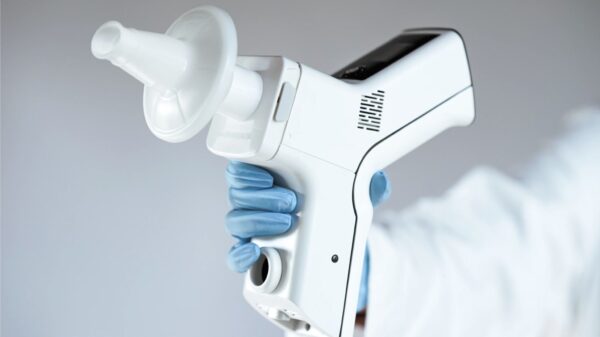
Artificial intelligence is also expanding beyond imaging into new forms of cancer detection. For example, Breath Diagnostics is developing its OneBreath platform, which combines a proprietary microreactor with artificial intelligence to analyze volatile organic compounds in exhaled breath. The company aims to identify chemical signatures associated with lung cancer through a non-invasive test that could support earlier diagnosis.
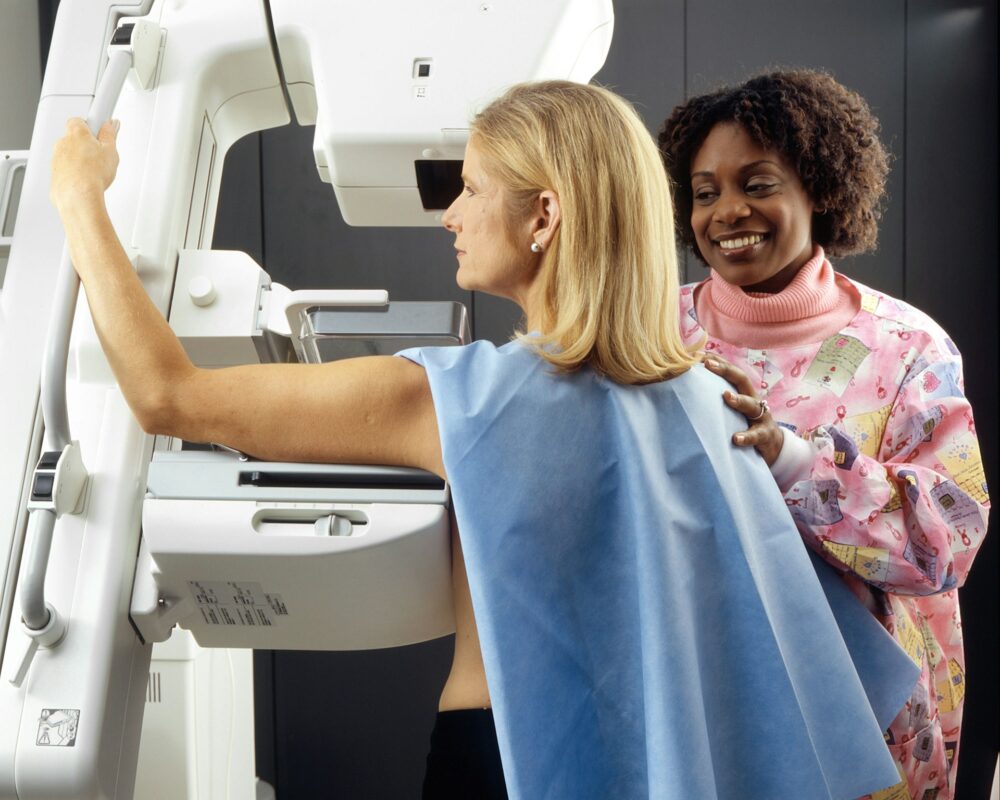
Meanwhile, medical technology company iCAD uses artificial intelligence to assist radiologists in detecting cancer through medical imaging. Its ProFound AI platform analyzes mammograms and breast tomosynthesis scans, flagging suspicious abnormalities that may require further review. Additionally, the software acts as a virtual second reader, helping clinicians interpret images more efficiently while maintaining full control over diagnostic decisions.
Together, these approaches demonstrate how artificial intelligence is supporting cancer diagnosis through both biomarker analysis and advanced medical imaging.