
Google DeepMind’s AlphaFold is moving from prediction to real-world medicine as its sister company prepares to test AI-designed drugs in humans.
Isomorphic Labs, a biotech spinoff of Google DeepMind, is preparing to enter clinical trials with drugs created using its artificial intelligence platform. Additionally, company president Max Jaderberg said the firm is close to testing whether these molecules work safely in people.
Jaderberg told an audience in London that the company is gearing up for human studies soon. However, he did not provide a firm timeline for when trials will begin.
The move comes later than initially expected. Last year, CEO Demis Hassabis said trials would start by the end of 2025. Meanwhile, the delay reflects the complexity of moving from lab design to human testing.
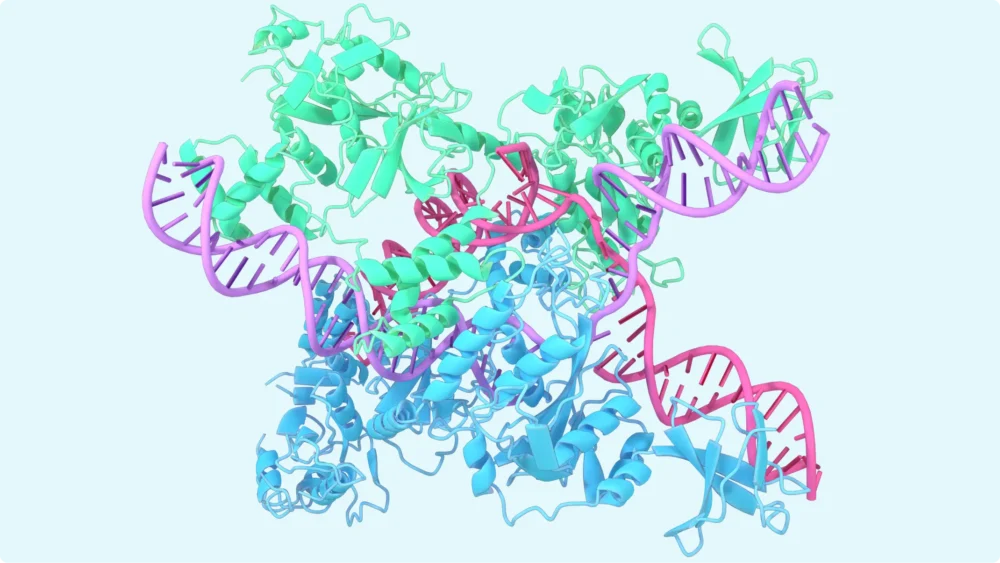
Isomorphic Labs launched in 2021 as a unit of Alphabet Inc (NASDAQ: GOOGL). It builds on AlphaFold, an AI system that predicts protein structures with high accuracy. Additionally, the platform has reshaped how scientists study biology at a fundamental level.
Proteins play a central role in all living systems. They form from chains of amino acids that fold into specific shapes. Consequently, those shapes determine how proteins function in the body.
For decades, researchers struggled to predict protein structures. The number of possible shapes made the problem extremely difficult to solve. However, AlphaFold changed that in 2020 with a deep-learning approach.
Hassabis and researcher John Jumper introduced AlphaFold 2 with breakthrough accuracy. A year later, the team released a widely accessible version to researchers worldwide. Additionally, that decision accelerated adoption across academia and industry.
Read more: Breath Diagnostics leader speaks at lung cancer education event in Louisville
Read more: Prestigious medtech intelligence firm recognizes Breath Diagnostics for innovation
AlphaFold has mapped over 200 million known protein structures
In 2024, the team introduced AlphaFold 3. The updated model expanded beyond proteins to include DNA and RNA interactions. Consequently, scientists gained a clearer view of how molecules behave together.
That capability matters for drug development. Researchers must understand how a drug binds to a target protein and what unintended effects may occur. Furthermore, stronger predictions can reduce costly trial-and-error experiments.
Since its release, AlphaFold has mapped roughly 200 million known protein structures. Meanwhile, more than 2 million researchers across 190 countries have used the tool.
The work earned Hassabis and Jumper the 2024 Nobel Prize in chemistry. Additionally, the Nobel committee noted its impact on antibiotic resistance research and enzyme discovery.
Isomorphic Labs is now building on that foundation. Earlier this year, it introduced IsoDDE, a proprietary drug design engine. According to company data, the system significantly improves accuracy compared with AlphaFold 3.
The company believes better design leads to more effective drugs. Additionally, Jaderberg said these molecules may require lower doses and cause fewer side effects.
That claim will now face real-world testing. Human trials represent a critical step in proving whether AI-designed drugs can succeed. However, many experimental treatments fail at this stage.
Isomorphic Labs has also formed partnerships with major pharmaceutical companies. It is working with Eli Lilly (NYSE: LLY) and Novartis (NYSE: NVS) on AI-driven drug discovery programs. Meanwhile, it is advancing its own pipeline focused on cancer and immune-related diseases.
The company has invested heavily to reach this point. Last year, it raised USD$600 million in funding to support clinical development. Additionally, it hired a chief medical officer and expanded its clinical team.
Read more: Breath Diagnostics completes install of advanced mass spectrometry system
Read more: Breath Diagnostics leaders promote their mission at Miami investment conference
Transition from prediction to treatment marks a turning point
The broader goal remains ambitious. Jaderberg said the company aims to tackle a wide range of diseases using AI-driven design. However, he acknowledged the scale of that mission.
The transition from prediction to treatment marks a turning point. Consequently, the upcoming trials will test whether AI can move beyond theory and deliver practical medical outcomes.
As Isomorphic Labs advances toward clinical trials, artificial intelligence is also reshaping how doctors approach cancer care. Additionally, new AI tools are helping oncologists detect tumors earlier, analyze complex data faster, and tailor treatments with greater precision than traditional methods.
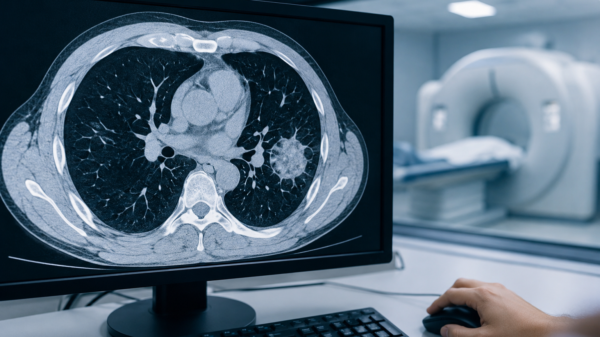
Artificial intelligence is also transforming medical imaging, where radiology has become a key frontier. Additionally, AI systems can now scan imaging data to detect subtle tumours earlier and flag anomalies that clinicians might miss. This improves diagnostic speed and supports more consistent interpretations across large patient volumes.
Meanwhile, emerging tools are expanding beyond imaging into non-invasive diagnostics. Breath Diagnostics has developed a microreactor system that analyzes volatile organic compounds captured by its OneBreath device. Consequently, clinicians can assess metabolic changes linked to lung cancer through a simple breath sample.
Other companies are pushing similar innovations. Grail Inc (NASDAQ: GRAL) offers the Galleri blood test, which screens for multiple cancers using DNA signals. Grail uses AI to analyze fragments of DNA in the bloodstream, identifying patterns linked to cancer. It then predicts whether cancer is present and where it likely originated in the body.
.