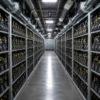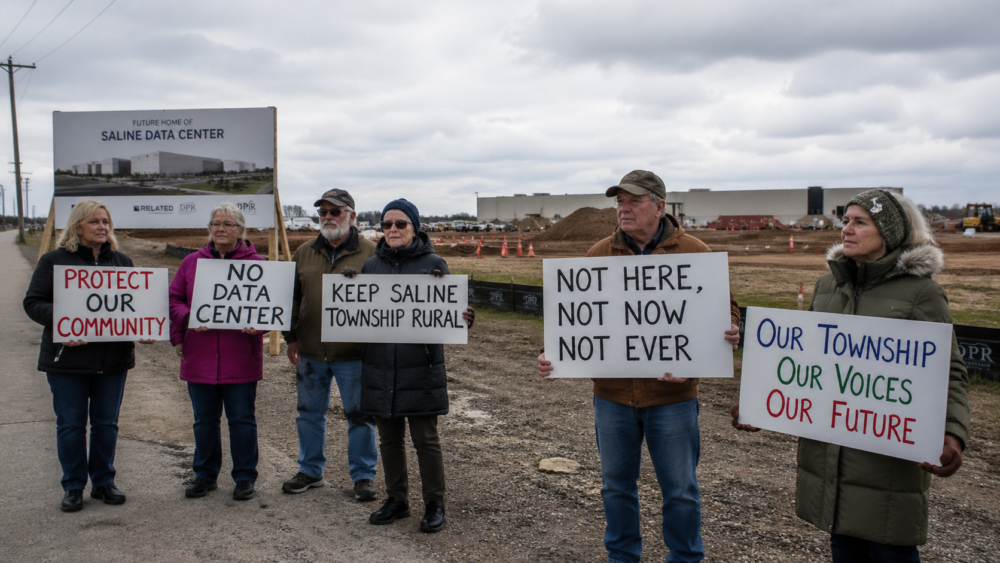

A planned USD$16 billion data center campus in rural Michigan is drawing both industry backing and local resistance as tech giants race to expand artificial intelligence infrastructure.
The Saline Township project, located about 50 miles outside Detroit, will deliver more than one gigawatt of capacity. Announced on Saturday, that scale far exceeds typical facilities, which usually range between 100 and 300 megawatts.
Developer Related Digital said it secured funding with support from Blackstone and PIMCO. Additionally, the initial build will span roughly 250 acres, placing it among the largest U.S. data center campuses.
Michigan Governor Gretchen Whitmer previously described the development as the largest investment in state history. Meanwhile, the facility is expected to support Oracle’s growing artificial intelligence operations, which the company projects could generate about USD$90 billion in revenue by 2027.
The project forms part of the broader Stargate initiative, a USD$500 billion effort led by Oracle Corp (NYSE: ORCL), OpenAI, and SoftBank Group. The initiative aims to expand AI infrastructure nationwide and strengthen U.S. competitiveness in the sector. Furthermore, developers and policymakers frame these projects as key to economic growth and technological leadership.
However, residents near Saline Township have raised concerns about the development’s impact on daily life. Protesters at a December gathering voiced frustration over potential strain on the electric grid and environmental risks. One local resident said she would prefer the project disappear entirely so she could return to a quieter routine without organizing opposition.
Read more: Axe Compute stock heads for the moon on US$260M NVIDIA GPU contract
Read more: Cerebras files for IPO as it takes on NVIDIA in the AI chip market
Technology leaders pledged to shoulder energy expenses
Communities worry about increased electricity demand, heavy water usage, and possible pollution. Additionally, residents question whether the promised economic benefits will outweigh these costs.
A 2024 investigation identified 1,240 existing or planned data centers across the United States. That figure marks a sharp rise from 311 permitted facilities in 2010. Meanwhile, a significant share of new development has shifted toward Midwestern states.
In response, technology leaders recently pledged to shoulder a larger portion of energy expenses tied to data centers. They made those commitments during discussions in Washington earlier this year. Furthermore, developers behind the Saline project said they will implement a closed-loop cooling system designed to reduce water consumption and protect local resources.
However, those assurances have not fully resolved community concerns. Residents continue to question long-term impacts on infrastructure, natural resources, and quality of life as construction plans move forward. Power demand sits at the top of the list. Facilities exceeding one gigawatt can strain local grids. Consequently, communities worry about higher electricity costs and reduced reliability over time.
Water usage is another major issue. Data centers require significant cooling, even with more efficient systems. Additionally, residents fear long-term pressure on local water supplies, especially during drought conditions. Land use and environmental impact also draw scrutiny. Large campuses can replace farmland or natural areas with industrial infrastructure. Furthermore, waste heat and construction runoff raise questions about ecological effects.
These facilities operate continuously, producing sound from cooling systems and backup generators. Meanwhile, increased traffic during construction can disrupt quieter rural areas. Economic benefits remain a point of debate. Data centers create construction jobs, but long-term employment is relatively limited. In addition, tax incentives may reduce the financial gains for local communities.
.