
Electric vehicle manufacturer, Rivian (NASDAQ: RIVN) plans to deploy a 10 megawatt-hour second-life battery storage system at its Illinois factory, aiming to cut peak energy costs and support grid stability using repurposed electric vehicle packs.
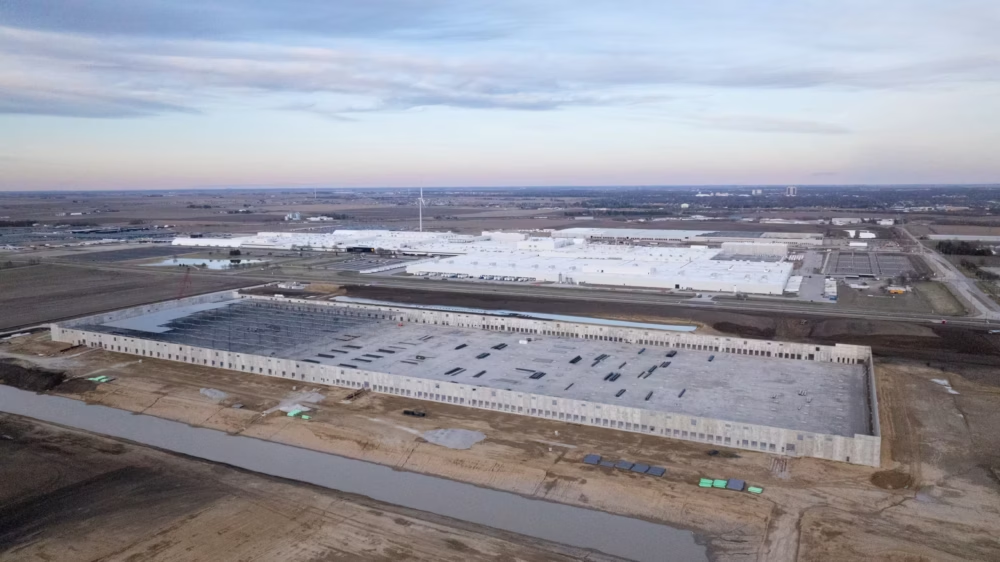
Announced on Friday, the company will work with Redwood Materials to install the system at its Normal, Illinois facility. Additionally, the setup will use more than 100 retired EV battery packs. The companies will convert those packs into a stationary storage unit located directly on-site.
Redwood will integrate the batteries into its Redwood Energy platform. Furthermore, the system will rely on proprietary software to manage and dispatch stored electricity. The goal is to release energy during periods of high demand. Consequently, Rivian expects to reduce expensive peak electricity purchases.
The initial system will deliver 10 MWh of dispatchable energy capacity. Meanwhile, both companies say the design can scale over time. As more EV battery packs reach retirement, additional capacity can be added. This approach allows expansion without building entirely new battery systems.
Rivian said the project extends the usable life of its batteries beyond vehicle applications. In addition, the company views the packs as long-term energy assets. Instead of immediate recycling, the batteries will serve a second function. That function centers on grid support and industrial energy management.
Electricity demand in the United States continues to rise faster than grid expansion. Consequently, industrial users face growing pressure from higher peak costs. Large-scale battery storage offers one way to manage that imbalance. However, traditional battery manufacturing takes time and significant investment.
Read more: Plug Power delivers electrolyzer system for major European hydrogen project
Read more: Trump pushes nuclear reactors in space with 2030 moon target
Companies can quickly add energy storage capacity
Second-life batteries offer a faster alternative. Instead of producing new units, companies can reuse existing packs. Additionally, those packs still retain meaningful storage capacity after vehicle use. This reduces both deployment timelines and upfront costs.
Redwood executives said the United States already holds a large base of battery assets. Meanwhile, many of those assets remain underused after vehicle retirement. By repurposing them, companies can quickly add energy storage capacity. This approach also avoids delays tied to new infrastructure projects.
Rivian’s leadership framed the initiative as part of a broader energy strategy. The company believes EV batteries represent a distributed energy resource. Furthermore, those resources can support grid flexibility and reliability. As energy demand grows, that flexibility becomes more valuable.
Redwood emphasized the role of energy storage in industrial growth. The company noted that electricity constraints can limit expansion. Consequently, accessible storage solutions may unlock new capacity. By using existing battery packs, companies can bypass supply bottlenecks.
The system will also support a strategy known as peak shaving. During high-demand periods, stored energy will flow back into the facility. Meanwhile, Rivian can avoid purchasing costly peak electricity power from the grid. This stabilizes operating costs and reduces strain on local infrastructure.
Heat waves and seasonal demand spikes often drive peak electricity usage. Additionally, those spikes can stress regional grids. By deploying on-site storage, Rivian can smooth its energy consumption profile. This helps maintain stable operations during volatile demand periods.
Redwood designed its integration platform with scalability in mind. As more EVs reach end-of-life, the supply of reusable batteries will grow.
Read more: Trump administration fast-tracks South Dakota uranium project amid tribal opposition
Read more: Canada launches finance taxonomy to steer USD$115B into climate investment
Company positions itself across full battery lifecycle
The system can also expand into a larger distributed network. That network could serve both industrial sites and broader grid applications.
The deployment represents one of the early industrial-scale uses of second-life EV batteries. Furthermore, it combines cost reduction with grid support in a single system. By colocating storage with manufacturing, Rivian gains direct control over energy use.
The project also reflects a shift in how companies view battery lifecycles. Traditionally, batteries moved from vehicles directly to recycling. However, second-life applications introduce an intermediate phase. This phase extracts additional value before material recovery.
Redwood will still handle eventual recycling after the batteries complete their second use. Meanwhile, the company positions itself across the full battery lifecycle. That includes collection, repurposing, and final material recovery.
Industrial energy demand continues to evolve alongside electrification trends. Additionally, sectors such as manufacturing require reliable and flexible power sources. Battery storage systems can fill gaps where grid infrastructure lags.
Rivian’s Illinois deployment may serve as a model for other facilities. If successful, similar systems could appear across the United States. Consequently, second-life batteries could become a common feature in industrial energy strategies.
.