
Canaan Inc. (NASDAQ: CAN) has expanded its Bitcoin mining footprint in Ethiopia, pushing estimated capacity above 5 exahash per second, according to its March 2026 update.
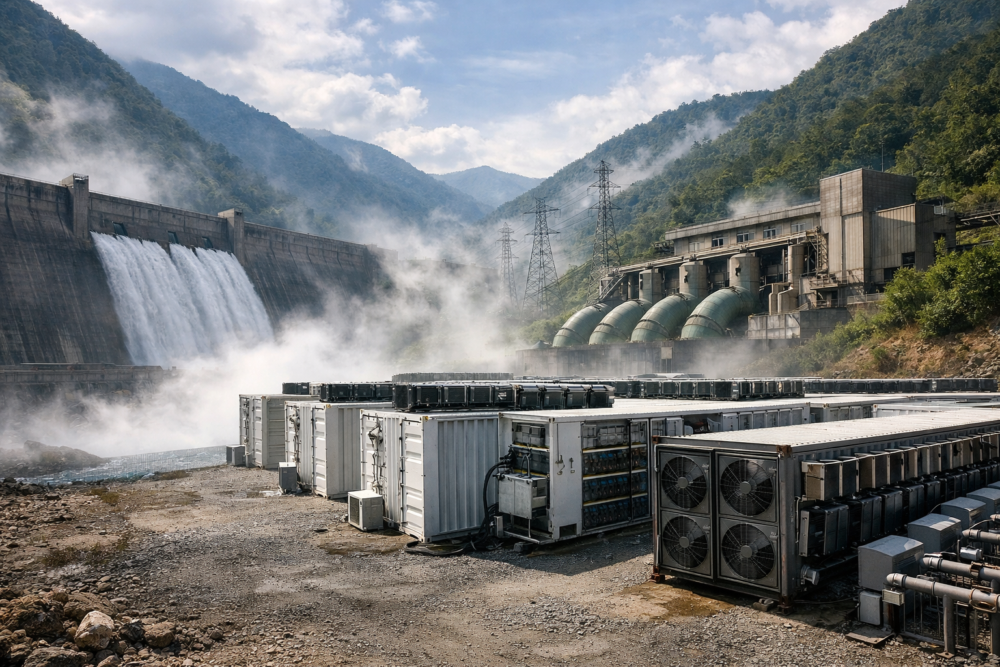
The company reported two active mining projects in Ethiopia at the end of March. Additionally, those sites delivered 2.36 EH/s of energized computing power. Installed capacity in the country reached 4.96 EH/s during the period. Furthermore, another 0.16 EH/s of equipment remains in transit. That brings Ethiopia’s estimated total computing capacity to 5.12 EH/s.
The Ethiopia operations form part of a broader global network spanning 13 active projects. Meanwhile, Canaan reported 11.29 EH/s of energized capacity across all sites. Installed global computing power reached 15.37 EH/s. Additionally, the company mined 89 bitcoin during March. Its digital asset holdings rose to 1,808 BTC and 3,952 ETH.
Canaan has operated in Ethiopia since at least 2024, based on prior disclosures. Furthermore, the country reached industrial-scale mining capacity through 2025. Last year, Ethiopia contributed more than 4 EH/s to Canaan’s non-North American portfolio.
North America remains a major focus for expansion. The company reported 266.3 megawatts of installed power capacity in the region. In addition, joint ventures in Texas added another 120 megawatts. Canaan also achieved average miner efficiency of 18.7 joules per terahash in North America.
Chief executive Nangeng Zhang said the company continues to expand its role in energy-linked computing systems. He indicated that mining operations increasingly integrate with power optimization strategies. Additionally, the company is investing in infrastructure that reuses excess heat. It is also working on systems that balance electricity demand across grids.
Read more: Lawmakers close in on stablecoin rules amid banking sector resistance
Read more: Kraken sticks with IPO plans despite USD$6.7B valuation drop
Canada maintains a strong presence in the sector
The Ethiopia expansion reflects a broader strategy to distribute mining operations globally. Meanwhile, Canaan continues to deploy capacity across Canada, the Middle East and Malaysia. The approach aims to improve operational flexibility and align computing loads with available energy resources.
Global bitcoin mining is increasingly shifting toward regions with abundant, low-cost energy as operators prioritize efficiency and scale.
The United States remains the largest hub for mining activity. Additionally, companies continue to expand across states with deregulated power markets. Texas and other energy-rich regions have attracted major infrastructure investment. Furthermore, miners are leveraging flexible grid arrangements to reduce costs and stabilize demand.
Canada maintains a steady presence in the sector. In addition, its hydropower resources and cooler climate help lower operating expenses. Provinces such as Quebec and British Columbia support industrial-scale mining operations. However, some jurisdictions have introduced limits to manage electricity demand.
Emerging markets are driving much of the industry’s growth. Meanwhile, countries in Africa, Latin America and the Middle East are attracting new projects. Ethiopia has gained attention due to its surplus hydroelectric capacity. Additionally, nations like Paraguay and Argentina offer access to underutilized energy resources. These regions allow miners to deploy equipment where power would otherwise go unused.
The industry is also evolving beyond simple bitcoin production. Furthermore, companies are integrating mining into broader energy management strategies. Operators increasingly use mining to absorb excess electricity and balance grid loads. In addition, some projects reuse waste heat for industrial or local applications.
Competition for energy is shaping the next phase of development. Meanwhile, high-performance computing and artificial intelligence data centres are competing for the same power sources. This dynamic is pushing miners to secure long-term energy agreements.
.