
Mining companies are racing to harvest metal-rich rocks scattered across the deep ocean floor, igniting a global debate over whether the hunt for battery minerals could damage one of Earth’s least understood ecosystems.
Dozens of countries gathered this week in Jamaica to negotiate rules for deep-sea mining. The discussions are taking place under the authority of the International Seabed Authority, which governs mineral resources in international waters.
Thousands of metres beneath the Pacific Ocean, the seafloor is dotted with dark, potato-shaped rocks packed with valuable metals. Mining companies now want to harvest them, while scientists warn the fragile ecosystems around them remain largely unknown.
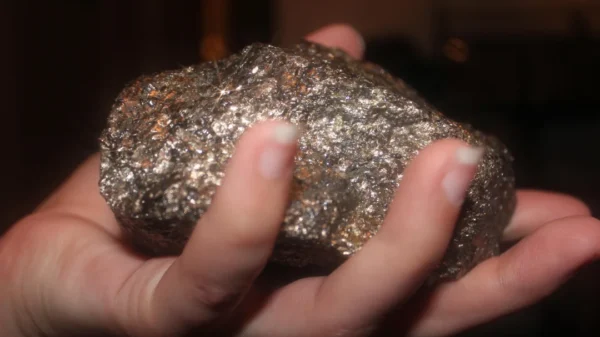
These formations, called polymetallic nodules, slowly accumulate metals like nickel, cobalt and manganese over millions of years. Additionally, those same metals have become essential for batteries, electronics and other advanced technologies.
Consequently, interest in deep-sea mining has accelerated as governments and companies seek new mineral supplies. Meanwhile, scientists caution that the deep ocean remains one of Earth’s least understood environments.
The authority was established under the United Nations Convention on the Law of the Sea. That treaty created a framework to manage seabed minerals considered part of humanity’s shared heritage.
However, the United States has not ratified the treaty. Consequently, the country has moved ahead with its own process to permit mining in international waters.
Last year, Donald Trump signed an executive order directing federal agencies to support seabed mining development. The order aimed to strengthen U.S. access to critical minerals and reduce dependence on foreign supply chains.
Read more: NevGold’s stock growth secures junior spot on 2026 TSX Venture 50 list
Read more: NevGold discovers transformational oxide gold-antimony structure at Limousine Butte
Regulators urged to proceed carefully
Officials argued the strategy could counter China’s influence over seabed mineral resources. Meanwhile, environmental groups warned the move could weaken international cooperation governing ocean activities.
The National Oceanic and Atmospheric Administration recently accelerated its environmental review procedures for seabed mining permits. Additionally, the agency now allows companies to apply simultaneously for exploration and commercial mining licenses.
Previously, companies completed environmental reviews separately at each stage of development. Consequently, critics say the new approach shortens opportunities for scientific study and public oversight.
Rebecca Loomis, an attorney with the Natural Resources Defense Council, said regulators should proceed carefully. She argued the industry remains too new for regulators to reduce review requirements.
“We don’t know what the value of all of those lifeforms and their genetic resources are for future generations of humans,” says Antje Boetius, marine scientist and president of the Monterey Bay Aquarium Research Institute.
“We cannot predict if one of the microorganisms we might lose, will that be the cancer cure? Will that be an amazing source of bioinspiration for antibiotics?”
Mining firms, however, say deep-sea extraction may cause less environmental damage than traditional mining on land. They point to widespread deforestation and pollution tied to some terrestrial mining projects.
One of the most prominent developers is The Metals Company (NASDAQ: TMC). The firm hopes to become the first company to commercially harvest deep-sea minerals at industrial scale.
The company targets a vast region of the Pacific Ocean known as the Clarion-Clipperton Zone. The area stretches between Hawaii and Mexico and contains enormous fields of polymetallic nodules.
Read more: NevGold delivers major growth at Idaho gold project
Read more: NevGold Corp. advances toward gold antimony resource with expanded Nevada drilling
Scientists observe notable ecological declines
The Metals Company has applied for U.S. permits to collect between three million and twenty million tonnes annually. The company proposes to operate for roughly twenty years in its first commercial lease area.
However, scientists studying the test mining sites report significant ecological disturbance. Removing nodules disrupts the soft sediment where many small animals live.
Researchers documented worms, crustaceans and other organisms living directly within the seabed mud. Additionally, many species attach themselves to the nodules because the hard surfaces offer rare habitat.
A team of independent researchers studied the company’s test mining area. They included scientists from the University of Hawaii and the Natural History Museum.
Two months after a test operation, scientists observed notable ecological declines. Consequently, species abundance dropped by roughly 37 per cent compared with undisturbed areas.
Biodiversity also fell by about 32 per cent in the affected zone. However, researchers have not yet measured how quickly those ecosystems might recover.
Company officials say those impacts remain relatively small compared with some land-based mining operations. They often cite deforestation in tropical regions as a comparison.
Meanwhile, marine biologists say the deep ocean remains far too poorly understood for such conclusions. Many researchers argue humanity has explored only a tiny fraction of the deep sea.
Steve Haddock, a senior scientist at the Monterey Bay Aquarium Research Institute, said many deep-sea creatures remain unknown to science.
One study found that roughly 90 per cent of species in the Clarion-Clipperton Zone remain unidentified. Additionally, many of those animals survive in complete darkness and extreme pressure.
Some produce their own light through bioluminescence. Others possess unusual biological traits that researchers still struggle to explain.
Read more: NevGold’s latest discovery represents near term antimony production potential
Read more: NevGold surges after closing C$10M financing deal
Questions remain about ecosystem damage potential
Scientists say these organisms may also hold medical potential. Consequently, researchers already study deep-sea microbes and animals for possible cancer treatments.
Certain species rely directly on polymetallic nodules as habitat. The muddy seabed offers few hard surfaces where organisms can anchor themselves.
One example is a translucent octopus nicknamed Casper. Scientists discovered the species roughly a decade ago during deep-sea exploration.
Researchers observed the octopus laying eggs on a sponge attached to a nodule. Additionally, scientists believe between 20 and 30 per cent of deep-sea species depend on these mineral formations.
The Metals Company says its operations would leave some nodules behind. The company estimates roughly five per cent would remain within mined areas.
However, scientists question whether that fraction would sustain the existing ecosystem. Meanwhile, researchers also worry about sediment plumes created during mining operations.
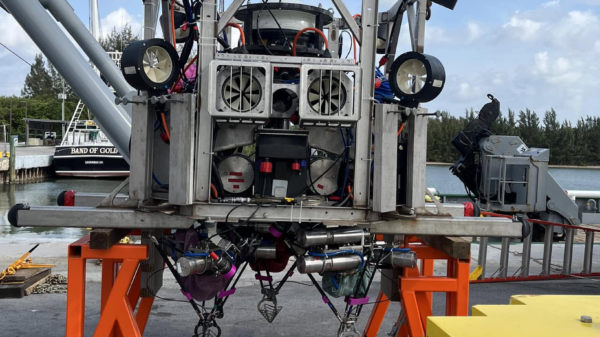
When the nodules reach the surface ship, operators separate the mineral material from surrounding sediment. Subsequently, the company plans to release the remaining sediment back into the ocean.
That process creates large underwater plumes of fine particles. Additionally, those clouds of sediment could drift through the water column for kilometres.
Researchers from the University of Hawaii examined this potential impact. They found suspended sediment may interfere with organisms that filter microscopic plankton from seawater.
Consequently, disruptions at the base of the food web could ripple through marine ecosystems. Larger animals like tuna depend on those plankton-based food chains.
The Metals Company says it intends to reduce those risks. The firm plans to release sediment deeper in the ocean, around 6,000 feet below the surface.
Read more: NevGold expands Bullet Zone discovery as drilling confirms oxide gold-antimony system
Read more: NevGold mobilizes drill on Limo Butte historical pads, eyes 2027 antimony production
Permits allow governments to study mining zones
Meanwhile, international regulators continue debating how to manage the emerging industry. Several countries, including China, already hold exploration permits through the International Seabed Authority.
Those permits allow governments and companies to study potential mining zones. However, commercial extraction has not yet begun under the international system.
Consequently, regulators face pressure to finalize global rules before mining begins. Environmental organizations argue stronger safeguards remain necessary.
The United States has chosen a different approach. Meanwhile, the National Oceanic and Atmospheric Administration now reviews permit applications submitted by The Metals Company.
Company executives say they hope to begin commercial operations as early as next year. Scientists and environmental groups, however, continue urging regulators to slow the process while research continues.