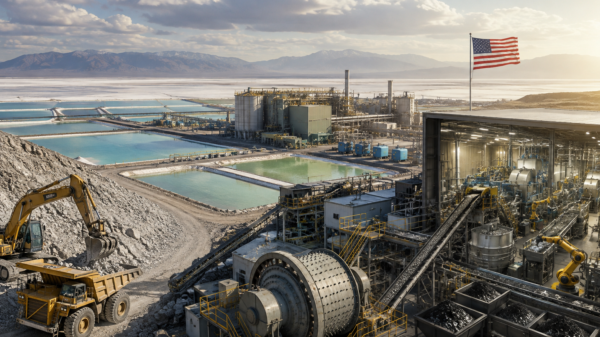

Rio Tinto Group (ASX: RIO) (NYSE: RIO) has completed its first commercial shipment of lithium carbonate from the Rincon project in Argentina, marking the mining giant’s initial step into large-scale lithium production.
The cargo left the Port of Buenos Aires this week bound for Shanghai, China. Additionally, the shipment contained roughly 200 tonnes produced at the project’s pilot-scale facility. Reuters first reported the milestone on Tuesday.
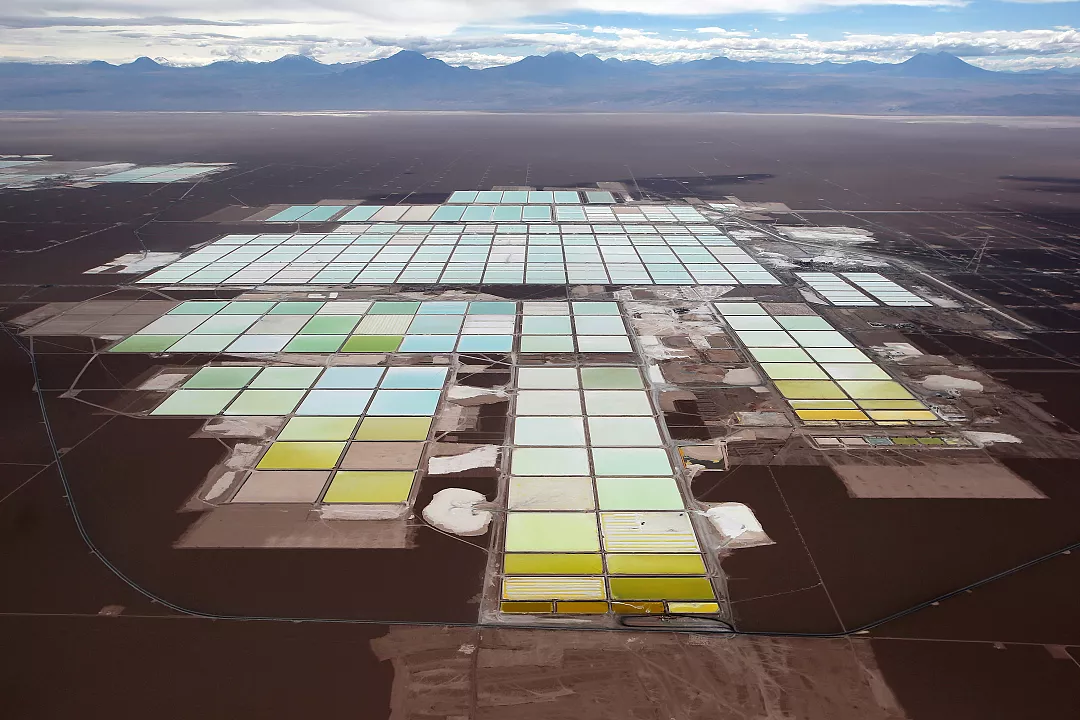
Rincon sits in Argentina’s Salta province within the lithium triangle, a region rich in brine deposits. The project targets annual output of about 60,000 tonnes of battery-grade lithium carbonate.
Initially, Rio Tinto plans to produce lithium from a 3,000-tonne starter plant already operating at the site. Subsequently, the company intends to expand operations with a larger 57,000-tonne facility scheduled to start production in 2028.
Construction of the expansion is currently underway and carries an estimated cost of USD$2.5 billion. Consequently, the project represents one of the company’s largest investments in battery materials.
Rio Tinto acquired Rincon in March 2022 to strengthen its position in the electric-vehicle supply chain. Meanwhile, the project has become the company’s flagship lithium development following the suspension of its Jadar project in Serbia.
Executives say Rincon will form a cornerstone of the firm’s long-term lithium strategy. Additionally, Rio Tinto expects the project to produce roughly 53,000 tonnes annually over a planned 40-year mine life.
To accelerate development, the company has applied for Argentina’s RIGI investment incentive program. The scheme offers tax advantages and regulatory stability for major industrial projects.
Meanwhile, Rio Tinto has secured additional funding to advance construction. The company announced a USD$1.175 billion financing package backed by several international institutions.
Read more: Rio Tinto strengthens integrated lithium strategy with Nemaska majority stake
Read more: Chinese firms spend $80B abroad to soak up green tech supply glut
Lithium market presently faces short-term oversupply problem
The lenders include the International Finance Corporation, IDB Invest, Export Finance Australia and the Japan Bank for International Cooperation. Additionally, the financing diversifies funding sources for the Rincon development.
Rio Tinto’s lithium division chief Jérôme Pécresse said the financing supports the company’s broader battery-materials pipeline. He also pointed to long-term demand growth tied to the global energy transition.
However, the lithium market currently faces a very different short-term reality. Prices have fallen sharply over the past two years due to a significant supply glut.
Producers expanded output aggressively during the electric-vehicle boom earlier in the decade. Consequently, new mines and brine projects added large volumes of lithium to global markets.
Meanwhile, electric-vehicle sales have continued growing but at a slower pace than many forecasts predicted. This mismatch between supply and demand pushed lithium carbonate prices down dramatically from their 2022 peaks.
Benchmark prices for battery-grade lithium carbonate in China have dropped more than 80 per cent from those highs. However, several major producers continue expanding production despite weaker prices.
Companies often maintain projects because lithium developments require many years to build. Consequently, producers focus on long-term demand expectations rather than short-term market volatility.
Additionally, governments increasingly view lithium as a strategic resource for energy security. Policymakers want domestic or allied supply chains to support electric-vehicle manufacturing and battery storage.
Meanwhile, Argentina has emerged as one of the fastest-growing lithium producers globally. The country’s brine deposits attract investment from international mining companies seeking large-scale resources.
Rio Tinto says Rincon will play a central role in its future lithium portfolio. Additionally, the company considers Argentina a key location for expanding its battery materials business.