
Shares of Tango Therapeutics (NASDAQ: TNGX) surged Thursday after the biotechnology company reported strong financial results and announced a new clinical drug partnership.
The stock climbed about 23 per cent to around USD$15.25 with heavy trading volume exceeding nine million shares. Investors reacted to fourth-quarter and full-year 2025 results released on March 5. Additionally, the company reported strong cash reserves and several upcoming clinical milestones.
Tango said it held USD$343.1 million in cash as of Dec. 31, 2025. The company expects that capital to fund operations into 2028. Meanwhile, management pointed to progress in its lead drug candidate vopimetostat. The therapy targets PRMT5, an enzyme linked to several aggressive cancers. The company plans to launch a pivotal second-line pancreatic cancer study in 2026. Furthermore, early trial data suggests the drug may deliver a strong therapeutic profile.
The update arrived alongside a new clinical collaboration with Erasca, Inc. (NASDAQ: ERAS). The companies signed a clinical trial collaboration and supply agreement to test a combination therapy. Additionally, the study will evaluate Erasca’s experimental drug ERAS-0015 with Tango’s vopimetostat.
Researchers will test the combination in pancreatic and non-small cell lung cancer patients. These patients carry MTAP deletions and RAS mutations, two genetic changes linked to difficult tumors. Consequently, scientists believe dual targeting may disrupt cancer growth more effectively.
ERAS-0015 belongs to a class known as pan-RAS molecular glues. These drugs aim to block RAS signaling across multiple mutation types.
Read more: Breath Diagnostics advances pre-op pneumonia screening with FDA breakthrough designation
Read more: Prestigious medtech intelligence firm recognizes Breath Diagnostics for innovation
Study tests drug in patients with solid tumours
Meanwhile, vopimetostat inhibits PRMT5, a protein that helps certain tumors survive. Researchers think combining both drugs could create stronger and longer-lasting tumor responses.
Additionally, the strategy may reduce the chance that cancers develop drug resistance. Under the agreement, Erasca will supply ERAS-0015 at no cost for the study. Tango will sponsor the Phase 1/2 trial and oversee its development. However, each company will retain commercial rights to its own compound. The collaboration also remains non-exclusive.
Erasca has already begun evaluating ERAS-0015 in its AURORAS-1 Phase 1 trial. The study tests the drug in patients with solid tumors carrying RAS mutations. Early dose escalation data has shown manageable safety and encouraging tumor responses. Furthermore, some responses appeared at doses as low as eight milligrams once daily.
Preclinical testing has also compared ERAS-0015 with Revolution Medicines’ RAS inhibitor RMC-6236. Consequently, Erasca reported stronger binding activity and greater RAS inhibition in laboratory models.
The company said the drug achieved tumor control at doses far lower than the comparator.
The recent collaboration between Tango Therapeutics and Erasca, Inc. reflects a broader shift underway in oncology. Drug developers increasingly pursue combination strategies that attack cancer through multiple biological pathways. Consequently, researchers hope these approaches will produce deeper and more durable responses in difficult tumors.
Targeted therapies now dominate much of modern cancer drug development. Companies focus on identifying genetic vulnerabilities that tumors rely on to survive. Additionally, researchers increasingly pair drugs that interrupt separate points in the same signaling network.
Read more: Breath Diagnostics completes install of advanced mass spectrometry system
Read more: Breath Diagnostics leaders promote their mission at Miami investment conference
Many cancers adapt or develop resistance to single therapies
Several biotechnology firms are exploring strategies similar to Tango’s RAS-focused approach. Revolution Medicines, Inc. (NASDAQ: RVMD) has built a pipeline around drugs that inhibit RAS proteins directly. Revolution also shares a partnership with Tango. Initial Phase 1/2 data from that collaboration is expected sometime in 2026.
Meanwhile, the company continues advancing multiple RAS(ON) inhibitors designed to block cancer-driving mutations.
These drugs aim to shut down signaling pathways that fuel tumor growth. However, many cancers eventually adapt or develop resistance to single therapies.
In addition, researchers believe that pairing targeted therapies with better diagnostic tools could transform treatment strategies. Detecting tumors earlier or identifying specific mutations may help doctors select therapies more precisely.
One company pursuing that detection angle is GRAIL, Inc. (NASDAQ: GRAL). The biotechnology firm develops blood-based cancer screening tests designed to identify tumors before symptoms appear. Its flagship Galleri test analyzes fragments of tumor DNA circulating in the bloodstream.
Meanwhile, the company continues expanding clinical research and commercial partnerships to broaden adoption of multi-cancer screening. Early detection technologies like Galleri aim to identify dozens of cancer types through a single blood sample.
Consequently, many researchers now see diagnostics and targeted therapy development as closely linked. Precision medicine relies on identifying the molecular signals that guide treatment decisions.
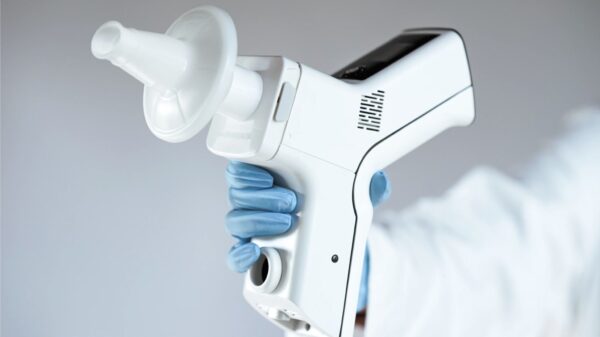
Newer companies are exploring alternative approaches to cancer detection as well. Kentucky-based Breath Diagnostics is developing breath-analysis technology designed to detect metabolic markers associated with certain cancers. The company’s platform analyzes volatile organic compounds in human breath to identify patterns linked to disease.
Additionally, breath-based diagnostics could eventually offer a non-invasive screening tool. Such systems may complement blood tests and imaging technologies in future cancer detection strategies.
.