Xcite Uranium Inc.'s six‑hole Black Bay drilling program begins
A second rig has been procured for the 1,300-metre Saskatchewan program, with C$975,000 allocated to drilling.
 Mara Quinlan
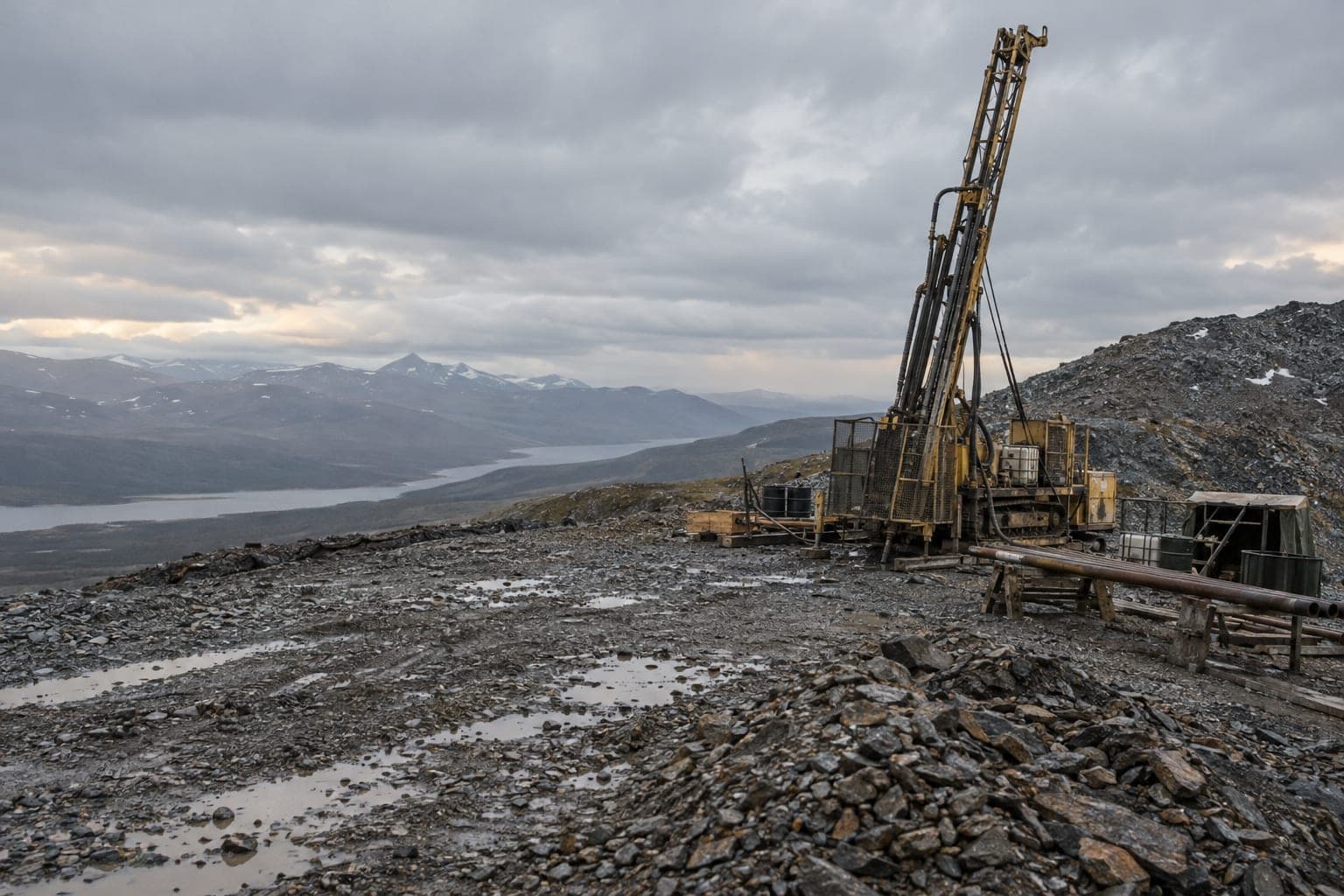
Xcite Uranium Inc. CNSXXRI said Monday it has started a six-hole, 1,300-metre diamond drilling program at Black Bay in Saskatchewan and procured a second rig for the work. The holes will test below ground along a four-kilometre geophysical trend where 2026 trench samples returned up to 1.17 per cent U3O8, moving the work beyond surface sampling.
Xcite shares closed at C$0.44 on the Canadian Securities Exchange on Friday, Oct. 2, according to the 4 p.m. EDT quote for CNSXXRI. The Oct. 5 announcement was issued before Monday's Canadian market open, so that close predates the drilling news.
The six holes will be drilled from five pads to test conductors identified in a 2025 airborne survey near the former Black Bay mine, particularly where they run parallel to or intersect magnetic high-low contacts. Its Oct. 5 release says the added rig is under contract to Base Diamond Drilling, with crews based in Uranium City, about 20 kilometres north of the project, but gives no date for that rig to start work.
Eagle Plains Resources Ltd. CVEEPL said Monday it owns the 1,114-hectare Black Bay property and gave Xcite the exclusive right to earn up to an 80 per cent interest under a December 2023 agreement. The drilling is being conducted under Xcite's option.
The approved 2026 Black Bay budget is approximately C$1.1 million. It assigns C$975,000 to drilling and C$125,000 to completed fieldwork, putting most of the allocation behind the six-hole drilling program now underway.
TerraLogic Exploration managed Xcite's 2026 fieldwork, which collected 32 rock samples and included a four-square-kilometre lidar survey. Geologists also modelled 745 line-kilometres of airborne electromagnetic data gathered in 2025.
"The drilling will use a second drill rig, under contract to Base Diamond Drilling, with crews based out of Uranium City," Xcite said in its Oct. 5 release.
Black Bay's past mine is part of the reason for testing the adjacent trend. The property overlaps seven Saskatchewan mineral occurrences, including the former Black Bay uranium mine.
Xcite cites historical records from 1954 to 1958 for the Black Bay mine. Those records show production of approximately 1,375 tons grading 0.17 per cent U3O8.
The old production and the latest trench samples are separate evidence from the planned drill holes, which have yet to produce new assay results.
The company reported a 2026 trench sample of 1.17 per cent U3O8 on the mine trend. A mineralized float sample near the historic Brunston zone returned 7.37 per cent U3O8.
Xcite's Oct. 5 release gives no completion or first-assay date for the six-hole Black Bay program.