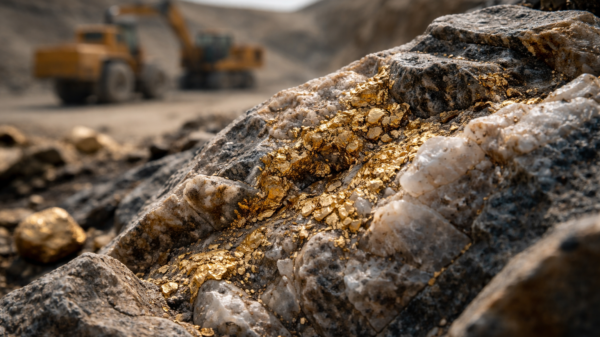

Latin American countries are ramping up efforts to refine and process critical minerals at home, aiming to capture more value instead of sending raw materials abroad.
Ilan Goldfajn, president of the Inter-American Development Bank (IDB), said on Tuesday that governments in Argentina, Bolivia, Brazil, Chile, and Ecuador are working to expand lithium, copper, and other mineral processing capacities.
“Countries want to go beyond exporting raw resources and keep more economic value within their borders,” he said.
The push comes as the Trump administration encourages sourcing closer to the United States, and as the European Union partners with regional development banks to support sustainable investment.
In a joint initiative launched last year, the IDB and the EU are promoting responsible investment and value chain development in Latin America and the Caribbean. The EU provided nearly €6.3 million (USD$7.3 million) in grants, which is expected to unlock about €120 million (USD$140 million) in IDB funding for mineral-related projects. The funding targets downstream activities, including refining, processing, and infrastructure improvements.
Through its Mining for the Energy Transition (MET) program, the IDB is offering technical support to strengthen regulatory frameworks, improve geological data, support sustainable mining practices, and enhance regional infrastructure. Additionally, the program seeks to attract long-term investment in critical mineral supply chains.
Washington has also signalled it prefers sourcing and processing minerals within the hemisphere. Goldfajn said governments across political lines see a rare chance to increase domestic value creation. Latin America also holds roughly 60 per cent of the world’s identified lithium reserves and produces about 46 per cent of global copper, making it a leading supplier alongside Peru.
Read more: NevGold expands high-grade antimony discovery at Nevada’s Limousine Butte Project
Read more: NevGold delivers major growth at Idaho gold project
Argentina exports most of its lithium to China
Brazil also holds the world’s second-largest rare earths reserves, though production remains limited because of technical and commercial challenges. China continues to dominate global processing, often undercutting competition and making it hard for resource countries to expand downstream activities.
Argentina currently exports about 70 per cent of its lithium to China, only to import it back at prices eight or nine times higher after processing. Long-term supply agreements could narrow this cost gap, according to Goldfajn. He further cited Chile’s 20-year green hydrogen deal with Germany as an example that helped unlock IDB financing.
The IDB is also directly financing extraction and processing projects. In Argentina, it is providing a USD$100-million loan to support Rio Tinto Group (ASX: RIO) (NYSE: RIO) in a USD$2.5-billion plan to produce battery-grade lithium in Salta province.
Furthermore, rising demand for critical mineral financing is contributing to the IDB group’s expected raise over USD$30 billion this year. Nearly USD$20 billion will come from its public-sector arm, and IDB Invest and IDB Lab will finance over USD$11 billion.
Goldfajn acknowledged political differences between the Trump administration and major left-leaning governments in Brazil, Mexico, and Colombia. However, he said the renewed U.S. focus on Latin America presents opportunities for regional development and investment.
Read more: NevGold targets U.S. critical mineral supply chain with new antimony-gold find
Read more: NevGold Expands Gold-Antimony Potential at Limousine Butte in Nevada
Multiple companies prioritized for critical minerals
Since returning to office, Trump has signed multiple executive orders aiming to expand U.S. domestic mineral production. The orders direct federal agencies move quickly on new mining sites and streamline permitting for projects critical to national security.
Under that mandate, the Stibnite mine operated by Perpetua Resources (NASDAQ: PPTA) (TSE: PPTA) in Idaho has gained priority status. Perpetua received roughly USD$75 million in DPA Title III awards. Furthermore, it has secured a letter of interest from the Export Import Bank of the United States for up to USD$1.8 billion to finance its gold-and-antimony project. The administration has backed Perpetua as a cornerstone of a new domestic antimony supply chain.
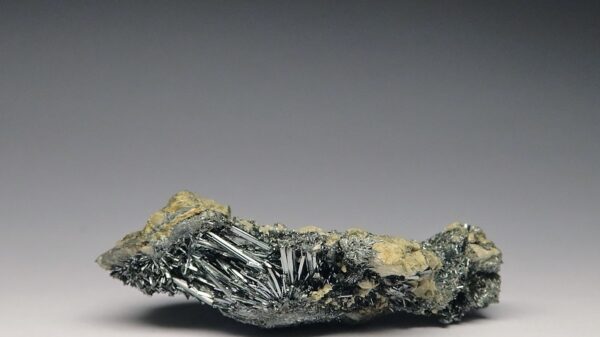
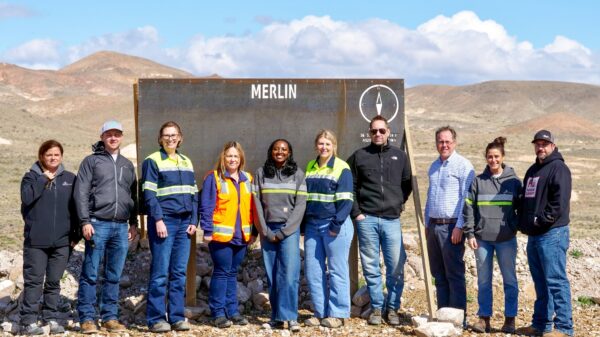
Meanwhile, NevGold Corp (CVE: NAU) (OTCMKTS: NAUFF) (FRA: 5E50) has started to attract attention as another potential contributor to U.S. non China antimony supply. Its Limousine Butte project in Nevada returned several encouraging drill results in 2025. These include high-grade antimony intercepts of up to 3.76 per cent over 4.6 metres from surface within a mineralized interval. Metallurgical testwork has demonstrated good antimony recovery rates of 71–85 per cent across a range of grades.
.
NevGold Corp is a sponsor of Mugglehead news coverage
.