Jury gives Sam Bankman-Fried 25 year sentence for FTX scam
Prosecutors claimed Bankman-Fried inflicted losses exceeding USD$10 billion US on customers, investors, and lenders
 Joseph Morton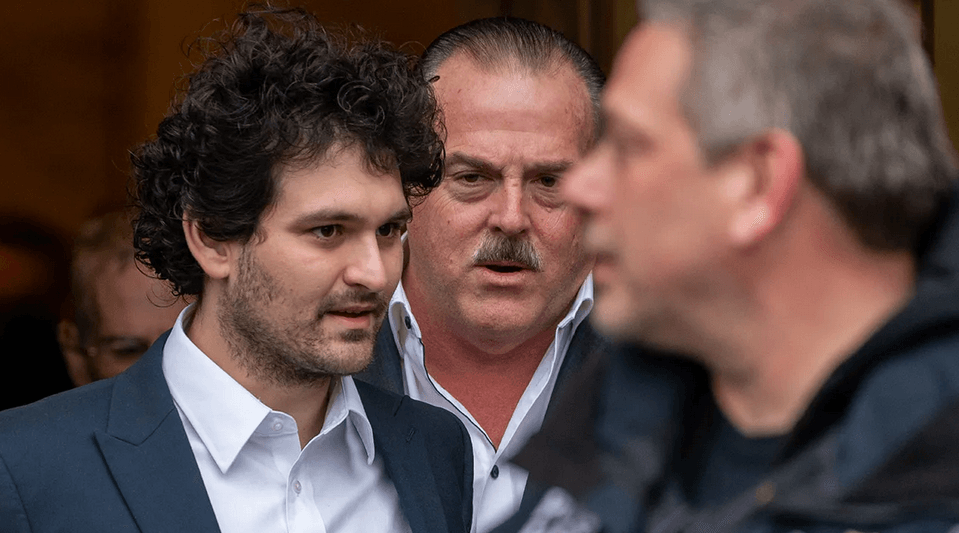
The ongoing saga of embattled crypto-CEO Sam Bankman-Fried came to a close on Thursday as he accepted a 25-year sentence for his part in the 2022 collapse of digital currency trading platform FTX.
A jury convicted Bankman-Fried of seven fraud and conspiracy charges in November. It found that Bankman-Fried illegally used funds from FTX depositors to cover expenses, which included luxury items like properties in the Caribbean, private planes, and contributions to the federal Democratic party as well as alleged bribes to Chinese officials.
U.S. District Judge Lewis A. Kaplan said “that there is a risk that this man will be in position to do something very bad in the future. And it’s not a trivial risk at all.” The sentence in question was “for the purpose of disabling him to the extent that can appropriately be done for a significant period of time.”
Prosecutors claimed that by misappropriating billions of dollars, Bankman-Fried had inflicted losses exceeding USD$10 billion US on customers, investors, and lenders to fuel his quest for influence and dominance in the new industry.
The prison sentence marks a dramatic descent from a peak of success, highlighted by a Super Bowl advertisement and celebrity endorsements from stars such as quarterback Tom Brady, basketball star Stephen Curry, and comedian Larry David.
When given a chance to speak by the court, Bankman-Fried apologized in a statement.
“A lot of people feel really let down,” he said. “And they were very let down. And I’m sorry about that. I’m sorry about what happened at every stage. My useful life is probably over. It’s been over for a while now, from before my arrest.”
Read more: Netcoins USA new deal with Zero Hash expands crypto reach into United States
Read more: The SEC denies Coinbase petition for rules clarification
Prosecutors recommend 40-50 year sentence
Prosecutors recommended a prison sentence ranging from 40 to 50 years, while the defense sought a term no longer than six years. They argued that FTX’s investors had largely recovered their funds, a claim that bankruptcy lawyers, FTX, and its creditors disputed.
“Mr. Bankman-Fried continues to live a life of delusion,” said John Ray, FTX’s new CEO. Ray took over and has been doing what he can to get the company back afloat after Bankman-Fried left it on November 11, 2022.
On Thursday, Kaplan sided with prosecutors, asserting that Bankman-Fried should not receive leniency merely because some investors and customers might recover a portion of their lost funds. He labelled the argument as “logically flawed” and “speculative.” According to him, customers suffered losses of about USD$8 billion, investors USD$1.7 billion, and lenders faced a shortfall of USD$1.3 billion US.
Kaplan also noted three times where Bankman-Fried committed perjury in his testimony, including when Bankman-Fried testified to not having any knowledge until weeks before FTX’s collapse that customer funds were being funnelled to a hedge fund offshoot.
In response, defence lawyer Marc Mukasey said his client was misunderstood.
“Sam was not a ruthless financial serial killer who set out every morning to hurt people,” Mukasey said.
FTX enabled investors to purchase dozens of virtual currencies, ranging from Bitcoin to more obscure ones like Shiba Inu. Bankman-Fried also aired a Super Bowl advertisement to market his business and acquired the naming rights to an arena in Miami.
However, the 2022 collapse of cryptocurrency prices heavily impacted FTX, ultimately leading to its collapse.
Read more: SEC Chair Gensler warns AI left unchecked could initiate financial disaster
Read more: Vitalik Buterin proposes hard fork strategy for Ethereum in case of quantum attack
FTX is the latest in a long list of crypto-frauds
Alameda Research, FTX’s hedge fund affiliate, had invested billions of dollars in various crypto assets that plummeted in value throughout 2022. Bankman-Fried diverted FTX customer funds to address Alameda’s balance sheet shortfalls.
Three individuals from Bankman-Fried’s inner circle, including his once-girlfriend Caroline Ellison, admitted guilt to related crimes and testified against him at his trial. In November, the court sentenced Ellison to 11 years in prison. She portrayed Bankman-Fried as a calculating person who was aware of committing crimes as he directed the misuse of customer funds.
Since 2015, the cryptocurrency space has witnessed a series of failures and frauds that have highlighted the risks and volatility inherent in this emerging sector.
One of the most infamous examples is the collapse of Mt. Gox, once the world’s largest bitcoin exchange, which filed for bankruptcy in 2014 after losing $450 million worth of bitcoin to a hack. This event set a precedent for the vulnerabilities associated with digital currency exchanges.
More recently, the dramatic rise and fall of BitConnect in 2017 and 2018 served as a stark warning against crypto investment schemes that promise unrealistic returns. BitConnect was widely accused of operating a Ponzi scheme, offering high yields for those who invested in their BitConnect Coin (BCC). The platform eventually collapsed, causing losses in the range of hundreds of millions of dollars for its investors. These events, among others, underscore the need for greater regulatory oversight and more sophisticated security measures in the cryptocurrency market to protect investors from fraud and theft.
Read more: Crypto mining pollution lawsuit targets Pennsylvania company
Read more: Will Securities and Exchange Commission attempt to classify Ethereum as a security?
Quadriga CX investigation produced more questions than answers
Additionally, Quadriga was once Canada’s largest cryptocurrency exchange and became one of the most bewildering failures in the cryptocurrency world in January 2019. It announced that its founder and CEO, Gerald Cotten, had died unexpectedly in late 2018, and with him went the access to $190 million worth of cryptocurrencies stored in cold wallets.
Cotten was reportedly the only person with the passwords to these wallets, leaving Quadriga CX unable to fulfill withdrawal requests from its customers.
The subsequent investigation into Quadriga CX’s collapse raised more questions than answers, uncovering a web of deceit that included the misuse of customer funds and significant gaps in operational integrity.
Reports from forensic accountants revealed that Cotten had engaged in fraudulent trades and used customer deposits to fund his lavish lifestyle. The saga of Quadriga CX not only shed light on the risks associated with the custody of digital assets but also served as a cautionary tale about the importance of transparency and regulatory compliance in the cryptocurrency industry.
.