
Six European nuclear regulators have completed the second phase of a joint early review of France’s Nuward small modular reactor (SMR) design, marking a rare coordinated step in Europe’s nuclear oversight.
The group said on Tuesday that the expanded effort improved shared understanding of the reactor’s safety approach and created a stronger base for future licensing discussions in several countries.
The European initiative began in 2022 when French electricity firm, EDF Group, announced that the Nuward design would serve as the first case study for a new early joint regulatory review. France’s Autorité de Sûreté Nucléaire, Finland’s Radiation and Nuclear Safety Authority and the Czech State Office for Nuclear Safety led the initial work.
They chose to compare national regulations with broad international safety objectives, as well as recent scientific knowledge and common good practice. The idea aimed to identify key issues before any future licensing attempt rather than replace full national reviews.
The pilot phase focused on six technical areas. Regulators examined general safety objectives, design basis conditions, design extension conditions, passive cooling systems, the development plan for reactor computer codes and the implications of placing two reactor units inside one facility.
They also explored the planned use of Probabilistic Safety Assessment. The three authorities published their findings in 2023 and agreed to continue the effort.
Regulators from Poland, Sweden and the Netherlands joined when phase two began. Their arrival widened the discussion and added a diverse set of national approaches. The group chose to build on the earlier structure. However, they expanded the work to include new topics.
Read more: Texas A&M to host first reactor in Trump’s nuclear pilot initiative
Read more: Startup reimagines nuclear energy with mile-deep micro-reactor pilot
Report explains working methods and describes main findings
These included managing extended design conditions, assessing containment performance, reviewing radiological effects and analysing electrical systems. Regulators also looked at instrumentation, control and management systems. Further examination covered the risk of nuclear criticality and how Nuward proposed to handle it.
Published on 2 December, the final report describes how the partners organised the second year. It explains their working methods and describes the main findings. The regulators said the project again proved valuable for improving their ability to deal with new reactor applications. They noted that joint work allowed them to understand the designer’s choices sooner. They added that it supported several national efforts to update guidance.
The report states that most differences between countries came from variations in regulatory guidance and in how regulators interpret similar rules. It adds that the core requirements do not differ as much as expected. That finding, the authors said, will help future cooperation. It will also support attempts to move toward more aligned licensing approaches in Europe.
Throughout the project, the regulators used structured technical sessions with Nuward’s engineering teams. They said these sessions offered a practical way to raise issues before design decisions become difficult to revise. Additionally, early discussions allowed them to compare national expectations in real time. That exchange reduced delays that often occur when countries examine the same design separately.
Several regulators said the joint format gave them a unique opportunity to explore how a modern SMR is built. They stressed that early dialogue created a clearer path for later licensing steps. One Finnish adviser said the group saw how different interpretations of similar safety rules can affect final reactor features.
Read more: Bushehr expansion and new reactor sites mark Iran nuclear ambitions
Read more: U.S. Army launches Janus Program to deploy nuclear microreactors by 2028
SMR project dates back to 2019
Meanwhile, a Dutch representative said the exercise helped Nuward understand what European regulators generally expect during review. He also said the collaboration improved their own knowledge of Nuward’s design choices.
The six agencies have started informal talks about expanding the project again. They may examine new areas such as severe accident behaviour or long-term heat removal. They may also involve more European regulators as SMR deployment gains attention. Several national programmes across Europe are studying SMRs as potential replacements for coal facilities.
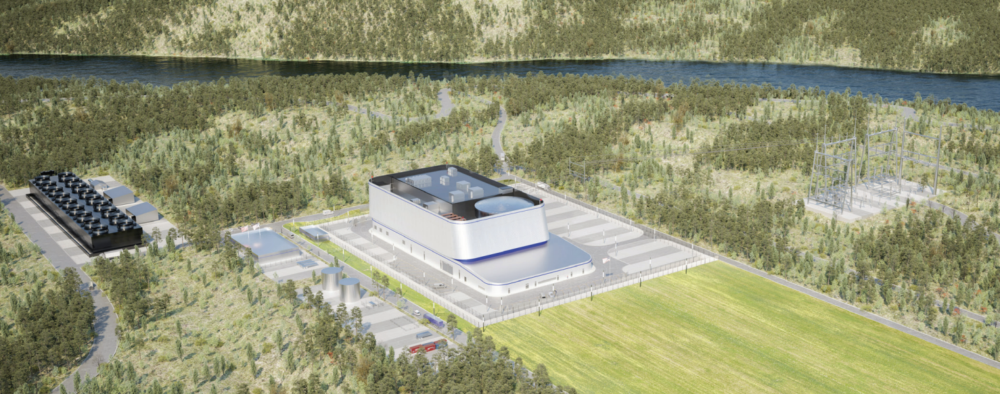
Nuward’s SMR project dates back to 2019. France’s Alternative Energies and Atomic Energy Commission, EDF, Naval Group and TechnicAtome created the concept. The team designed a 340-megawatt plant that uses two 170-megawatt pressurised water reactors. They built the design on France’s decades of experience with PWR technology. The partners intended the system to replace ageing coal, gas and oil plants that produce high carbon emissions. They also promoted the design for industrial heat, hydrogen production, district heating and desalination.
Nuward originally planned to begin detailed design work and submit a formal application for a new nuclear facility in 2026. The company expected first concrete in 2030. It estimated the first unit’s construction would take about three years.
However, the company reviewed customer feedback in 2024. Several potential buyers expressed interest in a design built on proven components with fewer novel features. As a result, EDF said the project would shift toward a more standardised approach. That change aimed to improve predictability for budgets and schedules. It also aimed to make the plant more acceptable to regulators who often prefer established technologies.
Read more: Cameco, Brookfield, and Westinghouse ink partnership with U.S. for new reactors
Read more: UK nuclear site set for revival as fusion fuel and medical isotope hub
Cooperation over SMRs may allow countries to reduce effort
In early 2025, Nuward said recent studies helped refine the company’s goals. The team announced a revised design that would deliver 400 megawatts of power. Nuward added an option for up to 100 megawatts of thermal output for co-generation. Additionally, the company said the updated concept uses existing building blocks familiar to the nuclear industry. That approach, they said, will support safety reviews and meet the needs of utilities evaluating new options.
Nuward now plans to finish the conceptual design by mid-2026. It intends to market the product in the 2030s and still expects the first unit to be built in France. The company said it wants the design to serve multiple markets that seek compact, flexible reactors.
Regulators involved in the joint review said the project offered them useful experience with early SMR assessments. They said continued cooperation may allow countries to reduce duplicated effort. Furthermore, aligned expectations may reduce the burden on reactor developers.
Although each country will keep its independent authority, the six regulators said shared learning can make national processes more efficient. They added that early international cooperation reduces the risk of late findings that could slow a project. Also, they noted that a consistent approach across borders gives vendors a clearer understanding of European expectations.
The second-phase report suggests that early, multilateral discussions can help resolve issues before they become obstacles. It also says the process may create new opportunities for harmonisation. The regulators emphasised that the effort did not replace national licensing. Rather, it prepared the ground for smoother reviews when formal applications arrive.
.