IonQ enters DARPA Stage C under agreement worth up to US$300M
Funding beyond the undisclosed initial obligation depends on future appropriations as DARPA tests IonQ systems through 2029.
 Julian Okafor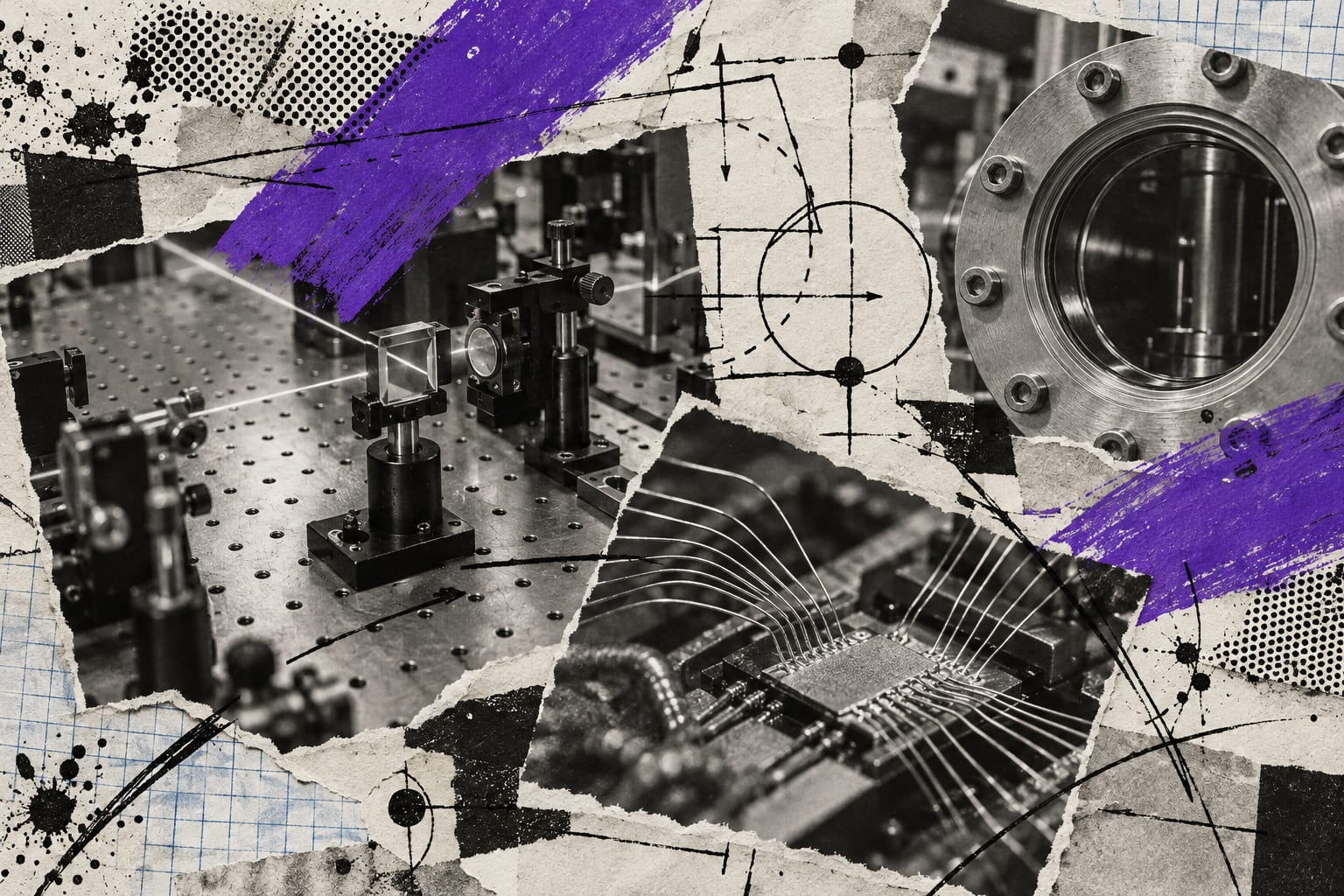
An agreement capped at US$300 million has put a federal price tag on quantum validation without revealing how much work has been funded. IonQ, Inc. NYSEIONQ, the College Park, Maryland, developer of quantum computing systems, said on Oct. 7 it signed a Stage C agreement with the Defense Advanced Research Projects Agency (DARPA), the U.S. defence research agency. Its announcement says the agency will test generations of IonQ systems through 2029.
IonQ shares were lower at US$40.45 at 10:53 a.m. EDT on Oct. 8 in New York, according to the NYSEIONQ quotation.
The company says funding beyond the initial obligation depends on future appropriations and DARPA funding actions. It gives no dollar amount for that first obligation or a schedule for later commitments. The US$300 million figure is the agreement's potential ceiling, so the Oct. 7 release cannot establish how much of it is funded now.
DARPA describes Stage C as work with the government to verify that a proposed quantum computer can be built as designed and operated as intended. Its wider program asks whether any approach can reach utility scale by 2033, meaning its computational value exceeds its cost. Entering the stage starts that examination; it does not report a successful utility-scale test.
The Funded First Tranche Remains Undisclosed
IonQ reached Stage B in November 2025, after a Stage A concept review. Stage B called for a research and development plan, technical requirements, designs and risk controls. The new agreement moves that roadmap into independent verification, but its published value is contingent on agency decisions after the first, undisclosed obligation.
"Advancing to Stage C is a significant vote of confidence in IonQ's technology roadmap and architecture for delivering quantum computing at utility scale," IonQ chairman and chief executive Niccolo de Masi said in the Oct. 7 release.
The release calls Superion 256 IonQ's sixth-generation quantum computer and says multiple Superion generations will enter DARPA's process. It gives no independent Stage C performance result for that system. Nor does it specify the number of systems DARPA will examine, a price per system or the date of the first handoff.
Those missing terms limit what holders can infer from the ceiling. A maximum program value does not reveal how much DARPA has committed to hardware, software or testing in the current funding period. IonQ also has not set out a milestone-payment table in its Oct. 7 announcement, leaving the pace of cash receipts and revenue recognition unquantified there.
Stage C Tests IonQ's Roadmap Through 2029
DARPA's March 10 program update said it had evaluated approaches from 20 commercial companies and advanced 11 organizations to Stage B. Two performers from an earlier pilot had reached Stage C at that point. The agency's managing director for the Quantum Benchmarking Initiative, Micah Stoutimore, said it remained unclear which team or teams would build a utility-scale machine by 2033.
Stoutimore had served as the initiative's deputy program manager since its inception, according to DARPA. His caution sets a limit on IonQ's description of Stage C as a vote of confidence: selection brings closer scrutiny, while the question of which architecture works remains open. DARPA says its initiative assesses all viable approaches for which funding is available, rather than choosing one winner.
IonQ says DARPA will test its scalable hardware and software against the company's technical roadmap through 2029. The release does not identify a first test date or an interim decision deadline.
PsiQuantum Has a Separate Stage C Award
PsiQuantum, a Palo Alto developer of quantum computers, said on July 22, 2026 that it signed a US$125 million expanded agreement with DARPA for Stage C testing. It described that award as performance-based and said it covered hardware designs, components, system performance and software. Its separate award shows that Stage C includes funded evaluation work, but its terms do not establish IonQ's initial obligation.
PsiQuantum's announcement also identified a US$31.8 million agreement from September 2025 for on-site testing and evaluation. The later US$125 million tasking expanded the scope, according to PsiQuantum. Those dated amounts are disclosures about PsiQuantum's own work; IonQ has not supplied comparable funded amounts for its Oct. 7 agreement.
A distinction between a proposed headline figure and work already delivered also runs through Mugglehead's Oct. 6 coverage of potential Finnish power. For IonQ, the missing figure is the first DARPA obligation. Without it, the size of the funded contract cannot be compared with the US$300 million ceiling.
Read more: Applied Digital Corporation signs Finnish deal for up to 1GW of potential power
IonQ says Stage C will continue through 2029, when DARPA's independent verification is due to have tested multiple Superion generations. Its Oct. 7 announcement gives no earlier dated handoff or payment milestone, so that program horizon is the next published timetable against which the company's validation claim can be checked.