BTQ Technologies targets 2027 chip beta alongside first recurring deal
The Kaia agreement ties revenue to secured transactions, while Bitcoin Quantum targets a first-half 2027 mainnet launch.
 Julian Okafor
A three-year transaction-fee agreement is giving a quantum-security developer a recurring commercial model while its chip business works toward a 2027 beta. BTQ Technologies Corp. NASDAQBTQ, a Vancouver quantum-security hardware and software developer also listed on Cboe Canada, reported more than 100,000 transactions on its QSSN mainnet.
The company's Nov. 17 corporate update also reports a paid proof of concept with an unnamed major French bank. Its QCIM security-chip business expects a beta version of its application-specific integrated-circuit intellectual property in the first quarter of 2027.
BTQ's U.S. shares fell to US$1.31 at the Nov. 16 Nasdaq close, timestamped 4 p.m. EST by Google Finance's NASDAQBTQ snapshot. That close preceded Tuesday's update and cannot establish a market reaction to it.
The fee-sharing agreement was first announced on Sept. 30, when BTQ forecast six-figure first-year revenue in U.S. dollars. The company described that amount as an expectation, with revenue over the three-year term tied directly to transaction volume.
Fees Depend On Secured Transactions
Kaia DLT Foundation, which supports the Kaia blockchain ecosystem, is the counterparty to the agreement. BTQ receives a portion of transaction fees generated by QSSN-secured activity, giving it an economic interest in usage beyond an initial integration.
The Nov. 17 update pairs the mainnet transaction milestone with plans to deploy QSSN on Kaia. The Sept. 30 agreement defines the revenue-generating activity as QSSN-secured transactions, so network activity and the first-year revenue forecast describe different measures.
"QSSN secured its first recurring commercial deployment through our three-year agreement with the Kaia DLT Foundation," BTQ chief executive Olivier Roussy Newton said in the Nov. 17 release.
The blockchain roadmap also includes Bitcoin Quantum, which BTQ describes as a fork of Bitcoin secured by ML-DSA signatures. The project advanced to external audit after completing its internal audit, with mainnet targeted for the first half of 2027 and exchange and custody integrations for the second half.
Chip Validation Precedes The 2027 Beta
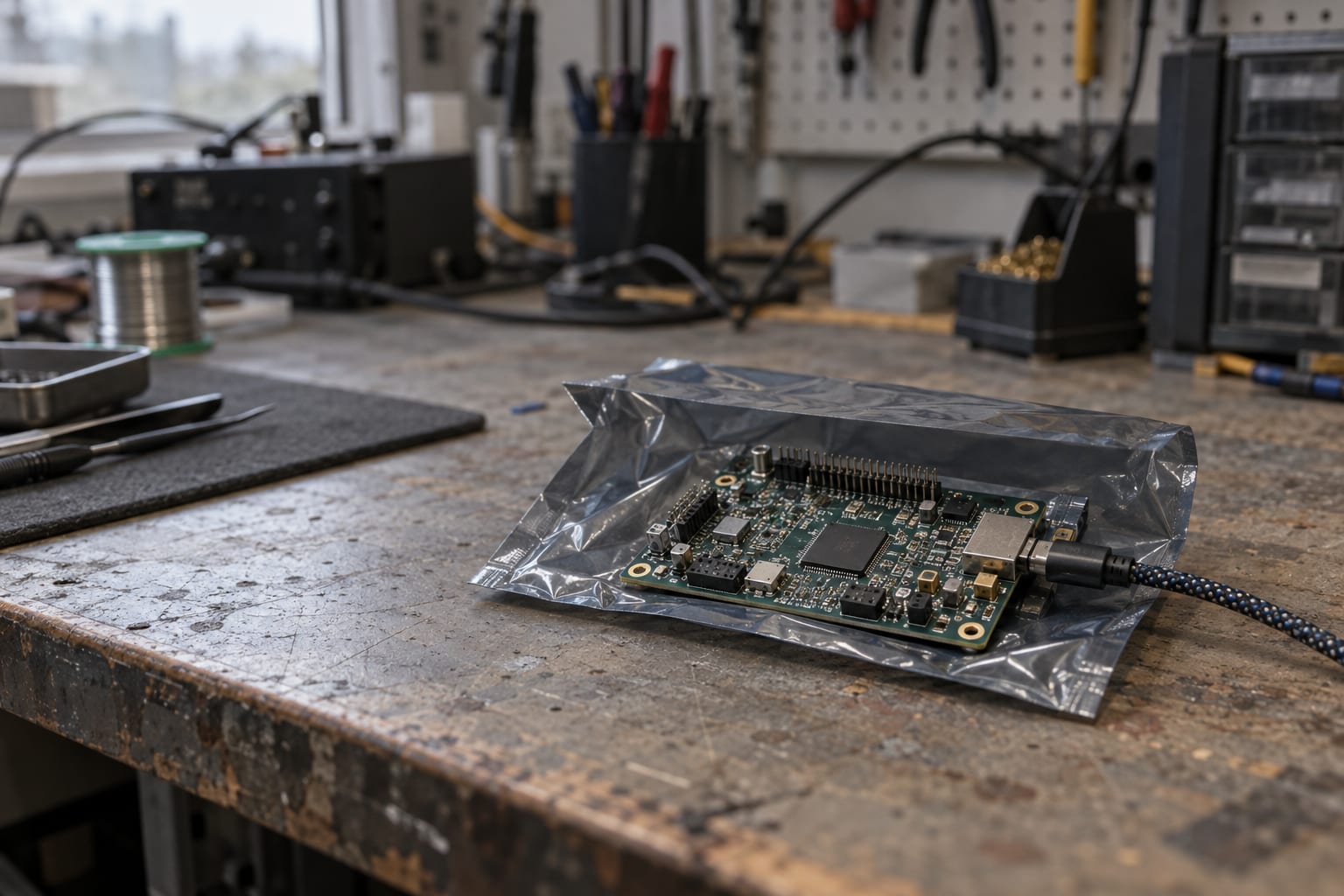
BTQ reports that QCIM completed its security-chip design and validated its core in a 28-nanometre design environment. The stated result concerns design validation, while the commercial roadmap still calls for an initial field-programmable gate-array IP release and the ASIC IP beta.
The Nov. 17 update identifies defence, space and critical infrastructure as potential commercialization markets. Its first-quarter 2027 beta target is a development milestone, distinct from an announcement that finished chips have shipped to customers.
The broader adoption constraint is the complexity of replacing cryptography across existing systems. In NIST's Oct. 27 migration guidance, mathematician Dustin Moody, who heads the U.S. agency's post-quantum cryptography standardization project, cautioned that one migration strategy does not fit every use case.
NIST says organizations must account for their entire cryptographic supply chain when planning the transition. Its guidance identifies migration deadlines for federal high-value assets and high-impact systems of 2030 for key establishment and 2031 for digital signatures, giving suppliers a schedule that extends beyond a chip beta.
QPerfect Has A Year-End Software Target
QPerfect, the quantum-emulation business BTQ acquired on July 7, supplies another route to commercial deployment. BTQ says its MIMIQ software entered production on a South Korean commercial quantum cloud and launched an on-premises offering for regulated and sovereign customers.
After the September quarter, MIMIQ became available through a managed developer interface serving more than 35,000 quantum developers, according to the Nov. 17 update. That distribution figure describes access to the software; the separately disclosed paid bank proof of concept is a customer engagement.
The distinction between commercial activity and recognized sales also runs through Mugglehead's earlier coverage of quantum-sector bookings. D-Wave Quantum Inc. NASDAQQBTS, which sells quantum computers and cloud access, reported on Nov. 10 third-quarter revenue of US$4.5 million and bookings of US$1.9 million.
Read more: D-Wave Quantum reports US$4.5M revenue as quarterly bookings fall
D-Wave's shares closed at US$8.67 on Nasdaq at 4 p.m. EST on Nov. 16, according to Google Finance's NASDAQQBTS snapshot. Its results provide a dated comparison for commercial quantum activity, although its hardware and cloud businesses differ from BTQ's fee-sharing security model.
For BTQ, the nearest stated software milestone is QPerfect's first aQCess-specific Digital Twin release, targeted for year-end 2026. A cloud-accessible version is targeted for mid-2027, putting the first delivery test at the end of December.