HeartBeam reports higher ECG specificity in 132‑patient heart attack pilot
Sensitivity was slightly lower than standard ECGs; a U.S. pivotal study is planned for the first quarter of 2027.
 Adrian Kessler
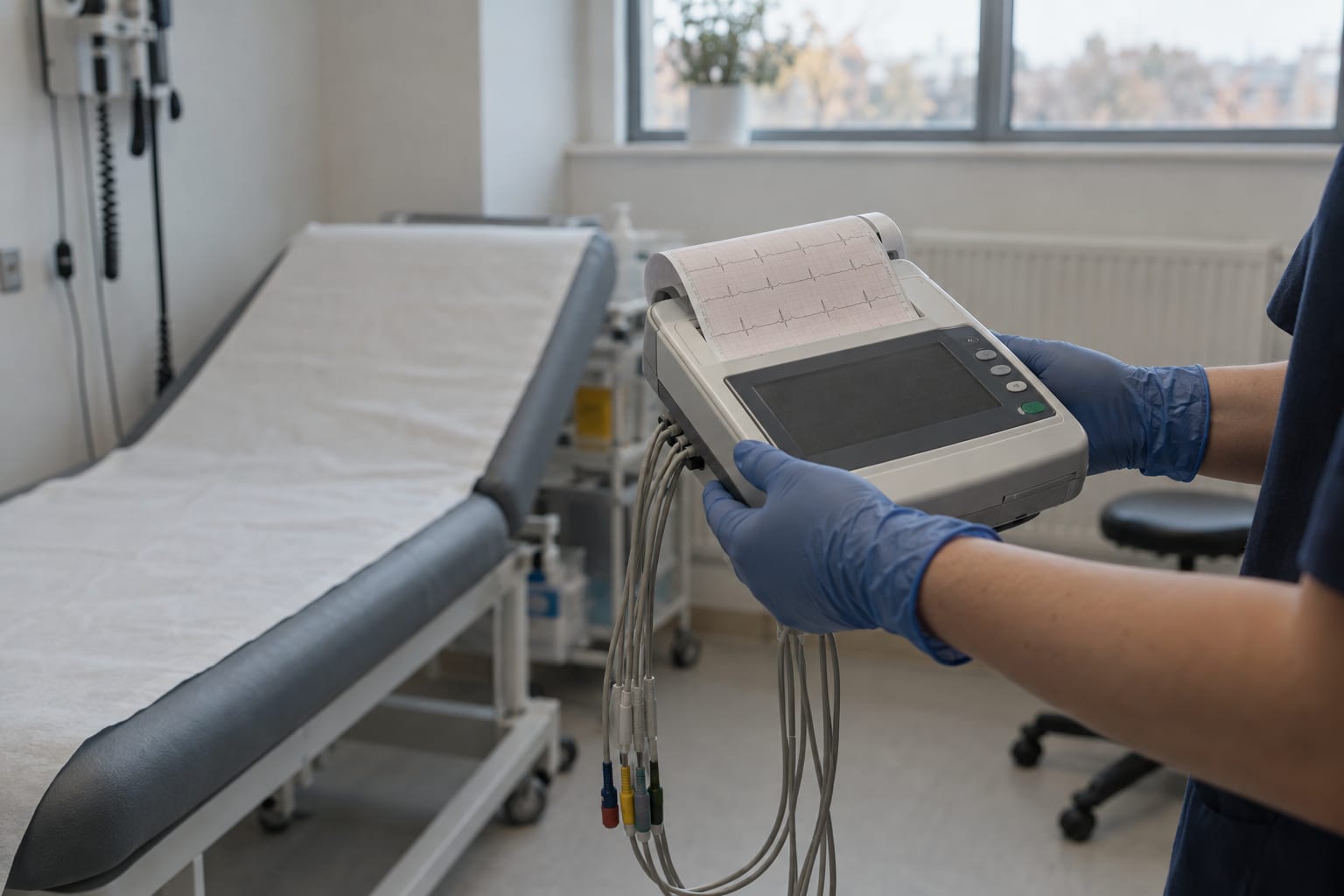
A patient-recorded ECG achieved higher specificity but slightly lower sensitivity than a standard recording as HeartBeam, Inc. NASDAQBEAT reported pilot results on Monday. The 132-adult study will inform a U.S. pivotal trial planned for the first quarter of 2027.
The company's Nov. 2 release compared its portable system with a standard 12-lead electrocardiogram for assessing acute coronary syndrome, which includes heart attacks. Heart attack assessment remains investigational; the system's existing FDA clearances cover arrhythmia assessment.
HeartBeam is a small medical-device company in Santa Clara, Calif., developing portable systems for recording the heart's electrical activity. Its cable-free device captures electrical signals in three dimensions for physician review.
Before Monday's announcement, HeartBeam closed at US$0.55 on Nasdaq on Oct. 30 at 4 p.m. EDT, according to NASDAQBEAT. That quotation predates the pilot results and establishes no share reaction to them.
Supervised Recordings Leave Home Use Untested
ALIGN-ACS enrolled adults at two cardiology centres' emergency departments in Belgrade, Serbia. Each patient underwent both recordings, so the comparison used the same patients rather than separate treatment and control arms.
Eight cardiologists, blinded to the patients' diagnoses, independently interpreted the recordings. Their assessments were checked against final diagnoses determined by an independent panel of three cardiologists using all available clinical information.
Specificity was 81.8 per cent for HeartBeam, against 71.4 per cent for the standard ECG. Sensitivity was 60.2 per cent, compared with 63.0 per cent for the standard recording.
For ST-elevation myocardial infarction, a heart attack subgroup, sensitivity was 82.9 per cent with HeartBeam and 83.8 per cent with the standard ECG. The release supplied no confidence intervals or p values and did not identify a prespecified primary endpoint.
All patients successfully recorded their own ECGs without prior training, but did so under clinical supervision. The results therefore establish supervised recording feasibility; the announcement reported neither home-use outcomes nor adverse-event findings.
"In the ALIGN-ACS pilot study, patients were able to record their own ECGs with the HeartBeam device under clinical supervision," University of Washington physician Graham Nichol said in the release.
The company said its heart attack assessment technology has received FDA Breakthrough Device Designation. The announcement did not report FDA agreement on a pivotal protocol, and the designation does not change the investigational status of this use.
Read more: Teleflex gains FDA breakthrough designation for Freesolve coronary scaffold
Pivotal Study Follows Commercial Refocus
The results follow HeartBeam's Sept. 21 decision to redirect most financial and human resources toward heart attack detection. Management said it would continue limited commercialization of its cleared arrhythmia product without building a large commercial organization.
That separates the existing product's commercial rollout from the clinical and regulatory work needed for a heart attack indication. HeartBeam also intends to pursue a partner to commercialize its extended-wear ECG patch while advancing that product toward clearance.
Read more: electroCore seeks FDA clearance for Quell in chemotherapy neuropathy
A larger cardiac-monitoring peer, iRhythm Holdings, Inc. NASDAQIRTC, reported second-quarter revenue of US$224.2 million in its Aug. 6 results. Its wearable biosensors and cloud-based analytics illustrate the established monitoring business alongside HeartBeam's investigational heart attack program; this pilot did not compare their products.
For sector context, the iShares U.S. Medical Devices ETF NYSEARCAIHI was quoted at US$54.59 on Oct. 30 at 8 p.m. EDT.
HeartBeam's Aug. 13 financial update reported US$8.7 million in cash and equivalents at June 30. Second-quarter operating cash use was US$3.3 million; Monday's clinical announcement supplied no updated cash balance or dated cash-runway estimate.
The next scheduled development step is the U.S. pivotal study planned to begin in the first quarter of 2027. HeartBeam says a successful study would support a future FDA submission seeking to add heart attack assessment to the system's indication.