Teleflex gains FDA breakthrough designation for Freesolve coronary scaffold
A 1,859-patient pivotal trial will compare the resorbable implant with Xience, with primary completion estimated for June 2029.
 Adrian Kessler
An expedited development pathway has opened for a resorbable coronary scaffold after Teleflex Incorporated NYSETFX announced FDA Breakthrough Device designation for Freesolve on Thursday. The device remains investigational in the United States while an ongoing pivotal trial targets 1,859 patients.
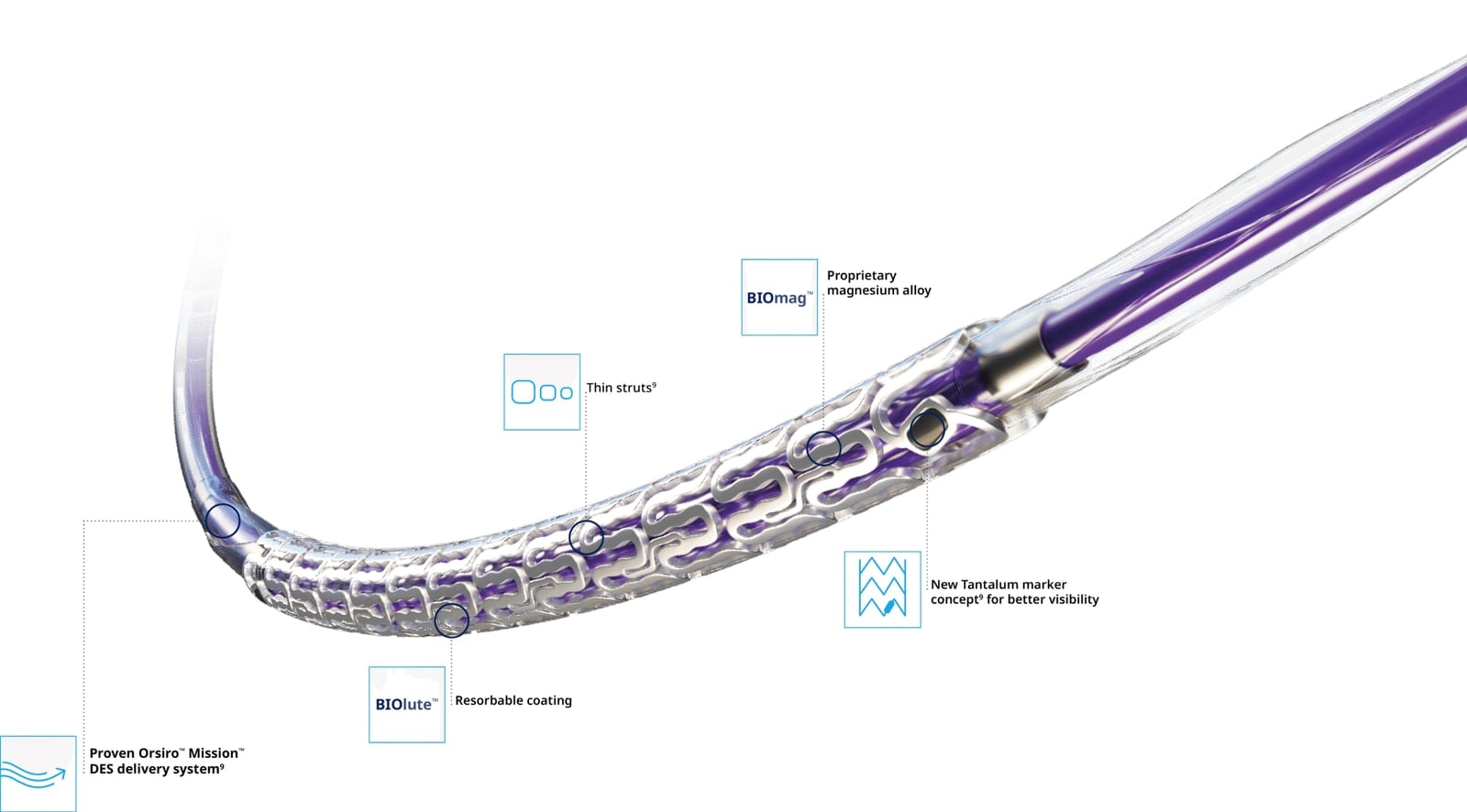
The Oct. 22 release says the designation covers percutaneous coronary intervention, the catheter-based treatment of narrowed coronary arteries. Freesolve provides temporary vessel support using a magnesium scaffold and bioabsorbable coating, with the company reporting 99 per cent magnesium resorption at 12 months.
Teleflex is a diversified medical-device supplier based in Pennsylvania, serving healthcare markets worldwide with products spanning vascular access, surgery and interventional cardiology.
Shares NYSETFX closed at US$130.40 in New York at 4:00 p.m. EDT on Oct. 21, before the designation announcement.
The FDA describes its breakthrough program as a way to speed development, assessment and review through closer interaction with agency experts and prioritized submission review. Devices must still meet its safety and effectiveness standards before receiving marketing authorization.
Freesolve is already CE marked and commercially available in several international markets, according to Teleflex. Its separate below-the-knee scaffold received breakthrough designation in 2024 for chronic limb-threatening ischemia; Thursday's announcement concerns coronary intervention.
Read more: HeartBeam receives FDA breakthrough status for heart attack assessment
"This designation recognizes the potential of resorbable scaffolds to address an important unmet clinical need in contemporary coronary intervention," said David E. Kandzari, United States national principal investigator for BIOMAG-III, in the release.
Teleflex identifies Kandzari as a paid consultant. The company says the pivotal trial is intended to support a future FDA premarket approval application, but its announcement gives no filing date.
A Randomized Test Against Xience
The control device is Xience, the everolimus-eluting coronary stent system from Abbott Laboratories NYSEABT. That places an established coronary-device supplier directly inside the comparison that will test Teleflex's temporary scaffold.
The BIOMAG-III protocol record, whose latest update was posted Aug. 31, describes a randomized, participant-blinded, non-inferiority study assigning patients to Freesolve or Xience in a two-to-one ratio. Its primary endpoint is target lesion failure at 12 months, combining cardiac death, heart attack involving the treated vessel and clinically driven repeat treatment of the target lesion.
The design also follows patients for five years and measures scaffold or stent thrombosis. Those longer observations extend the comparison beyond the period when Teleflex says most magnesium has resorbed.
Early Findings Lack A Randomized Control
The BIOMAG-I protocol record records 116 participants in a single-arm first-in-human study. Teleflex's Oct. 22 release reports a Kaplan-Meier target lesion failure estimate of 3.5 per cent at four years, without giving the number assessed at that visit.
The company reports no new clinical events between years two and four, but the release supplies no detailed adverse-event table or confidence interval. Without a randomized control, that estimate cannot establish superiority over Xience.
The resorption claim also has a qualification: Teleflex's product information says the scaffold's markers are not resorbable. The technology therefore aims to remove the magnesium support structure while leaving those markers.
For sector context, the iShares U.S. Medical Devices ETF NYSEARCAIHI traded at US$54.25 at 9:42 a.m. EDT on Oct. 21. That observation also predates Teleflex's announcement and provides no measure of its reception.
Read more: Edwards Lifesciences wins FDA approval for PASCAL tricuspid repair
BIOMAG-III's registry estimates primary completion in June 2029, when collection for its main endpoint would finish. The comparative findings are intended to support a future FDA approval application; designation alone does not decide whether Freesolve can be sold in the United States.