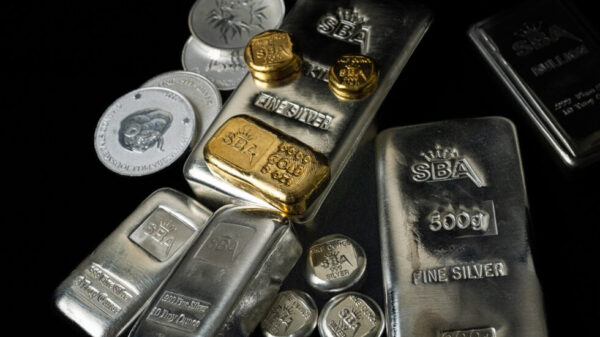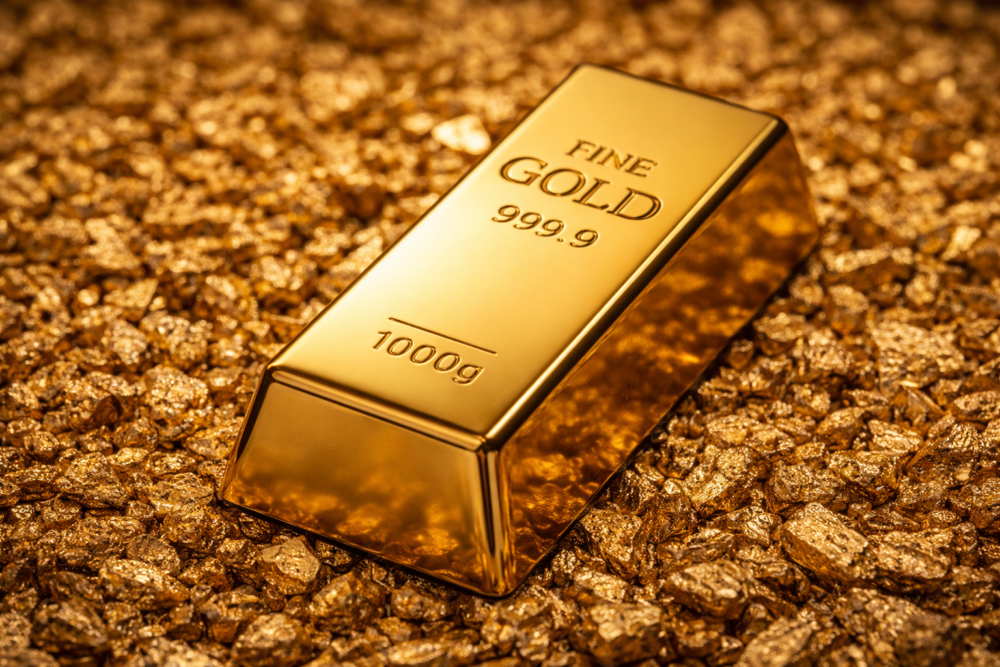

Precious metals opened the first trading session of the New Year by extending the powerful rally built through 2025, as investors continued to favour hard assets.
Gold prices rose as geopolitical tension and expectations of U.S. interest rate cuts reinforced demand.
Spot gold climbed 0.5 per cent to USD$4,335.50 per ounce by late morning New York time. Earlier in the session, prices briefly reached USD$4,402.06 before easing. Furthermore, gold set a record high of USD$4,549.71 per ounce on December 26. It ended 2025 with gains of about 64 per cent.
U.S. February gold futures added 0.1 per cent to USD$4,346.20 per ounce. Additionally, futures positioning suggested investors remain confident in bullion’s near-term support.
Market participants focused heavily on interest rate expectations.
Analysts at TD Securities, a unit of Toronto-Dominion Bank (TD), pointed to growing conviction around Federal Reserve easing. Accordingly, lower rates tend to reduce the appeal of yield-based assets and lift gold demand. Markets currently price in at least two quarter-point U.S. rate cuts this year. As a result, non-yielding assets such as gold appear more attractive to investors.
Geopolitical risk also continued to shape sentiment.
Additionally, unrest in Iran and ongoing conflict in Gaza supported safe-haven buying. Meanwhile, the lack of a Russia–Ukraine peace deal sustained broader uncertainty.
Technical factors also played a role. Jim Wyckoff of Kitco Metals said February gold futures remain in a strong upward trend. However, he noted that prices face resistance near recent record levels.
Read more: NevGold expands Limo Butte footprint by staking 90 promising antimony-gold claims
Read more: NevGold expands high-grade antimony discovery at Nevada’s Limousine Butte Project
Silver and platinum among chief performers in 2025
Physical markets showed early signs of recovery.
For the first time in roughly two months, gold traded at a premium in India and China. Additionally, those premiums suggested improving local demand after recent softness.
Silver posted even stronger gains. Spot silver jumped 2.3 per cent to USD$72.90 per ounce. Earlier in the week, prices touched an all-time high of USD$83.62. Platinum also rallied sharply. Prices rose 3.7 per cent to USD$2,130.55 per ounce. Earlier, platinum reached a record of USD$2,478.50.
Palladium lagged its peers but still advanced. It gained 1 per cent to USD$1,621.75 per ounce. However, palladium still finished 2025 up 76 per cent, marking its strongest year in 15 years. In addition, silver and platinum outperformed gold last year. Silver surged more than 147 per cent during 2025. Platinum climbed roughly 127 per cent over the same period.
Analysts linked silver’s rally to several structural factors. Additionally, its classification as a critical U.S. mineral boosted investor interest. Tight supply and low inventories further supported prices. Despite the strong start to January, short-term momentum softened. Consequently, all major precious metals were still set for weekly losses following the year-end rally. The broader performance of 2025 remained historic. Gold and silver delivered some of their strongest annual returns in more than four decades.
According to ETWealth, gold alone rose 74.5 per cent over the year. Prices stayed firm even as equity markets remained relatively stable. Additionally, inflation stayed manageable for much of the year. Instead, investors focused on geopolitical risks, tariffs, and rising government borrowing.
Read more: NevGold surges after closing C$10M financing deal
Read more: NevGold edges closer to gold-antimony resource with latest Limousine Butte results
Regulatory scrutiny slowed digital gold demand
Uncertainty around the long-term interest rate path also influenced demand. Furthermore, concerns about fiscal sustainability encouraged defensive positioning. Exchange-traded funds provided a clear view of investor behaviour.
During several periods in 2025, gold and silver ETFs traded above indicative net asset value. However, those premiums later eased as supply adjusted. Indian investment demand strengthened steadily.
Vikram Dhawan of Nippon India Mutual Fund, operated by Nippon Life India Asset Management pointed to rising ETF exposure. Additionally, investors favoured ETFs for liquidity, transparency, and regulation.
Digital gold also gained traction. As physical prices climbed, retail investors turned to small online purchases. These products allowed exposure without storage or purity concerns.
However, regulatory scrutiny slowed digital gold demand late in the year. Consequently, momentum faded as oversight increased. Jewellery demand struggled more visibly. Persistently high prices reduced affordability across key markets. As a result, jewellery volumes in India dropped sharply.
Looking ahead, some analysts urged caution.
Naveen Mathur of Anand Rathi Share and Stock Brokers warned inflation risks may be overstated. Additionally, stronger inflation in 2026 could limit rate cuts and strengthen the U.S. dollar. Such a shift could increase volatility across precious metals. Meanwhile, Dhawan said gold and silver remain effective long-term assets. However, he cautioned that short-term swings, particularly in silver, can be severe.
Rising gold prices are reshaping global gold production incentives, particularly for mid-tier and large-scale miners. Higher realized prices improve margins, even as input costs remain elevated. Additionally, projects previously considered marginal now appear economically viable.
Read more: NevGold delivers major growth at Idaho gold project
Read more: GoldMining chooses to retain its NevGold shares for next 18 months
Geopolitical risk affects jurisdictions unevenly
Producers are likely to accelerate development timelines and revisit shelved deposits. In addition, exploration budgets may expand as companies chase reserve replacement. Stronger cash flow also improves balance sheets and reduces reliance on external financing.
However, production growth is unlikely to surge immediately.
Long permitting timelines, labour constraints, and equipment shortages continue to limit output.
Furthermore, geopolitical risk affects jurisdictions unevenly, influencing where capital is deployed.
Established producers in stable regions stand to benefit first. Meanwhile, higher prices may encourage governments to reassess royalties and mining taxes. Higher gold prices could benefit producers of all sizes, particularly those positioned to expand output or develop new deposits.
NevGold Corp (CVE: NAU) (OTCMKTS: NAUFF) (FRA: 5E50) stands to gain in Nevada, where its low-cost operations and nearby infrastructure can turn rising prices into accelerated production. Newmont Corporation (TSE: NGT) (NYSE: NEM) (FRA: NMM), one of the world’s largest gold miners, may use stronger cash flow to fund expansions and reduce debt, making more projects profitable.
Additionally, Agnico Eagle Mines Ltd (TSE: AEM) (NYSE: AEM) (FRA: AE9) could increase exploration spending and bring advanced stage deposits into production. Exploration juniors with promising districts may attract capital more easily as gold prices stay elevated. Furthermore, companies with robust balance sheets can negotiate better terms for equipment and services.
Mid-tier producers might boost dividends or share repurchases on higher margins. Conversely, firms in high-cost jurisdictions may face pressure to optimize operations. Governments could adjust royalty regimes in response to windfall pricing. Overall, sustained price strength supports production growth across the sector.
.
NevGold Corp is a sponsor of Mugglehead news coverage
.