
Duke Energy Florida unveiled a hydrogen-based power system in Volusia County on Wednesday that it says is the first U.S. project capable of producing, storing, and combusting up to 100 per cent green hydrogen using a single, end-to-end setup.
The DeBary Hydrogen Production Storage System pairs solar power, hydrogen storage, and a modified gas turbine to deliver electricity during periods of peak demand. Additionally, the demonstration is designed to show how hydrogen can support grid reliability while allowing more renewable energy onto the system.
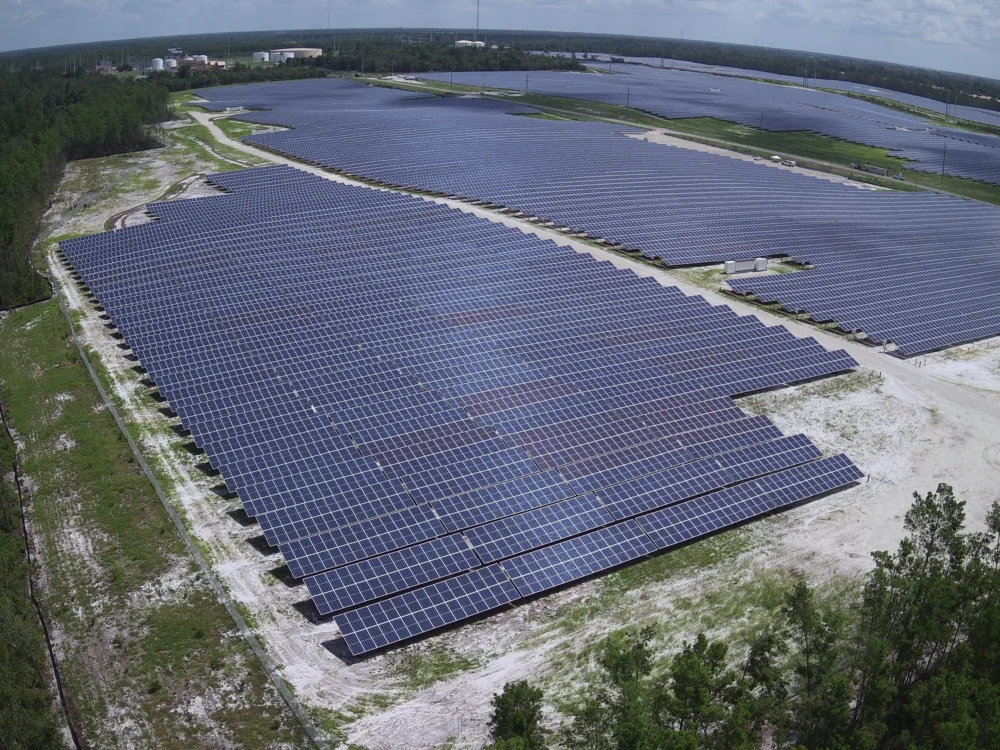
The project is located at Duke Energy Florida’s existing DeBary solar site, where sunlight provides the electricity needed to run two electrolyzer units. The company operates as a subsidiary of Duke Energy (NYSE: DUK), one of the largest electric utilities in the United States.
These electrolyzers split water molecules into hydrogen and oxygen using electricity rather than heat or fossil fuels. Subsequently, the system spits oxygen is into the air and captures hydrogen for later use.
Users can then store hydrogen in reinforced containers engineered to meet strict safety standards. Meanwhile, the stored fuel remains on site until electricity demand rises, often during hot afternoons or unexpected surges.
At that point, the hydrogen is fed into an upgraded combustion turbine.
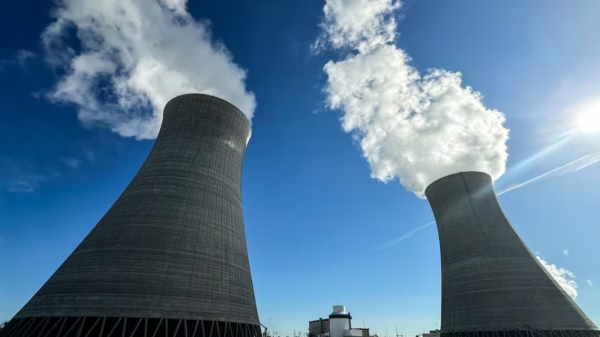
The turbine has been modified using technology from GE Vernova (NYSE: GEV) to operate on natural gas, hydrogen blends, or entirely on hydrogen. Consequently, the turbine can generate electricity without relying solely on fossil fuels. The company can also turn the system on and off quickly, which helps operators respond to changing grid conditions.
Read more: Plug Power brings green hydrogen production to Namibia
Read more: Bill Gates-backed hydrogen startup cuts workforce as commercial plans stall
Green hydrogen comes from renewable sources
Company executives say the project demonstrates how existing power plants can evolve rather than be replaced. In addition, they argue that flexible generation becomes more important as solar and other intermittent resources grow. Solar power produces electricity only when the sun shines, while customer demand continues around the clock.
Hydrogen addresses that gap because it stores energy rather than generating it directly. Processes convert electricity from solar panels into hydrogen, which users can convert back into electricity when needed.
Hydrogen as we understand it is made of two hydrogen atoms. Users burn it to produce heat or use it in fuel cells to generate electricity. However, not all hydrogen is produced in the same way, and those differences matter for emissions.
Green hydrogen comes from using renewable sources like solar or wind to splitting water with electricity. It produces no carbon dioxide because it doesn’t use fossil fuels. That’s the defining point for green hydrogen.
Most hydrogen sources today technically use grey hydrogen produced from natural gas. It releases carbon dioxide directly into the atmosphere during production. Blue hydrogen also starts with natural gas, but it attempts to capture some emissions.
However, carbon capture does not remove all emissions and adds cost and complexity. Conversely, green hydrogen avoids those emissions entirely by relying on clean electricity. That makes it attractive for power generation, heavy industry, and long-term energy storage.
Read more: Energy Fuels raises uranium sales outlook as nuclear stocks cool
Read more: The year 2025 in review: A Mugglehead roundup
Project balances innovation with reliability
DeBary uses hydrogen to specifically to fuel a combustion turbine that already exists. This approach allows utilities to reuse infrastructure while lowering emissions over time. Additionally, it reduces exposure to fuel price volatility because sunlight replaces some fuel purchases.
Duke Energy Florida leaders describe the project as a way to balance innovation with reliability. They emphasize that a mix of generation sources keeps the grid stable as demand grows. The company intends to use the hydrogen system to support customers rather than disrupt service.
Across Florida, Duke Energy Florida owns roughly 12,300 megawatts of generation capacity. It supplies electricity to about two million residential, commercial, and industrial customers.
The DeBary project is a demonstration rather than a full-scale rollout. However, utilities across the country are watching closely. If the system performs as expected, similar projects could follow in other regions.
Hydrogen remains expensive compared with natural gas today. Nevertheless, costs could fall as electrolyzers scale up and renewable power expands. Meanwhile, projects like DeBary offer a real-world test of how hydrogen fits into the modern grid.
.