
Coinbase Global Inc. (NASDAQ: COIN) is warning US lawmakers that it may withdraw political support for a major crypto market-structure bill if proposed limits on stablecoin rewards go too far.
The largest US crypto exchange, Coinbase sees customer rewards tied to stablecoin balances as a core part of its business model. However, people familiar with the company’s thinking say that model could be threatened by language being debated ahead of a bill expected to be unveiled Monday.
Lawmakers are preparing to mark up the legislation in at least one Senate committee on Thursday. Meanwhile, industry participants say the most contentious issue is whether platforms like Coinbase can continue offering incentives to customers who hold stablecoins.
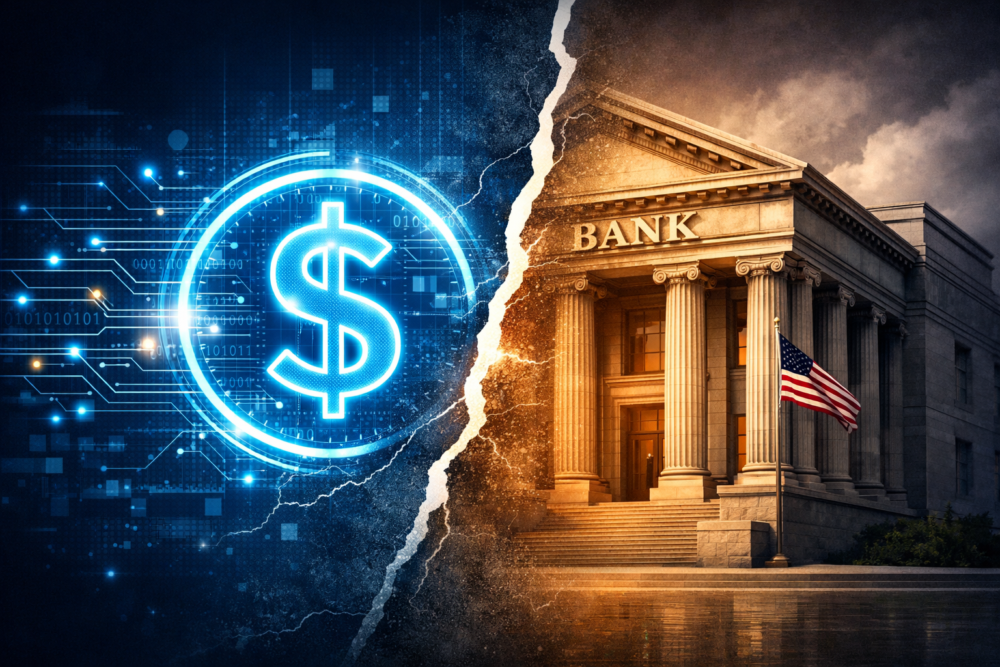
According to those discussions, some policymakers want to limit rewards to regulated financial institutions only. That approach is backed by parts of the US banking industry. Banks argue that yield-bearing stablecoin accounts could pull deposits out of traditional lenders.
Coinbase has applied for a national trust charter, which could eventually allow it to offer rewards under stricter rules. However, the company and other crypto-native firms are pushing back. They argue that rewards should remain legal even for platforms without bank-style charters.
Executives warn that broader restrictions could distort competition across the digital asset sector. Additionally, they argue that limiting rewards to banks would favor incumbents while freezing out newer technology firms.
The pressure campaign carries weight because the crypto industry has become a major political spender. During the 2023–2024 election cycle, crypto firms collectively ranked as the largest corporate donors. Coinbase alone donated USD$1 million to Donald Trump’s presidential inauguration.
Read more: Quantum computing revives debate over Bitcoin’s long-term security
Read more: Goldman Sachs flags policy momentum as turning point for digital assets
Coinbase owns a small equity stake in Circle
Additionally, Coinbase is among the companies contributing funds toward a proposed White House ballroom championed by the president. Industry observers say that political spending has helped the sector gain faster access to lawmakers.
For Coinbase, the stakes are financial as well as regulatory. Stablecoin-related revenue has become increasingly important, especially during slower trading periods.
Coinbase shares interest income generated from the reserves backing the USDC stablecoin with Circle Internet Group Inc. (NYSE: CRCL), the token’s issuer. USDC balances held on Coinbase provide a steady income stream when market volatility declines.
Furthermore, Coinbase owns a small equity stake in Circle. Circle is currently the largest stablecoin issuer operating in compliance with a US law passed in July. Coinbase encourages customers to hold USDC by offering rewards on certain balances. For example, users holding USDC through Coinbase One can earn about 3.5 per cent in rewards.
However, if the new market-structure bill bans that incentive, fewer users may keep stablecoins on the platform. Consequently, Coinbase’s stablecoin revenue could fall. Bloomberg data projects that Coinbase’s stablecoin-related revenue could have reached about USD$1.3 billion in 2025. That figure could come under pressure if rewards are restricted.
Still, the exact impact remains uncertain. Much depends on how lawmakers define rewards and which entities can legally offer them. What is clear is that some form of rewards language will likely be added to the bill. People familiar with the negotiations say lawmakers now view the issue as unavoidable.
The debate follows the passage of the GENIUS Act earlier this year. That law created the first federal regulatory framework for stablecoin issuers.
Read more: Ghana’s crypto green light meets real-world Bitcoin adoption
Read more: Ripple gains regulatory clearance to boost crypto payments in Singapore
Odds of bill passage in year 1 is below 70%
President Trump’s second administration moved quickly to deliver regulatory clarity for the digital asset industry. The signing of the GENIUS Act triggered a wave of announcements from retailers and financial institutions exploring stablecoins.
Meanwhile, the Trump family itself entered the market before the law took effect. World Liberty Financial, which was co-founded by Trump family members, launched its own stablecoin called USD1.
The administration supports swift passage of additional crypto legislation. However, disagreement over stablecoin rewards has weakened bipartisan backing for the market-structure bill. Coinbase’s warning that it could pull support has heightened tensions on Capitol Hill. Some lawmakers now worry the bill could be delayed or derailed.
According to Bloomberg Intelligence analyst Nathan Dean, the odds of passage in the first half of the year may now be below 70 per cent. That estimate reflects fading bipartisan momentum.
The GENIUS Act itself drew a careful line on rewards. It bars stablecoin issuers from paying interest simply for holding tokens. However, it does not prevent third-party platforms from offering incentives linked to customer balances.
Banks argue that distinction still poses risks. The American Bankers Association recently warned that stablecoin rewards could drain funds from community banks. In a letter to lawmakers, the group said lost deposits would reduce lending to small businesses, farmers, students, and home buyers. Additionally, it argued that crypto platforms cannot replace traditional banks’ role in local lending.
The association also emphasized that crypto exchanges do not offer FDIC insurance. Bank advocates say that risk is often downplayed in marketing materials.
The crypto industry strongly disputes those claims. Industry representatives say the banking lobby is attempting to reopen debates already settled in the GENIUS Act.
Read more: Changing approaches to cryptocurrency in 2026: A Mugglehead roundup
Read more: China signals tougher enforcement on stablecoins and crypto operations
Senators have limited room for compromise
Coinbase’s chief policy officer, Faryar Shirzad, recently argued that stablecoin rewards support the global role of the US dollar. He pointed to China’s plans to pay interest on its digital yuan as a competitive threat.
That argument has resonated with some lawmakers concerned about monetary influence. However, others remain focused on protecting the traditional banking system.
As a result, senators face limited room for compromise. They are under pressure from the White House to pass legislation quickly. At the same time, they must navigate conflicting industry demands.
One potential middle ground has emerged. Some lawmakers are considering allowing rewards only for entities with banking licenses or trust charters. Five crypto firms have recently received conditional approval from the US Office of the Comptroller of the Currency to become national trust banks. That development has reshaped the debate.
However, the banking lobby has strongly opposed those approvals. Bank groups argue that trust charters were never intended for large-scale consumer finance activities. Critics warn that extending trust charters to crypto firms could introduce new risks to the financial system. Conversely, crypto advocates say the charters provide necessary oversight.
If the market-structure bill allows trust-charter firms to offer rewards, some in the crypto industry may accept the compromise. Still, others say that approach favors a narrow group of companies.
Industry insiders also caution that restrictions may prove ineffective. They believe companies will simply find alternative ways to incentivize users. William Gaybrick, president of technology and business at Stripe, previously said apps will always find methods to reward users. In his view, incentives are a fundamental part of digital platforms.