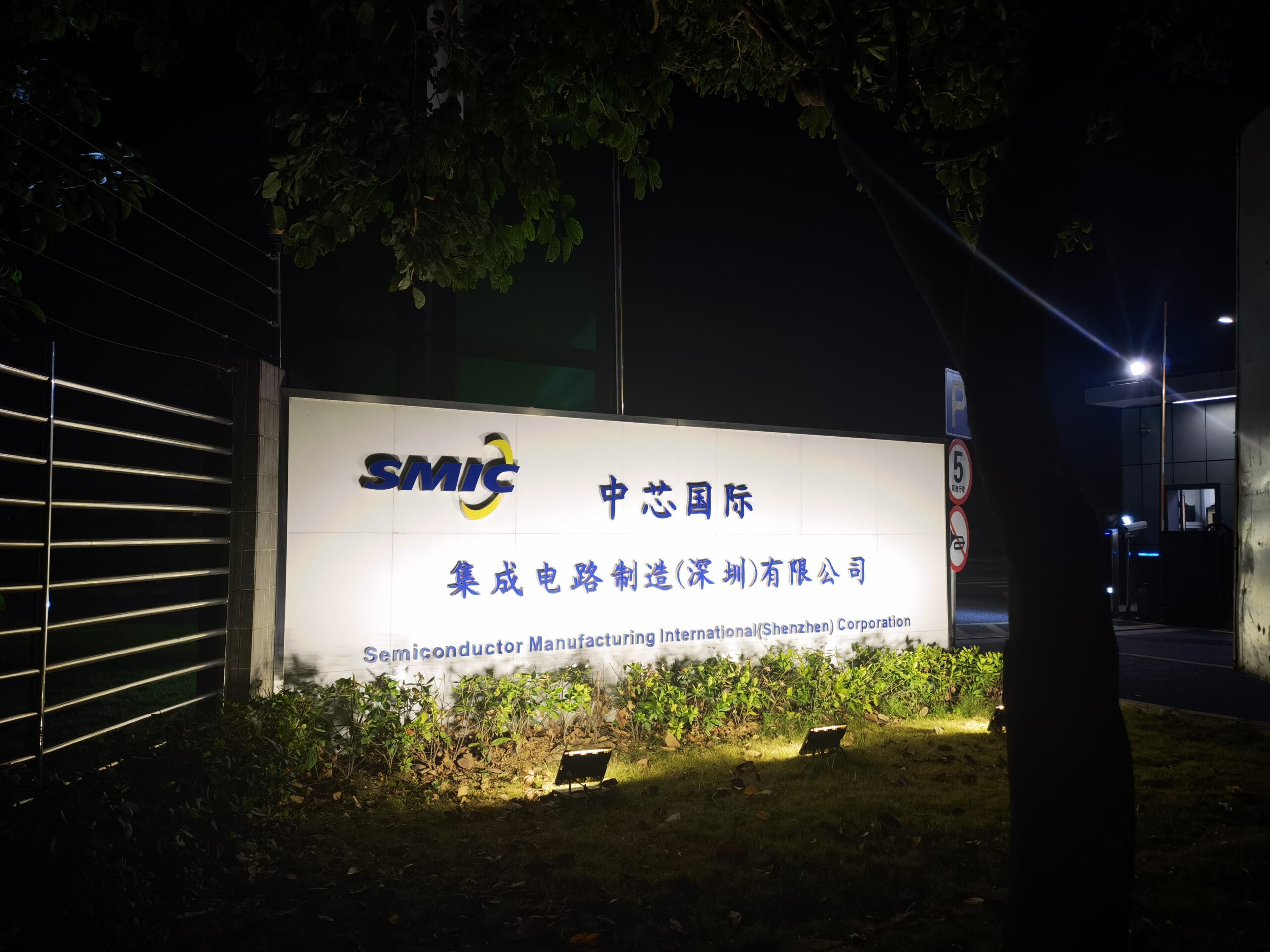

Chinese chip companies have been surging with record revenues. Firms like Semiconductor Manufacturing International Ord Shs (SMIC) (FRA: MKN2) (HKG: 0981) and Hua Hong Semiconductor Ltd (OTCMKTS: HHUSF) (FRA: 1HH) smashed sales highs in 2025, fuelled by the AI boom and U.S. export curbs that push China to build its own tech faster.
SMIC, the country’s biggest chipmaker, lifted revenue 16 per cent to US$9.3 billion. Analysts expect it to top US$11 billion in 2026. Major player Hua Hong, on the other hand, posted record fourth-quarter sales of US$659.9 million and forecasts steady growth into early 2026.
Other smaller Chinese firms reported record numbers for last year as well. Privately held ChangXin Memory Technologies saw revenue jump 130 per cent year-over-year to US$8 billion. Additionally, GPU design specialist Moore Threads Technology Co Ltd (SHA: 688795) expects 2025 revenue to have risen by 231 to 247 per cent once calculations are complete.
The reasoning behind these financial successes is clear. Explosive demand for AI chips from Chinese tech giants drives much of the surge while a worldwide memory chip shortage makes prices spike and opens doors.
American restrictions on the export of advanced chips and tools act like rocket fuel for local manufacturers. These restrictions stop Chinese companies from easily buying the newest foreign machines and top chips. This then causes the Chinese government to invest heavily in its own factories and strongly encourages local companies to buy chips made inside China.
Read more: Micron Technology attracts investor attention amid the AI revolution
NVIDIA’s lead shrinks nationwide
This homegrown push is delivering wins on Chinese soil. California-based NVIDIA Corp (NASDAQ: NVDA) (ETR: NVD), the world’s most valuable company, once owned the AI chip market there but its dominance has steadily slipped.
Chinese GPU and AI accelerator makers captured 41 per cent of the local market in 2025, shipping 1.65 million cards. NVIDIA still leads with 55 per cent and 2.2 million cards, but that share marks a sharp retreat from earlier large-scale control.
U.S. sanctions cut off NVIDIA’s hottest chips so buyers switch to local rivals like Huawei’s Ascend series. These alternatives may not match NVIDIA’s raw power yet, but they are proving to be adequate enough for many data centres and AI tasks. Government directives to buy domestic have been speeding up the shift.
Nvidia market share in China falls to less than 60%
Chinese chip makers deliver 1.65 million AI GPUs as the government pushes data centers to use domestic chips
via tomshardware pic.twitter.com/HITTW5Ezbp— Pirat_Nation 🔴 (@Pirat_Nation) April 2, 2026
Taiwan and TSMC still rule globally
When the world demands the fastest, most advanced chips, it still turns to Taiwan.
Taiwan Semicndctr Mnufctrng Co Ltd (NYSE: TSM) (FRA: TSFA) currently dominates global production of cutting-edge semiconductors. More than 90 per cent of the most sophisticated ones that power top AI systems, smartphones and military gear come from the island.
Decades of expertise, a dense web of suppliers and relentless innovation have kept TSMC ahead of the pack. Its latest 2-nanometre chips deliver huge leaps in speed and power efficiency.
China currently invests billions and scores wins in lower-cost areas, such as military-grade infrared chips now made for about US$10. But, competing with Taiwan is very difficult due to its extensive knowledge base derived from decades of research. Chinese firms have been growing stronger at home, but Taiwan is still setting the bar globally.
Read more: Chinese chip maker Montage Technology sees 64% surge in Hong Kong trading debut
Follow Rowan Dunne on LinkedIn
rowan@mugglehead.com