CBAK Energy signs Nanjing pact for planned 12 GWh battery capacity
The signed development-zone agreement adds a counterparty, while financing still governs the new lines and a separate expansion targets year-end.
 Ines Halvorsen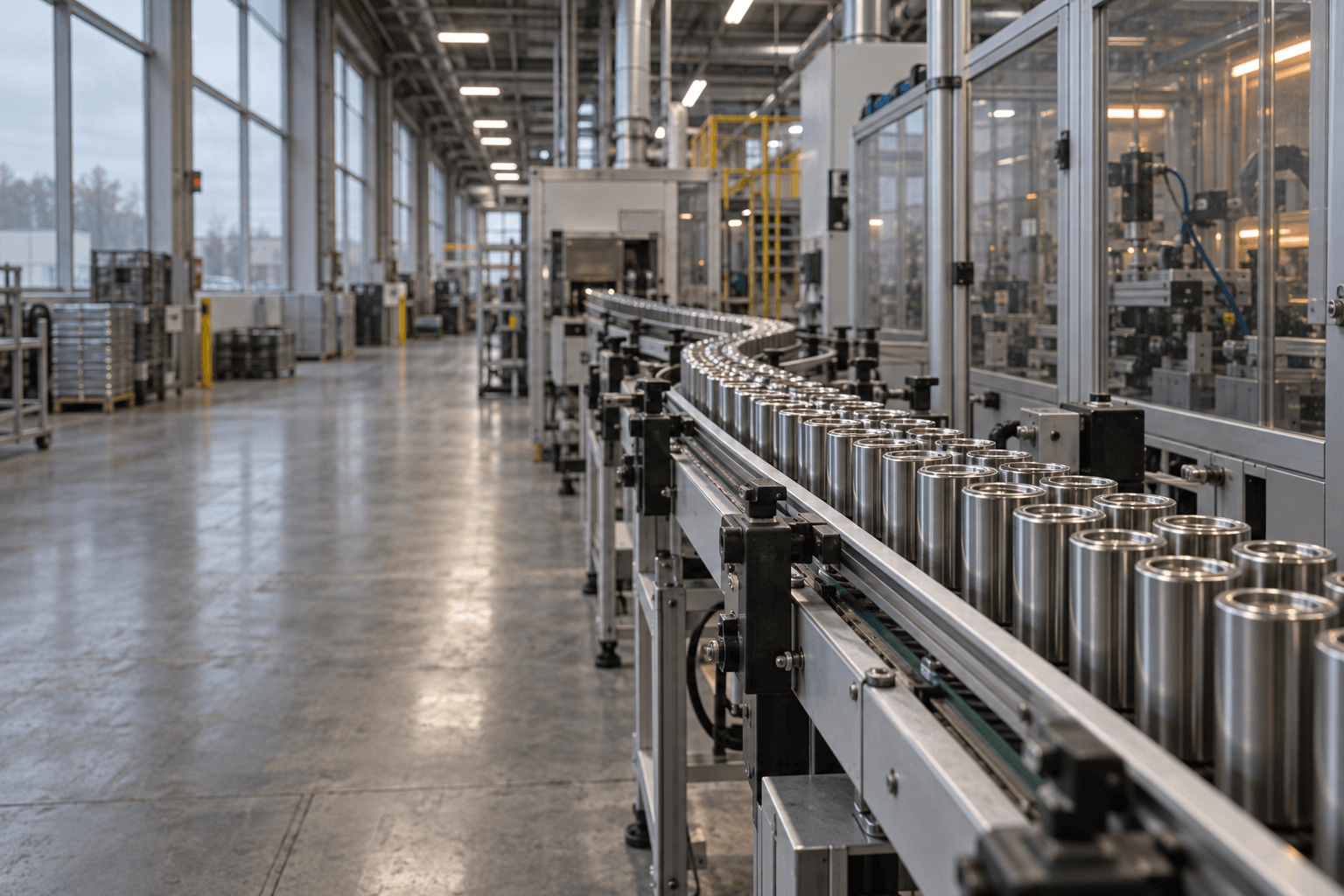
Sept. 23 brought a signed agreement for 12 gigawatt-hours of planned annual battery capacity in Nanjing, as CBAK Energy Technology Limited NASDAQCBAT signed with the Nanjing Gaochun Economic Development Zone. CBAK estimates the proposed lines could generate US$712 million to US$741 million in annual revenue at full capacity with every cell sold, using current lithium-ion prices as its benchmark. The release gives no agreement term, construction budget or financing commitment from the development zone.
CBAK shares NASDAQCBAT were up 3.1 per cent at US$1.33 on Nasdaq as of 11:06 a.m. EDT on Wednesday.
The company plans to advance the proposed 12-gigawatt-hour facility in the second half of 2027, subject to securing financing. Its production lines would be designed for either sodium-ion or lithium-ion cells, with the chemistry chosen according to demand. CBAK did not give a date for first output or identify a buyer for the planned capacity.
The nearer deadline belongs to a separate expansion at CBAK's existing Nanjing plant. The company targets an additional 6 gigawatt-hours of annual cell capacity by the end of 2026, on top of its current 4.5 gigawatt-hours. That would lift capacity there to 10.5 gigawatt-hours, while the proposed 12-gigawatt-hour facility remains on a later, financing-dependent timetable.
Financing Sets The Nanjing Build Timetable
CBAK is considering two lines for its larger Model 60150 cylindrical cells at the existing plant. It may instead install one Model 60150 line and one Model 32140 line because it says demand for the latter remains strong. The Sept. 23 release names no equipment supplier or delivery schedule, so it does not establish when the new lines could be commissioned.
The 12-gigawatt-hour plan covers cell manufacturing as well as module and battery-pack integration. Development would proceed in phases according to financing, customer demand and readiness. The release names no permit, approval body or decision date for that expansion.
"We plan to develop the project in phases, with investment guided by financing availability and customer demand," CBAK chief executive Zhiguang Hu said in the Sept. 23 release.
The agreement adds a named development-zone counterparty to a capacity goal CBAK had already described in its Sept. 17 sodium-ion update. That earlier notice called 12 gigawatt-hours a conditional planning objective, rather than installed production capacity. CBAK said sample cells were being tested by prospective customers for residential and portable storage and electric mobility, but it reported no commercial order tied to the Nanjing plan.
A larger listed rival is further along with sodium-ion manufacturing. Contemporary Amperex Technology Co., Limited SHE300750 said on June 22 that it had invested RMB5 billion to add 40 gigawatt-hours of annual sodium-ion capacity at its Fuding base. CATL said the lines were commissioned and targeted its first sodium-ion storage-system deliveries in China for September 2026.
Read more: CATL unveils TECTRANS II truck battery with 1,000-km range
CBAK's revenue forecasts for both Nanjing expansions assume a full year at full capacity with all output sold; the company says neither represents contracted sales. It estimates the nearer 6-gigawatt-hour expansion could add US$356 million to US$400 million in annual revenue under those conditions. The next dated test is whether CBAK reaches its targeted 10.5 gigawatt-hours of installed annual capacity at the existing Nanjing plant by year-end 2026.