Canagold Resources Ltd reports 13.2m at 3.83% antimony at New Polaris
A 1.21-metre section graded 30.46% antimony, while the 2025 feasibility study assigns the metal no revenue.
 Mara Quinlan
Canagold Resources Ltd. TSECCM OTCMKTSCRCUF said Thursday that hole NP26-01 returned 3.83 per cent antimony over 13.2 metres at New Polaris in British Columbia. The interval also graded 19.38 grams per tonne gold, while the company's 2025 feasibility study counted 5,173 tonnes of antimony in its mine plan but assigned no revenue to the metal.
Canagold shares rose 1.43 per cent to C$0.71 at 4 p.m. EDT on Oct. 1 in Toronto, according to the TSECCM quote. About 14,700 shares changed hands, below the roughly 39,700-share daily average shown on the TSECCM quote at 4 p.m. EDT on Oct. 1.
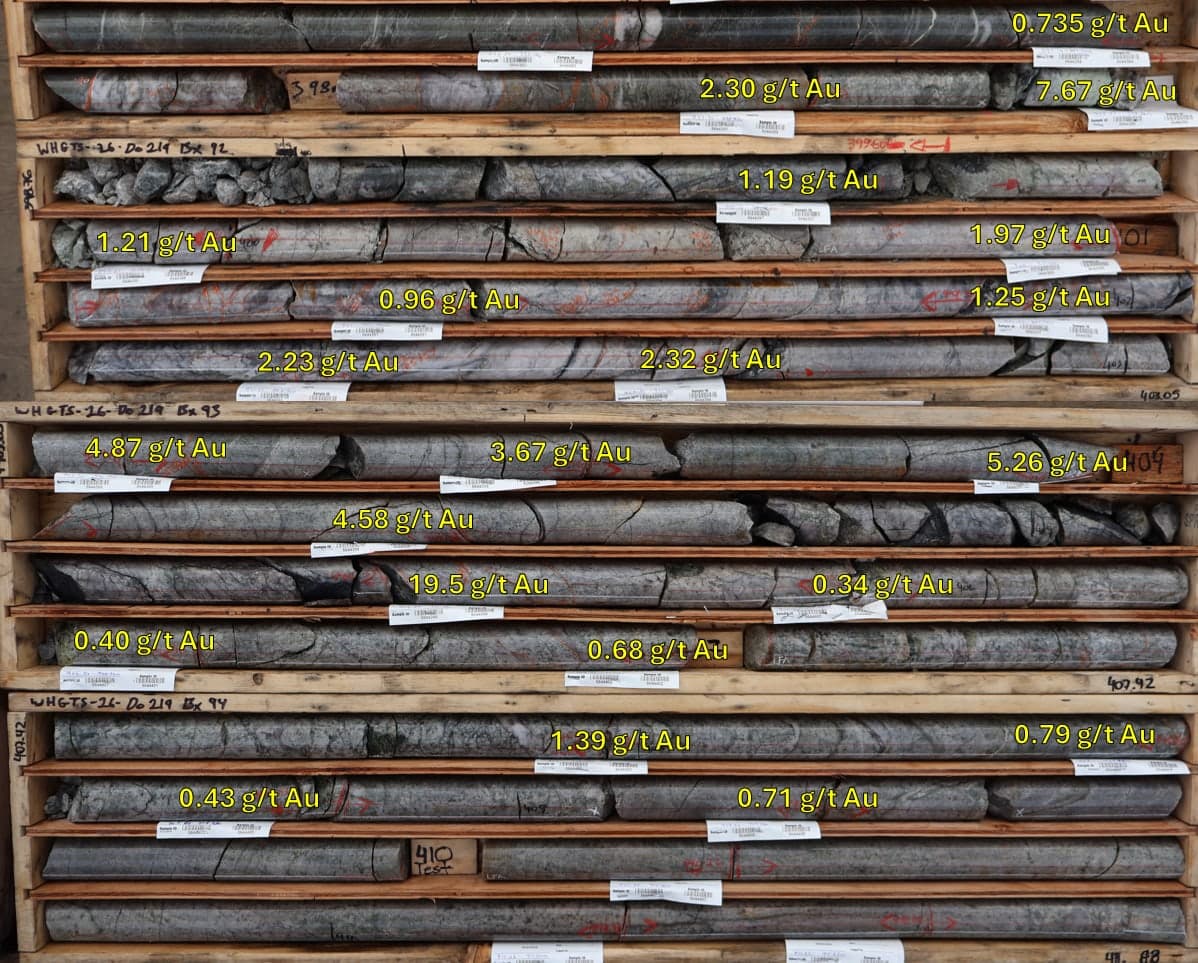
The reported interval began 451.75 metres down the hole, according to Canagold's Oct. 1 assay table. A 1.21-metre section returned 30.46 per cent antimony and 49.10 grams per tonne gold.
Canagold said the reported lengths are measured along drill core; it has not established the veins' orientation well enough to calculate true widths. The company reported results from five holes in a completed 14-hole campaign totalling 7,277 metres.
Hole NP26-02 returned 3.90 per cent antimony over 6.06 metres. The same interval graded 14.97 grams per tonne gold.
NP26-03 yielded 3.30 per cent antimony over 3.91 metres. Its gold grade was 15.08 grams per tonne.
NP26-05 returned 1.50 per cent antimony over 4.73 metres. Its gold grade was 5.76 grams per tonne.
The fifth hole, NP26-06B, carried 16.47 grams per tonne gold over 8.22 metres. Antimony in that interval graded just 0.01 per cent.
"Importantly, they suggest that the scale of the Sb mineralization may be substantially larger than we originally understood," Canagold chief executive Catalin Kilofliski said in the Oct. 1 release.
Canagold's feasibility page dates the current resource estimate to April 2, 2025. Its indicated category contains 5,630 tonnes of antimony grading 0.6 per cent.
The 2025 study did not assign antimony revenue because its process plan is designed to produce a sulphide concentrate. The company says more metallurgical testing and economic evaluation are needed before antimony revenue could enter its financial model.
That study estimated C$250 million in preproduction capital under a US$2,500-per-ounce gold assumption. The company said Sept. 11 that it submitted an environmental assessment application for New Polaris in April 2026.
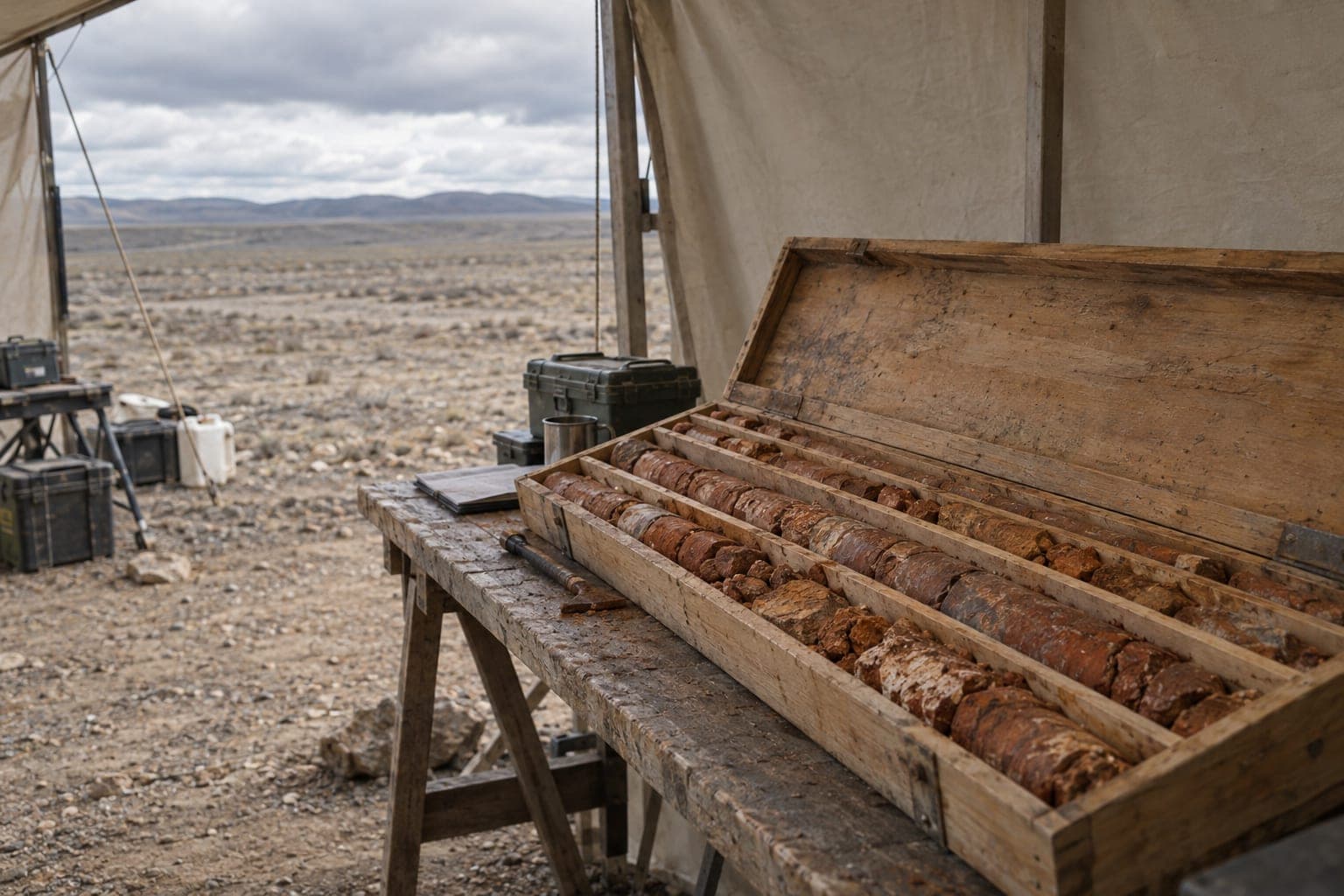
Canagold sent half-core samples to an independent laboratory for preparation in Terrace and assay in Langley, British Columbia. It retained the other half of each core on site.
Certified standards, blanks and duplicate samples were inserted in the testing sequence, and Canagold identified MSA Labs as independent of the company.
Canagold gave no date in its Oct. 1 release for the next assay batch or an updated resource estimate.