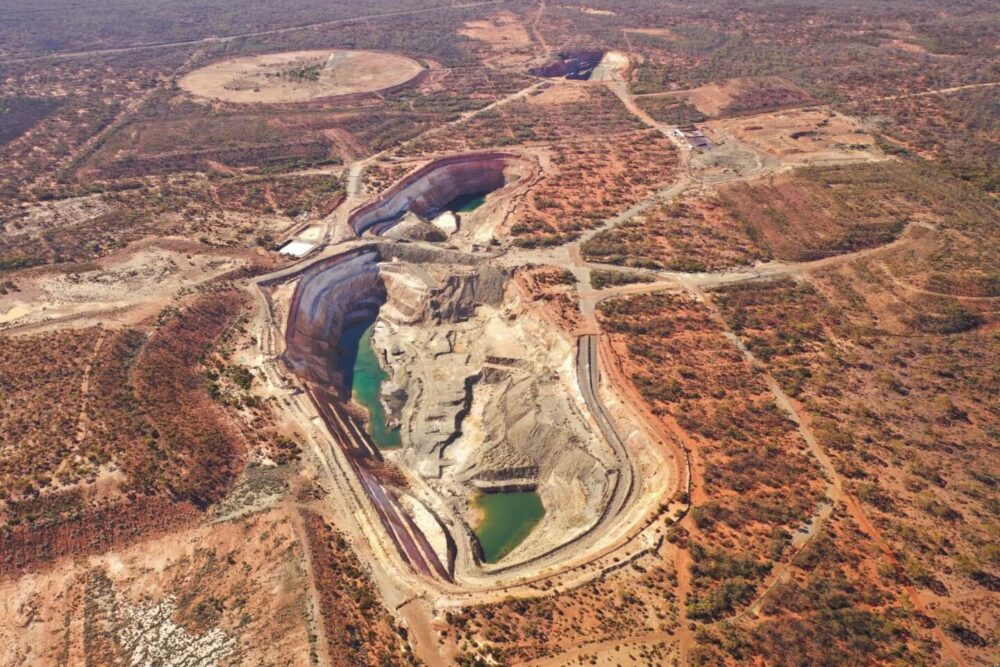

Franco-Nevada Corporation (TSE: FNV) (NYSE: FNV) will invest another AUD$200 million in Minerals 260 Limited (ASX: MI6) to expand its exposure to the Bullabulling Gold Project in Western Australia.
On Sunday, the Toronto-based royalty company said it will acquire an additional 1.45 per cent gross royalty for AUD$170 million, or about USD$122 million. Additionally, Franco-Nevada committed AUD$30 million, or approximately USD$22 million, to a future Minerals 260 equity financing.
The transaction will increase Franco-Nevada’s existing 2.45 per cent gross royalty over Bullabulling to 3.90 per cent. The agreement also expands the land covered by the royalty and extends its higher royalty rate across more future production.
Franco-Nevada already owns shares in Minerals 260 and provided the Australian company with significant financing earlier this year. In addition, the latest package raises Franco-Nevada’s total financial support for Bullabulling to AUD$420 million, or approximately USD$300 million.
The company provided an AUD$220 million, or roughly USD$155 million, financing package to Minerals 260 in February. That funding supported exploration, resource expansion and development work at the project.
Franco-Nevada president and chief executive officer Paul Brink said Bullabulling and the Minerals 260 team have exceeded the company’s expectations. He also said development and financing have progressed faster than expected while the project’s gold resource has grown rapidly.
Brink said Franco-Nevada expects its financial support to help Minerals 260 create additional value for its shareholders. Meanwhile, Minerals 260 managing director Luke McFadyen described the additional investment as another step toward bringing Bullabulling into production.
Read more: NevGold adds new CFO ahead of Limousine Butte engineering study
Read more: NevGold files technical report backing Limousine Butte gold-antimony resource
Project sits on mining leases and uses open-pit mining
McFadyen said both companies see Bullabulling as a large, long-life gold operation with room for future expansion. Additionally, he said the financing strengthens Minerals 260’s balance sheet ahead of a planned final investment decision in early 2027.
Bullabulling sits approximately 65 kilometres from Kalgoorlie in Western Australia’s Eastern Goldfields. Minerals 260 upgraded the project’s mineral resource in July 2026 following an extensive drilling campaign.
The project currently contains 4.4 million ounces of indicated gold resources within 140 million tonnes grading 0.98 grams per tonne. It also contains 1.7 million ounces of inferred resources within 51 million tonnes grading 1.0 grams per tonne.
Indicated resources carry greater geological confidence than inferred resources but do not automatically represent economically mineable reserves. Further, Minerals 260 has already converted part of the Bullabulling resource into a maiden reserve for its development studies.
The project sits on existing mining leases and would use conventional open-pit mining and carbon-in-leach gold processing. Minerals 260 completed a pre-feasibility study for Bullabulling in July and continues to advance more detailed engineering work.
The company expects to complete a definitive feasibility study and make a final investment decision in early 2027. Subsequently, Bullabulling could produce its first gold during the second half of 2028 if development proceeds according to schedule.
The pre-feasibility study outlined an initial processing rate of five million tonnes of ore annually. However, Minerals 260 incorporated infrastructure and design features that could support an expansion to 7.5 million tonnes annually.
Read more: Antimony recovery results from NevGold’s Limo Butte project exceed expectations
Read more: NevGold’s latest Nevada drill results show exceptional gold mineralization
Mining companies finance large projects through multiple avenues
The study used Bullabulling’s maiden reserve, which reflected the project’s resource position as of December 2025. It projected average annual gold production of approximately 150,000 ounces during the mine’s first 10 years.
Minerals 260 currently envisions a 19-year mine life under the development plan. Furthermore, Franco-Nevada believes additional resource growth could eventually support processing rates between seven million and eight million tonnes annually.
That expansion would broadly align with historical studies of Bullabulling and Minerals 260’s indicative second-stage development plans. Those plans contemplate annual gold production of approximately 200,000 ounces following an expansion.
The new financing could also reduce the amount of additional equity Minerals 260 needs to develop the mine. Franco-Nevada said royalty proceeds and money from the future equity raise should fully fund Bullabulling’s required equity component.
Mining companies generally finance large projects through combinations of shareholder equity, debt and other arrangements such as royalties. In this case, Franco-Nevada provides upfront capital in exchange for a percentage of future revenue from production covered by its royalty.
Consequently, Minerals 260 can use the royalty financing to continue engineering, drilling and other development work before construction. The arrangement gives Franco-Nevada additional exposure to future Bullabulling production without operating the mine itself.
The expanded royalty covers several deposits along the Bullabulling mineralized system, including Phoenix, Bacchus, Dicksons and Kraken. Together, those deposits extend across approximately 8.5 kilometres of strike length along the main Bullabulling trend.
The royalty also covers the Gibraltar deposit on a nearby sub-parallel geological trend. Gibraltar currently extends across approximately one kilometre of strike length.
Read more: NevGold appoints Nevada government affairs veteran Scott Bensing to board
Read more: NevGold pushes toward potential 2027 antimony production at Limousine Butte
Royalty covers approximately 650 square kilometres
Minerals 260 acquired Bullabulling in 2025 and subsequently launched the project’s first significant drilling campaign since 2011. Since then, the company has nearly tripled the project’s mineral resource.
Further drilling will target extensions of known deposits along strike and at depth while testing other prospective ground. Additionally, Minerals 260 can increase resource confidence by converting inferred resources into higher-confidence categories through infill drilling.
The latest agreement substantially expands the geographic area where Franco-Nevada can receive royalties from future discoveries. The area of interest surrounding the historical royalty tenure will increase from 2.5 kilometres to 10 kilometres.
As a result, the royalty will cover approximately 650 square kilometres and capture more potential extensions of mineralized trends. Franco-Nevada expects the larger footprint to provide additional exposure if Minerals 260 discovers economic gold beyond the currently defined deposits.
The transaction also changes the production threshold that determines when Franco-Nevada’s royalty rate declines. Under the new arrangement, its 3.90 per cent gross royalty remains in place until royalty lands produce six million ounces of gold.
The royalty will subsequently decline to 2.75 per cent after production reaches that threshold. Previously, the step-down mechanism applied after four million ounces of production.
The higher threshold gives Franco-Nevada another two million ounces of potential production at the 3.90 per cent royalty rate. However, actual royalty payments will depend on Bullabulling’s eventual production profile and gold output from covered properties.
Franco-Nevada’s Australian subsidiary will also retain a right of first refusal over certain future financing arrangements. Those rights cover streams, royalties and similar interests connected to properties within the royalty area.