
Artificial intelligence keeps sharpening its eye on medical scans used to spot cancers, steadily taking on tasks that once demanded full human attention. German firm Vara has now secured a world-first CE Mark for technology that can independently clear some breast screening images as normal.
The Berlin company received the Class IIb certification under European Union rules in early September. Its system reviews mammograms in organised population screening and reports those it judges clearly normal without any radiologist looking at them. All other cases still require review by at least one specialist. A built-in safety system called Autonomous-Triage Monitoring (ATMON) continuously checks performance, hardware and daily results. If anything drifts outside set limits, the site automatically switches back to full human reading.
This arrangement meets oversight demands for higher-risk AI tools. The approval builds directly on a CE Mark Vara gained last autumn for use as an independent second reader. That earlier clearance let the software stand in for one of the two human readers common in European screening. The new mark goes further by allowing complete autonomy on the large share of clearly normal exams.
“Autonomous AI in healthcare is a high-risk application, and we’ll need many such systems in the future,” said Vara co-founder Jonas Muff. “I’m proud Vara is contributing a blueprint for deploying autonomous AI safely in real-world healthcare.”
Read more: Breath Diagnostics advances pre-op pneumonia screening with FDA breakthrough designation
Vara engages government leader
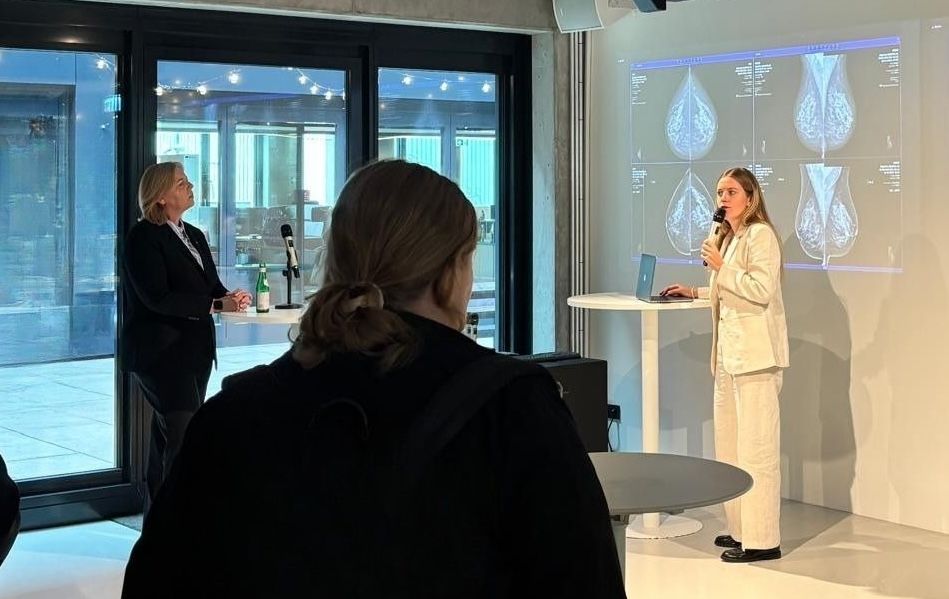
The certification follows a recent meeting in which Vara’s Business Development Manager Carla Gerlach briefed Germany’s labour and social affairs minister, Bärbel Bas, about the company’s work.
Gerlach spoke at an AI campus event attended by the minister and media. She pointed out that more than half of Germany’s organised breast screening units already use Vara daily, the widest routine clinical use of such technology anywhere.
“Nowhere else is AI in medicine running so comprehensively in regular operation,” said Gerlach.
Labour implications and wider rollout challenges
This development concerns labour as much as technology. Widespread use of the autonomous feature could ease pressure on radiologists by removing the need to review the majority of normal scans. Screening programmes might then expand the eligible age range without hiring extra readers.
At present, however, Germany offers no reimbursement pathway for Vara’s AI. That gap remains a major barrier to broader adoption, even though the firm already handles more than 250,000 screenings each month in the national programme.
Until payment rules catch up, the labour-saving potential stays limited mainly to centres that already absorb the cost.
Read more: Prestigious medtech intelligence firm recognizes Breath Diagnostics for innovation
Follow Rowan Dunne on LinkedIn
rowan@mugglehead.com