
Galvanize Therapeutics has reported new clinical evidence suggesting its pulsed electric field cancer therapy may activate immune responses beyond destroying tumors locally.
Earlier this month, the privately held medical technology company announced two peer-reviewed publications examining its Aliya pulsed electric field, or PEF, platform.
Researchers found signs of increased immune activity within treated tumors and in biomarkers circulating in patients’ blood.
Additionally, the findings could help researchers understand whether Aliya treatments can complement existing cancer immunotherapies.
The main study appeared in the peer-reviewed journal Clinical Cancer Research. Researchers studied patients with early-stage non-small cell lung cancer who received Aliya PEF ablation before surgery.
PEF ablation uses short electrical pulses to damage and destroy targeted tumor cells. Unlike heat-based ablation methods, the technology uses electrical energy rather than extreme temperatures to treat tissue.
Researchers also examined whether treatment changed immune activity surrounding the tumors.
They found mature immune structures called tertiary lymphoid structures with germinal centers in 47 per cent of treated tumors. Conversely, researchers found those structures in 24 per cent of tumors that had not undergone Aliya PEF ablation.
Tertiary lymphoid structures form in tissues where immune cells gather and organize their response to disease. Germinal centers represent a more developed stage where immune cells can refine their responses against specific targets.
Consequently, their presence could indicate that treatment prompted a more organized immune response within the tumor environment.
Galvanize said researchers believe the study provides the first clinical evidence of an ablation technology inducing these structures in humans.
However, the findings do not establish that the immune changes improve patient survival or other clinical outcomes.
Read more: Breath Diagnostics completes install of advanced mass spectrometry system
Read more: Breath Diagnostics advances pre-op pneumonia screening with FDA breakthrough designation
Preclinical studies have produced evidence of immune activity
Tullia Bruno, a study researcher, said mature structures suggest the immune system organized a more sophisticated response inside treated tumors. She added that this response differs from an ablation treatment that simply kills targeted cells.
Additionally, Bruno said the results provide a reason to investigate possible interactions between Aliya PEF and cancer immunotherapies.
Earlier preclinical studies have produced evidence of immune activity beyond the area receiving treatment. Researchers have also reported responses outside treated areas through case reports and early experience involving patients with metastatic cancers.
Meanwhile, a separate article in Nature Cancer examined tertiary lymphoid structures as an emerging area of cancer immunotherapy research.
Bruno co-authored the independent article, which identified Aliya PEF among a small number of approaches associated with these structures in human tumors. The researchers also identified Aliya as the only medical device among those approaches.
Galvanize co-founder and chief medical officer William Krimsky said researchers increasingly want to understand what occurs after the initial ablation.
Furthermore, he said preclinical and clinical evidence has pointed toward a potentially meaningful immune response following treatment.
The company recently received US Food and Drug Administration clearance for its Aliya EX Generator. It has also begun the first commercial use of the system.
Consequently, Galvanize continues developing clinical evidence alongside the commercial rollout of its Aliya technology.
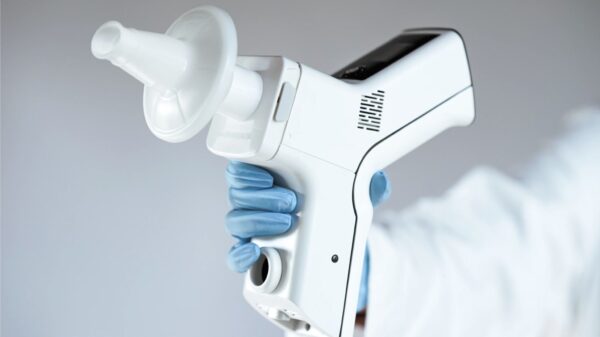
The company designed Aliya EX to deliver PEF energy through compatible tools during minimally invasive procedures.
Galvanize focuses its PEF technology on oncology and chronic lung disease applications.
Additionally, the company showcased the Aliya EX Generator at an interventional pulmonology conference in Denver from Aug. 20 through Aug. 22.
Read more: Prestigious medtech intelligence firm recognizes Breath Diagnostics for innovation
Read more: Breath Diagnostics completes install of advanced mass spectrometry system
Lung cancer remains difficult to detect early
Lung cancer remains one of the more difficult cancers to detect early because patients may develop few noticeable symptoms during its initial stages. Consequently, researchers and medical technology companies continue developing new approaches for identifying the disease sooner.
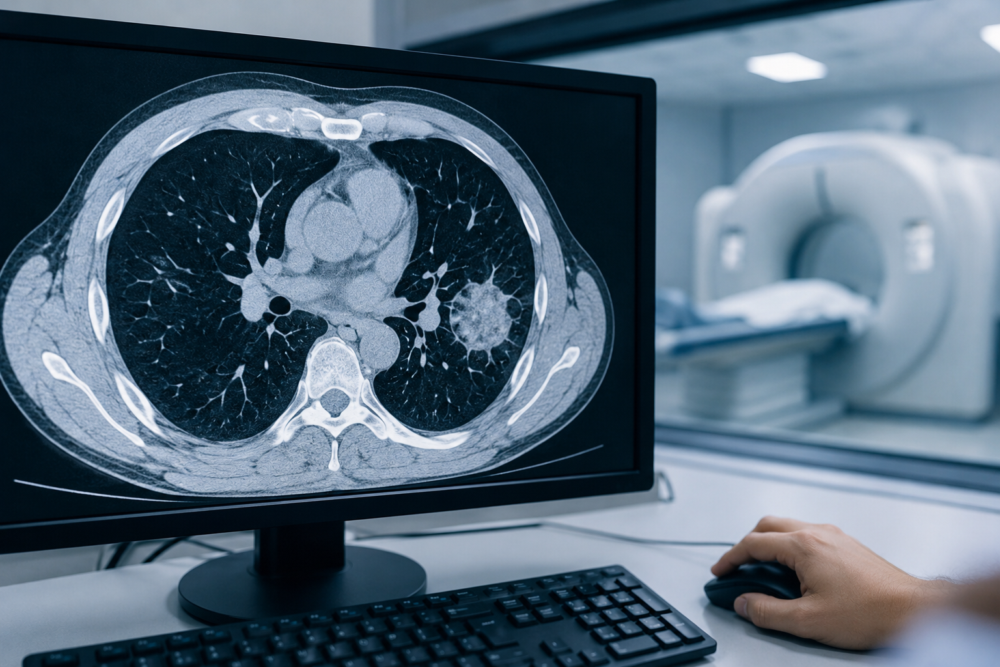
Current approaches include low-dose CT screening for patients considered at high risk, followed by additional imaging or tissue sampling when doctors identify suspicious findings.
Breath Diagnostics Inc., for example, is developing a breath-based test designed to identify biomarkers associated with lung cancer. The approach could eventually complement existing diagnostic methods by giving physicians another non-invasive tool for identifying patients who may require further testing.
.