
Canada’s three main telecommunications giants are facing scrutiny from Canada’s telecommunications regulator after introducing new wireless-related charges that the regulator says may violate recently enacted consumer protection rules.
The Canadian Radio-television and Telecommunications Commission (CRTC) implemented new regulations on Friday that prohibit telecommunications providers from charging fees to activate, modify or cancel wireless and internet services. Consequently, the rules eliminate charges such as activation fees and early cancellation penalties that have long been common across the industry.
In a series of letters, the CRTC warned BCE Inc. (TSE: BCE) (NYSE: BCE), Rogers Communications Inc. (TSE: RCI.B) and TELUS Corp. (TSE: T) that several recently introduced charges appear inconsistent with the new framework.
The regulator also introduced the measures to make it easier for Canadians to switch providers and secure lower-priced plans. However, the CRTC now argues that new fees introduced by Canada’s largest telecommunications companies may conflict with those regulations.
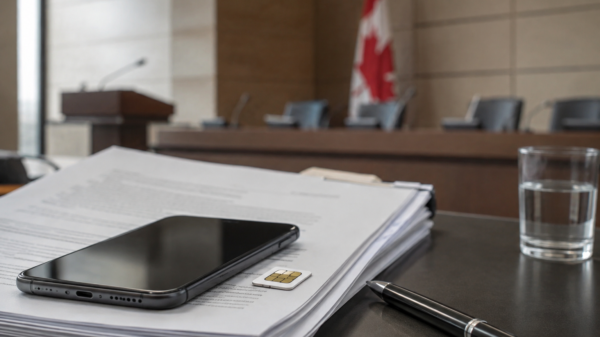
The CRTC identified Bell’s CAD$40 device handling charge, Rogers’ CAD$40 device setup fee, CAD$25 shipping fee and SIM-related charge, as well as Telus’s CAD$15 SIM card fee. Additionally, the regulator said those charges do not appear to qualify for exemptions contained in the new rules.
Matt Hatfield, executive director of consumer advocacy organization OpenMedia, said the fees resemble activation charges that companies can no longer impose.
He suggested the major providers may be attempting to recover revenue lost through the elimination of activation fees. Furthermore, he argued the new charges appear to offer little practical difference from the fees the regulator recently prohibited.
Hatfield characterized the practice as an attempt to continue charging customers through alternative labels. He also questioned whether the approach reflects responsible corporate conduct.
Read more: Telecommunications giant Ericsson closes acquisition of Vonage
Read more: Quebecor acquires Freedom Mobile, creates fourth major wireless carrier in Canada
Dispute is over a device handling fee
The three telecommunications companies each maintain that their respective fees comply with the regulations.
The dispute between Bell and the regulator began shortly after the company introduced its CAD$40 device handling fee. According to information posted on Bell’s website, the charge covers fulfilment costs when customers purchase a phone or other device alongside a wireless service plan.
Furthermore, regulations still permit companies to charge for optional products and services. For example, providers may bill customers for voluntary services such as in-home internet installation visits.
However, the CRTC informed Bell that the device handling fee did not appear to qualify for that exemption.
Bell responded on June 10. The company argued that customers are not required to purchase a device when signing up for a wireless plan. Consequently, Bell said the charge applies to an optional physical product that customers choose to buy.
The regulator remained unconvinced by that explanation. Subsequently, it issued a second letter on Friday directing Bell to confirm by June 17 whether it had stopped charging the fee.
Bell spokesperson Elise von Scheel told CBC News that the company is reviewing the regulator’s latest correspondence. However, she did not indicate whether Bell plans to withdraw the charge.
Meanwhile, a tip received by CBC News on Tuesday indicated Rogers had begun charging a similar CAD$40 device setup fee.
Following an inquiry from CBC, the regulator sent Rogers a letter stating that its device setup fee, shipping charge and SIM-related fee also appear inconsistent with the new regulations.
The CRTC gave Rogers until June 18 to confirm whether it had eliminated the charges. Alternatively, the company must provide a detailed explanation supporting its position.
Read more: The Mugglehead technology roundup: telecommunications and media concentration edition
Read more: Heads roll at Rogers putting Shaw merger in jeopardy
Regulator has challenged Telus over SIM card fees
Rogers spokesperson Kylie Laughren told CBC News that the shipping and SIM charges are not new. Additionally, she said the SIM-related fee applies only when customers require replacement cards because they have been lost or damaged.
Like Bell, Rogers argues the device-related charge qualifies as an optional purchase because customers can obtain service plans without buying a device.
Hatfield rejected that reasoning. He argued that many consumers purchase phones when establishing wireless service and therefore view device setup as an essential part of the process.
Furthermore, he suggested the companies may be relying on a narrow interpretation of the rules rather than the broader intent behind them.
The regulator has also challenged Telus over a newly introduced CAD$15 fee for physical and digital SIM cards.
SIM cards connect mobile devices to wireless networks and remain necessary for most cellphone services. Consequently, customers generally cannot access mobile service without one.
Earlier this month, the CRTC advised Telus that the charge did not appear to qualify for an exemption under the new regulations.
On Friday, the regulator followed up with a second letter. It directed Telus to confirm by June 17 whether it had discontinued the fee or provide additional justification for keeping it.
Telus spokesperson Martin Nguyen defended the charge in comments provided to CBC News.
He said the fee does not represent an administrative charge. Instead, he described it as a payment for a physical or digital product purchased by the customer.
The dispute places the regulator and Canada’s largest wireless providers on opposing sides of an important interpretation question.
Read more: Innovation, Science and Industry Minister and CRTC take aim at rising roaming fees
Read more: Competition Tribunal rules in favour of Rogers and Shaw telecommunications merger
CRTC warned all three companies about regulatory action
At issue is whether device-related and SIM-related charges qualify as optional purchases or whether they effectively function as prohibited activation fees under different names.
The CRTC has warned all three companies that it may pursue regulatory action if the matters remain unresolved.
Hatfield said the regulator appears to be attempting a faster resolution before launching lengthy enforcement proceedings. Additionally, he noted that formal telecommunications decisions often require considerable time to complete.
The CRTC told CBC News that its review of the Bell, Rogers and Telus fees remains ongoing.