
Rocket Lab Corporation (NASDAQ: RKLB) has secured regulatory approval to acquire Mynaric AG, advancing its push into laser communications for satellites.
Germany’s Federal Ministry for Economic Affairs and Energy cleared the transaction on Monday. Consequently, the company expects to close the deal in April.
Rocket Lab aims to strengthen its role across launch services, spacecraft manufacturing and satellite components. Additionally, the deal expands its capabilities in optical communications technology. Laser communication systems use light instead of radio waves to transmit data between satellites. As a result, they offer faster speeds, improved security and more efficient spectrum use.
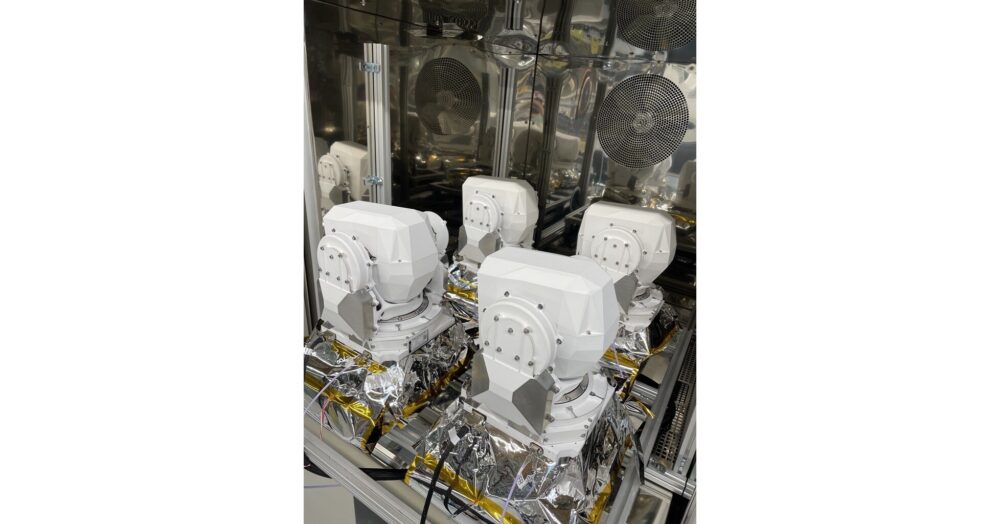
However, supply constraints have limited adoption across satellite constellations. Many operators struggle to source these systems at scale and at reasonable cost. Rocket Lab plans to address that gap by scaling Mynaric’s production. Furthermore, it intends to reduce lead times and improve affordability for customers.
Mynaric will remain headquartered in Munich after the deal closes. Meanwhile, the acquisition establishes Rocket Lab’s first operational footprint in Europe. The two companies already share a working relationship through existing contracts. Mynaric supplies CONDOR Mk3 optical terminals for Rocket Lab’s USD$1.3 billion agreements with the Space Development Agency.
These contracts cover 36 satellites across multiple defense-focused programs. In addition, Mynaric supports other contracts tied to the same agency. Rocket Lab said it will integrate Mynaric’s manufacturing into its broader operations. Consequently, customers may see more reliable delivery timelines and consistent pricing.
Chief executive Sir Peter Beck indicated the approval marks a key step toward closing the transaction. He added that the company plans to expand support for European space programs.
Read more: NASA reauthorization bill could unlock commercial space nuclear power
Read more: NextEra explores nuclear growth as AI drives record U.S. electricity demand
The company expanded production of subsystems
Beck also emphasized that laser communications play a central role in modern satellite networks. Furthermore, he said Rocket Lab intends to produce these systems at the scale customers require.
The acquisition builds on Rocket Lab’s strategy of scaling specialized satellite components. Previously, the company expanded production of subsystems that were once limited in availability. By applying that model to optical terminals, Rocket Lab aims to meet growing demand. Additionally, it seeks to serve both commercial operators and government agencies across global markets.
The satellite laser communications market remains relatively small today but is expanding rapidly as demand for high-speed data in space grows. Current estimates place the market in the low single-digit billions, reflecting its early-stage status. However, growth projections point to a much larger opportunity over the next decade. According to Fortune Business Insights, the optical satellite communication market could reach between USD$4.5 billion and USD$7.4 billion by the early 2030s. Additionally, strong demand from commercial satellite constellations and defense programs continues to drive investment.
Laser communication systems transmit data using light instead of radio frequencies. As a result, they offer significantly higher speeds, improved security and reduced signal interference. Consequently, they are becoming essential for next-generation satellite networks. Meanwhile, supply constraints remain a key challenge across the industry. Manufacturers have struggled to produce optical terminals at scale and at affordable costs. Companies like Rocket Lab are targeting this gap by scaling production and improving delivery timelines for constellation operators and government customers.