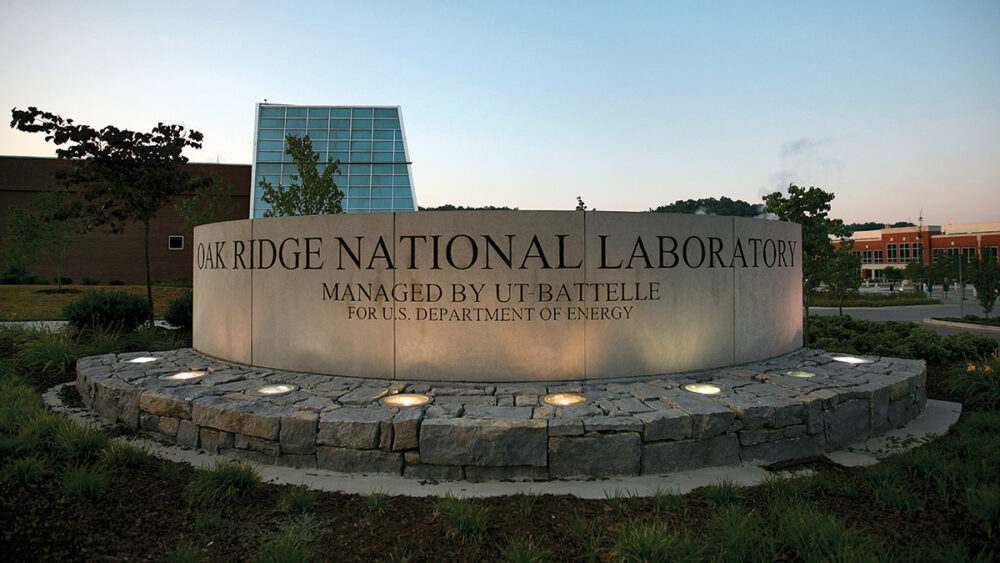

NuScale Power Corporation (NYSE: SMR) said it will partner with Oak Ridge National Laboratory to apply artificial intelligence to nuclear fuel management across a 12-reactor configuration.
The collaboration will study how AI tools can improve fuel use across multiple small modular reactors at a single site. Additionally, the U.S. Department of Energy’s Gateway for Accelerated Innovation in Nuclear initiative awarded funding to support the research.
The GAIN program operates within the DOE Office of Nuclear Energy. It provides technical, regulatory and financial backing to help new nuclear technologies reach commercialization. This award marks part of the first round of GAIN vouchers issued in fiscal year 2026.
Engineers already understand how to optimize fuel in a single reactor. However, NuScale believes its multi-module design creates new opportunities that traditional large plants cannot offer.
NuScale’s plant can host up to 12 small reactor modules at one site. Each module operates independently but shares certain systems, including a common fuel pool. Consequently, researchers want to examine whether they can shift or coordinate fuel use among modules to improve overall efficiency.
The company uses standard, commercially available fuel assemblies. Additionally, that approach allows researchers to focus on management strategies rather than redesigning the fuel itself.
Under the agreement, Oak Ridge will contribute expertise in artificial intelligence, machine learning and advanced computing. Researchers will build and test an AI-enabled framework that models fuel performance across multiple reactors. Furthermore, the team will simulate different loading patterns and operational scenarios.
Read more: NextEra explores nuclear growth as AI drives record U.S. electricity demand
Read more: Stellaria applies to build 100-kW molten salt reactor as France backs advanced nuclear
Project focuses on cost and performance
NuScale President and Chief Executive Officer John Hopkins said the company wants to explore smarter fuel coordination across modules. He described the effort as a way to potentially lower operating costs while maintaining safety and reliability.
He also said growing electricity demand in the United States and globally increases the need for dependable clean energy. Consequently, he believes advanced computational tools can help deliver more efficient nuclear plants.
The project focuses on cost and performance rather than changing reactor fundamentals. However, improved fuel management could translate into longer fuel cycles or reduced waste over time.
Meanwhile, policymakers continue to push for expanded nuclear deployment to support grid stability and decarbonization goals. Small modular reactors aim to offer flexible, factory-built units that scale more gradually than traditional large plants.
By combining AI with nuclear engineering, the partners hope to refine how multi-reactor sites operate. Additionally, the study may provide data that supports future licensing and commercial deployment decisions.
The research will remain exploratory at this stage. However, both parties say the work could shape how next-generation nuclear facilities manage fuel in the years ahead.