
Military Metals Corp (CNSX: MILI) (OTCMKTS: MILIF) (FRA: QN90) reported new soil sampling results from its past-producing Last Chance antimony project in Nevada.
The company said on Thursday that the 2025 program outlined a long zone of elevated antimony values extending from historic workings. Additionally, the results point to an 800-metre-scale trend that could guide future drilling.
The Last Chance property sits in Nye County, about 12 kilometres west of Round Mountain gold mine, operated by Kinross Gold Corporation (TSE: K) (NYSE: KGC). It also lies roughly 70 kilometres north of Tonopah, a historic mining town.
The company said the top 10 per cent of antimony soil results define an 815-metre northwest–southeast trend. Further, that trend extends both directions away from the historical mine area. Consequently, management believes the anomaly may reflect a buried mineralized system.
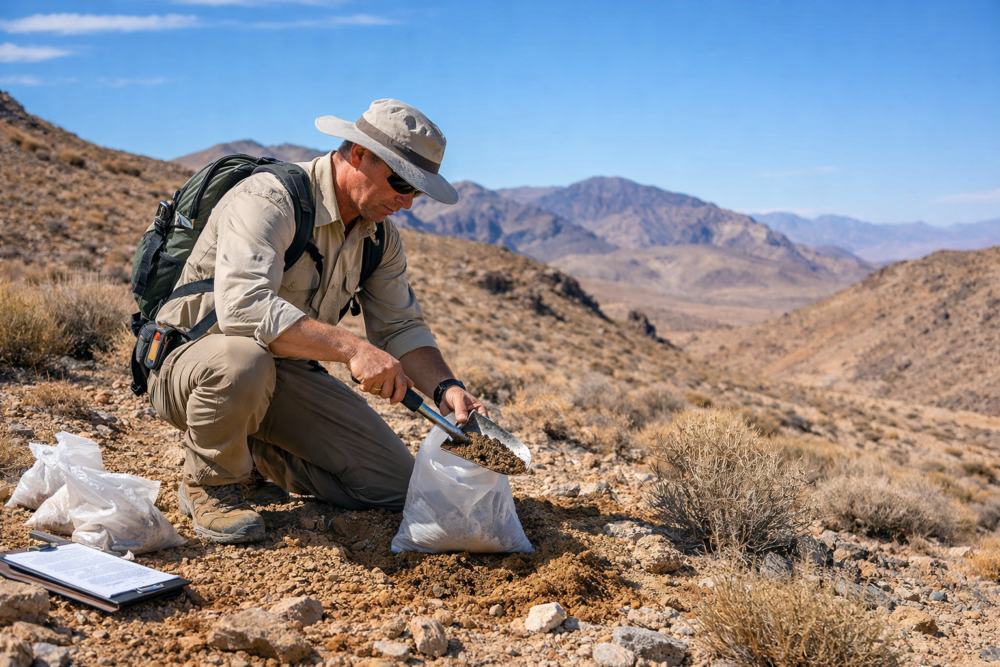
The soil program focused on B-horizon material collected across the property in October 2025.
Additionally, crews used hand tools and field sieving to reduce contamination risk. The company said it deliberately avoided disturbed areas tied to older mining.
Assay results show the highest decile ranged from 53.5 parts per million to 952 parts per million antimony. Meanwhile, those values cluster tightly along the newly defined northwest–southeast corridor. The company said that spatial coherence strengthens confidence in the anomaly.
The company will combine results from the soil work with existing geological and structural data. Subsequently, that integrated dataset will be used to select drill targets. Management said the approach aims to maximize efficiency before committing to drilling.
Read more: NevGold’s latest discovery represents near-term antimony production potential
Read more: NevGold surges after closing C$10M financing deal
The soil survey delivered strong insight at low cost
Earlier work also supports the presence of high-grade antimony nearby. Additionally, selective grab samples collected in spring 2025 returned values up to 11.61 per cent antimony. Those samples ranged widely, from trace levels to multi-per cent grades.
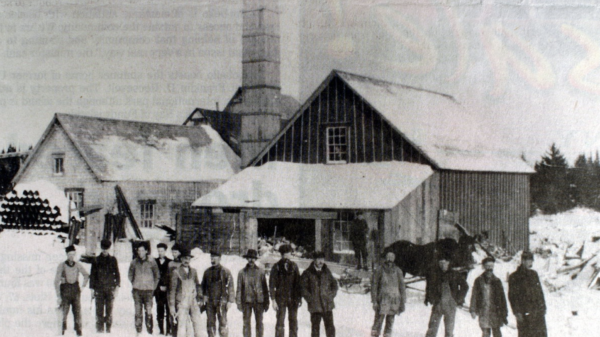
Historic production further supports the project’s antimony potential. Between 1941 and 1942, operators shipped more than 200 tons of stibnite from the area. Later, records show prior companies produced 44 tons in 1958 at grades between 10 and 15 per cent antimony.
Chief executive Scott Eldridge said the soil survey delivered strong insight at relatively low cost. However, he stressed the results must be viewed alongside other exploration data. He added that the findings directly inform where future drilling should test the system.
“Our past producing Last Chance project could play a crucial role in the development of a secure domestic supply of Antimony for the United States and its allies,” said Eldridge.
Antimony and other critical minerals play a central role in modern defense, energy, and technology supply chains. They support ammunition, flame retardants, batteries, and advanced electronics used by the U.S. military.
However, China controls much of global antimony supply, creating strategic vulnerability. Consequently, Washington wants domestic and allied sources.
NevGold Corp (CVE: NAU) (OTCMKTS: NAUFF) (FRA: 5E50) are advancing projects aimed at supplying antimony from North America. Additionally, these efforts align with U.S. policy to reduce reliance on China for critical materials.
NevGold Corp is a sponsor of Mugglehead news coverage
.