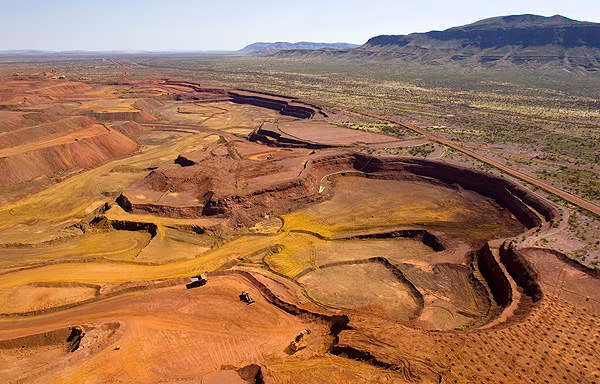

BHP Group (ASX: BHP) (NYSE: BHP) and Rio Tinto Group (ASX: RIO) (NYSE: RIO), two of the the world’s largest miners, plan to collaborate in Western Australia’s Pilbara iron ore hub to extend production into the next decade.
The companies said in a joint statement released on Thursday that the partnership could ultimately produce as much as 200 million tons of iron ore using shared assets and existing facilities.
According to the statement, the miners signed two non-binding agreements covering separate but connected Pilbara projects. One agreement examines joint development of Rio Tinto’s undeveloped Wunbye deposit, located near existing operations.
Additionally, the second agreement allows BHP to supply material from an expanded section of its Yandi mine for processing at Rio facilities. Executives said the approach focuses on efficiency rather than large new builds, keeping capital spending restrained. Rio’s iron ore chief executive Matthew Holcz said the companies believe cooperation can extend mine life while using infrastructure already in place.
Furthermore, management said shared rail, power, and port systems could unlock extra volumes with limited new investment. The Pilbara remains central to global steelmaking, however demand patterns are changing as China’s construction surge cools. Asian economies beyond China still require large steel volumes, consequently sustaining long-term iron ore demand.
Rio Tinto currently leads Pilbara iron ore production, closely followed by BHP, and together they ship over 600 million tons annually worldwide. The latest plans also build on a 2023 arrangement that allowed mining across adjacent tenements.
Read more: NevGold’s latest discovery represents near-term antimony production potential
Read more: NevGold expands Limo Butte footprint by staking 90 promising antimony-gold claims
Lower-grade material needs more processing
Meanwhile, the new memoranda of understanding push cooperation deeper into production and processing. First output from the joint projects would likely begin early next decade, the companies said. However, the miners did not disclose expected annual production rates or ownership splits.
The 200 million ton figure refers to total output over time, rather than yearly volumes. Iron ore still delivers substantial cash flow, even as major miners pivot toward copper and energy transition metals. Additionally, companies face declining ore quality across the Pilbara, which pressures pricing and margins.
Lower-grade material requires more processing, consequently raising costs across the supply chain. Miners are therefore prioritizing operational efficiency and disciplined capital allocation. Furthermore, both companies have explored selling non-core infrastructure to free capital.
BHP recently sold a significant stake in its Pilbara power network for about USD$2 billion. The buyer was BlackRock Inc. (NYSE: BLK) through its Global Infrastructure Partners unit. BHP said the sale would redirect funds toward priority growth areas, particularly copper.
Meanwhile, iron ore remains a financial backbone despite shifting long-term strategies. Shares of BHP rose about 3 per cent in Sydney trading after the announcement.