
Blink and 2025 is going to be over. Pop the cork. Hallelujah.
The year was defined by a weird mix of volatility, breakthroughs, and sharp reminders of how fast technology, markets, and medicine can shift. Precious metals surged on global uncertainty as wars and violence made investors head for safe haven assets. Medical diagnostics and psychedelic therapies incorporated artificial intelligence and inched towards the mainstream.
Investor behavior told a similar story. In periods of uncertainty, money gravitates toward assets and sectors proven to be durable or strategically critical. That dynamic played out repeatedly as commodities, infrastructure, and resource-linked industries shifted, reclaimed attention and shifted again.
At the same time, evolving supply chains and national security concerns pushed overlooked materials and technologies into the spotlight, reshaping how value and risk are assessed.
Meanwhile, healthcare continued its quiet transformation.
Advances in diagnostics, screening, and treatment models suggested a future where intervention happens earlier and more precisely than ever before. These developments arrived alongside a broader reassessment of mental health care. As a result, there’s more alternative approaches than ever before. Now they’re quietly gaining legitimacy, pushed by research, regulatory interest, and growing public demand. Together, they reflect a system that’s increasingly willing to challenge convention in pursuit of better outcomes.
Technology and finance remained inseparable in 2025, for better and worse.
Innovation created new avenues for wealth creation, but also exposed structural weaknesses and human error in rapidly evolving systems. The year offered no shortage of lessons about responsibility, oversight, and the long tail of early adoption.
Throughout it all, Mugglehead spent the year tracking stories at the intersection of capital, innovation, and consequence. That’s right. It’s that time of year where the writers are let off their leashes and asked to compile their favourite stories of the year.
Gold and silver are top performers on the TSX in 2025
Gold and silver producers emerged as the strongest performers on the Toronto Stock Exchange amid elevated precious metal prices.
Economic uncertainty has pushed investors toward safe-haven assets. More than half of the companies on the latest TSX30 list operate in mining. Additionally, 15 of those companies are in gold production. That number is up from six mining companies from last year’s ranking.
Released in early September, the TSX30 measures dividend-adjusted share price gains over the past three years.
Lundin Gold (TSE: LUG) (OTCMKTS: LUGDF) (FRA: F1YN) measured roughly 775 per cent growth, leading all mining companies. The company operates the high-grade Fruta del Norte mine in Ecuador.
Meanwhile, Avino Silver & Gold Mines Ltd (TSE: ASM) (NYSEAMERICAN: ASM) (FRA: GV6) climbed about 610 per cent. New Gold Inc (TSE: NGD) (NYSEAMERICAN: NGD) (FRA: 32N) and Kinross Gold Corp (TSE: K) (NYSE: KGC) (ETR: KIN2) follow at 394 per cent.
Iamgold Corp (TSE: IMG) (NYSE: IAG) (FRA: IAL) came next, rising 385 per cent. TMX Group Ltd (TSE: X) (OTCMKTS: TMXXF) (FRA: 9TX) mining executive Dean McPherson expects the rally to continue.
“I think precious metals will continue growing,” Dean McPherson told Mugglehead. “Silver has a huge part to play in clean tech. When you talk about the demand for silver you must also consider its [increasingly demanded] industrial applications.”
However, McPherson believes optimism extends beyond gold and silver. Junior miners face improved financing conditions and stronger commodity pricing.
Antimony has gained attention due to supply shortages and security concerns. Perpetua Resources Corp (TSE: PPTA) (NASDAQ: PPTA) is advancing the largest known antimony resource in the United States.
The company has secured more than US$80 million in government support.
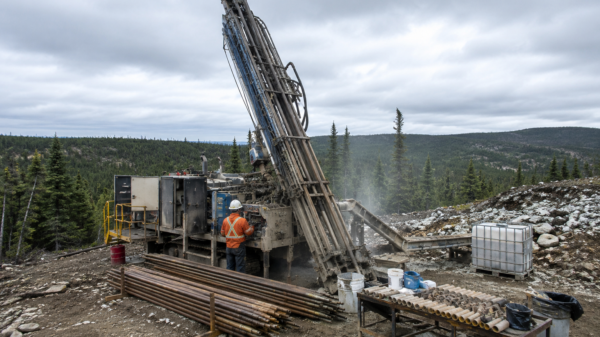
Additionally, NevGold Corp (CVE: NAU) (OTCMKTS: NAUFF) (FRA: 5E50) recently raised US$6 million for its Limo Butte gold-antimony project.
Grail brings new vistas in cancer diagnosis
A new blood test that screens for more than 50 cancers has delivered strong early results in a large U.S. clinical trial.
Announced in October, the Galleri test detected cancer in nearly two-thirds of flagged cases.
Developed by Grail Inc. (NASDAQ: GRAL), with backing from Illumina Inc (NASDAQ: ILMN), the test analyzes fragments of DNA released by tumors into blood.
These fragments, known as cell-free DNA, can appear before symptoms develop.
As a result, researchers believe doctors could detect cancer earlier, when treatment works best.
The Pathfinder 2 trial enrolled more than 23,000 symptom-free participants across the United States.
Galleri detected a cancer signal in 216 people during routine blood testing. Subsequently, doctors confirmed cancer in 61.6 per cent of those individuals. Importantly, the test correctly identified the cancer’s likely origin in 92 per cent of confirmed cases. This accuracy helped clinicians choose targeted scans instead of broad testing.
The trial also showed a 99.6 per cent true negative rate among cancer-free participants. Consequently, the test produced very few false alarms. More than half of detected cancers appeared at stages I or II. Furthermore, 69.3 per cent were identified between stages I and III.
Another advantage lies in how Galleri guides follow-up care.
“If someone presents with abdominal pain,” Kumar explained, “we might wonder if it’s ovarian, pancreatic, or colorectal cancer—or not cancer at all. Galleri can help clinicians direct investigations and make much better use of limited diagnostic resources.”
Additionally, the study projected a 21 per cent drop in cancer deaths within five years.
However, experts urge caution until mortality data becomes available. Furthermore, U.K. specialists described the findings as impressive but incomplete. In addition, researchers continue evaluating Galleri through an NHS-led trial.
Several other early-detection technologies have also emerged. Additionally, Breath Diagnostics has developed OneBreath, a lung cancer breath test. Clinical trials showed 94 per cent sensitivity and 85 per cent specificity. Furthermore, Prerna’s CANTEL blood test targets early breast cancer detection in India.
Also, Cizzle Bio (DEX-G2) focuses on early gastric cancer using blood-based markers.
Ibogaine therapy is on the rise
Alongside psilocybin, ibogaine has become a fast-rising topic in psychedelic medicine, driven by research momentum and patient outcomes.
Additionally, government-backed studies and media coverage have pushed ibogaine into mainstream discussion, especially among veterans and clinicians. As interest grows, retreat centres offering ibogaine therapy have drawn attention in Costa Rica, Canada, and particularly Mexico.
One Cancun-based facility, Beond, has received coverage for treating veterans, first responders, addiction patients, and people seeking spiritual healing.
“They had a shift in their brain chemistry, no longer wanted any chemicals or illicit drugs,” Feegel explained in an interview. “They also had a new perspective on the pain of the past and very meaningful insight into the purpose of their existence.”
Feegel built Beond after witnessing a family member’s transformation at an earlier ibogaine clinic with poor standards. However, he said that facility lacked medical oversight, therapeutic support, and basic hospitality infrastructure. Consequently, Feegel set out to create a five-star, medically supervised retreat in Quintana Roo.
Since opening, Beond has appeared in The Washington Post, Forbes, and a Fox News veteran-focused documentary. Meanwhile, Feegel says veteran attendance has steadily increased since 2023.
He links that rise to U.S. policy debates, beginning with Kentucky’s failed USD$42-million ibogaine research proposal.
Further, Texas recently approved a USD$50-million ibogaine drug development program targeting PTSD, addiction, and brain injuries. Former Texas governor Rick Perry has publicly supported ibogaine, citing firsthand experience with its effects.
Additionally, Navy SEAL veteran Robert O’Neill has called the treatment life changing and accessible for veterans.
Interest also grew after a Stanford University study examined veteran outcomes at Ambio Life Sciences’ Mexican clinic. The study reported major reductions in PTSD, depression, and traumatic brain injury symptoms among participants.
However, ibogaine retreats remain costly, averaging about USD$9,250 for five to twelve days of care.
Read more: NevGold expands high-grade antimony discovery at Nevada’s Limousine Butte Project
Read more: Breath Diagnostics gives the public the chance to join the fight against cancer
IT worker loses $1 billion in crypto
Earlier this year, James Howells, an IT worker from Newport, South Wales, faced a decision about whether or not he may have to abandon a decade long effort to recover lost cryptocurrency.
It started in 2013 when he accidentally threw away a hard drive during an office cleanup. The device contained private keys to roughly 8,000 Bitcoin, worth about USD$8 million then.
However, Bitcoin’s future value far exceeded early expectations.
By 2025, those coins would be worth roughly USD$742 million. Consequently, a routine mistake evolved into a massive financial loss. Howells later realized the hard drive likely sat buried in a municipal landfill. Meanwhile, Bitcoin shifted from a fringe experiment into a mainstream financial asset.
Additionally, Howells launched repeated recovery efforts as prices climbed. He proposed a detailed plan using AI-powered drones and robotic excavation systems. Furthermore, he pledged to pay all recovery costs himself and only requested access approval from Newport City Council.
However, local officials consistently rejected the proposal. They warned excavation could release toxic gases and pollute groundwater. Additionally, UK waste laws complicated the situation further.
Discarded property legally belongs to the landfill operator. Further legal challenges followed. In 2024, a British judge dismissed Howells’ case after 11 years of attempts. The court ruled recovery had no realistic chance of success.
Nevertheless, Howells continued speaking publicly about the project. He said he finally shared full technical plans with the public. He also maintained he would continue pursuing options.
Bitcoin’s history contains many similar missteps. For example, Laszlo Hanyecz spent 10,000 Bitcoin on pizza in 2010. That amount would now exceed USD$1 billion.
.
NevGold Corp is a sponsor of Mugglehead news coverage
.