
Robotics startup Lucid Bots is pushing a different path in an industry often dominated by spectacle and hype. Instead of humanoid demos, the company is deploying machines that clean windows and handle dangerous work on real job sites.
Founder and CEO Andrew Ashur said on Wednesday the company focuses on practical performance rather than flashy demonstrations. He told TechCrunch that many robotics firms still rely on attention-grabbing prototypes, while Lucid Bots prioritizes tools that generate measurable results for customers.
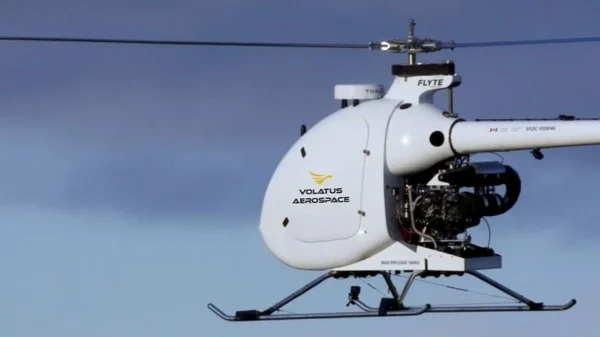
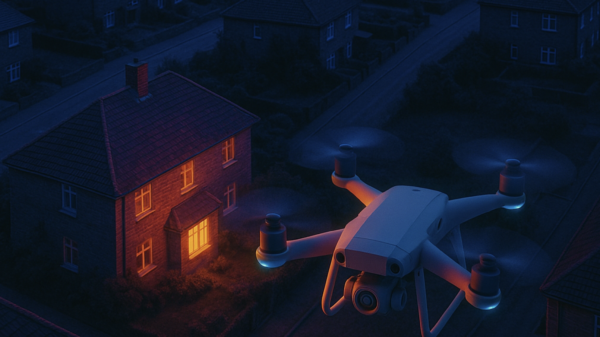
Lucid Bots builds and sells its Sherpa drones and Lavo robot to commercial cleaning companies. These machines help crews handle hazardous tasks more safely and efficiently. Additionally, the company designs and manufactures its systems domestically, giving it tighter control over production and iteration.
The Charlotte, North Carolina-based startup recently raised USD$20 million in a Series B round. The funding was co-led by Cubit Capital and Idea Fund Partners. Consequently, the company has now secured a total of USD$34 million in funding since its launch.
Ashur said the fresh capital will support hiring and production scaling. However, demand is already stretching internal capacity. He noted that the company receives more demo requests than it can currently accommodate.
Lucid Bots plans to expand its workforce to keep pace with that demand. Meanwhile, Ashur joked that even physical space has become a constraint, with parking already maxed out at its manufacturing site.
The company’s growth marks a sharp shift from its early years. Ashur said it took roughly five years to sell the first 100 robots. However, the company is now approaching 1,000 units sold as adoption accelerates.
Read more: NEURA Robotics reportedly raising €$1B in round backed by crypto giant Tether
Read more: Robot horse blends AI and tradition as DEEP Robotics eyes 2026 IPO
Labour market pressures driving demand for robots
That momentum reflects a broader need in the built environment sector. Ashur described infrastructure as the world’s largest asset class. Additionally, he pointed to three converging pressures: aging buildings, increasingly complex structures, and a shrinking labour pool.
These challenges have created a gap that automation can help fill. Consequently, Lucid Bots has focused on developing machines that directly address those constraints in the field.
The company’s origin traces back to Ashur’s time as a student at Davidson College. While studying economics and Spanish, he witnessed window cleaners struggling with unstable equipment on a windy day.
That moment shaped his thinking about safety and efficiency. He later said the incident made clear that existing methods exposed workers to unnecessary risk. Subsequently, he began exploring how robotics could improve those conditions.
Lucid Bots launched in 2018, initially operating as a cleaning service. The company took on contract jobs to better understand customer needs. Additionally, this hands-on approach exposed the team to real-world challenges early on.
Ashur said those early years included trial and error, including minor injuries from cleaning chemicals. However, the experience helped refine the company’s product design.
After about two years, the company transitioned fully into robotics development. It used insights from field work to shape its drone and robot systems. Consequently, the products reflect practical demands rather than theoretical use cases.
Lucid Bots continues to iterate on its technology through data collection. The machines feed operational data back into the company’s software systems. Furthermore, that data informs ongoing improvements to both hardware and performance.
Read more: Grok claims Netanyahu’s proof-of-life video in Jerusalem cafe is AI-generated
Read more: Chinese officials ban local firms from using Israeli or U.S. cybersecurity software
Lucid Bots looking to expand beyond menial tasks
The company is also expanding beyond window cleaning into adjacent services. It is developing tools that allow its robots to handle painting, waterproofing, and sealing tasks.
Ashur said customer demand has driven much of that expansion. Additionally, the company began receiving dozens of inbound inquiries each month for coating and painting applications.
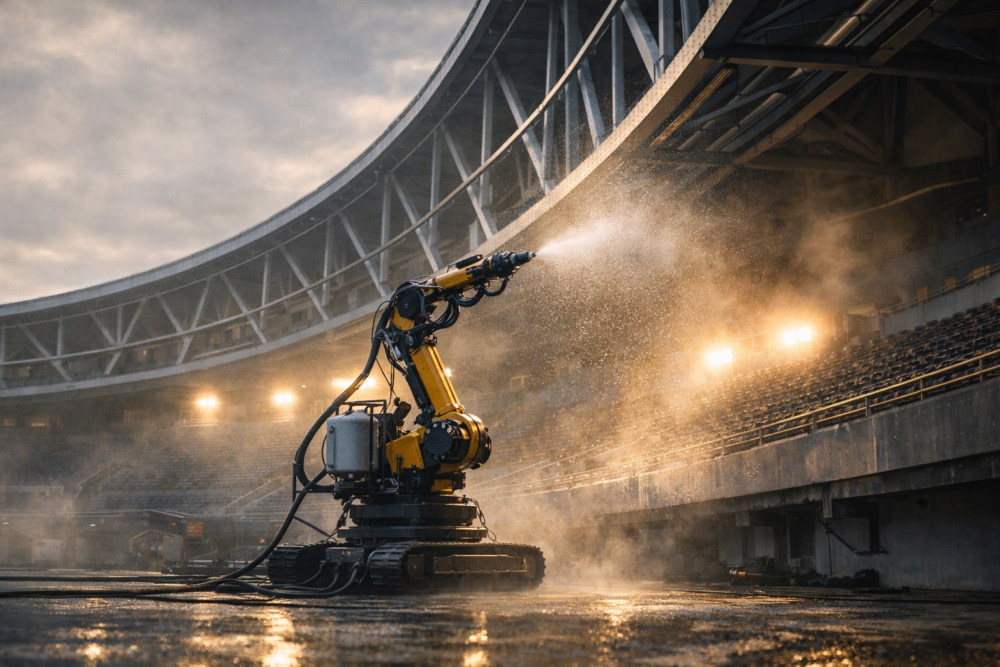
Lucid Bots recently tested those capabilities on a large university stadium project. The company used the same core system as its Sherpa drone to complete waterproofing work. Consequently, the platform’s flexibility has become a key selling point.
Ashur emphasized that the company’s strategy remains grounded in solving real problems. He said customers care less about futuristic demonstrations and more about reliability and cost savings.
That focus has helped differentiate Lucid Bots in a crowded robotics market. Meanwhile, many competitors continue to pursue humanoid designs and entertainment-driven demonstrations.
Lucid Bots instead positions itself as a full-stack provider of industrial robotics solutions. Additionally, its emphasis on field performance aligns closely with customer needs in construction and maintenance sectors.
.