Veolia launches French battery-metals plant with nearly 7,000‑tonne capacity
The Grand Est site will recover cobalt, nickel and copper from black mass, but Veolia disclosed no investment cost or earnings forecast.
 Ines Halvorsen
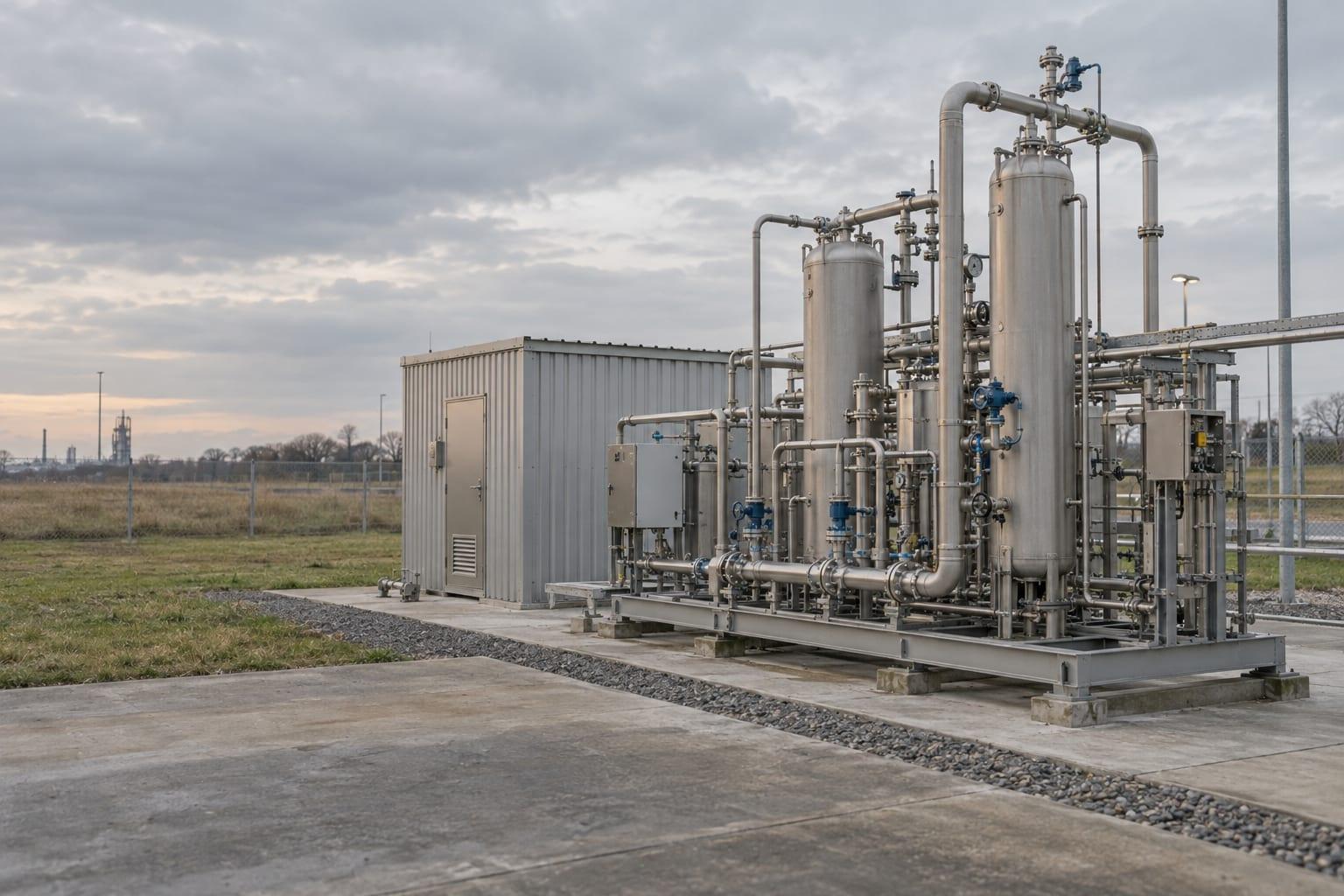
On Thursday, a French plant designed to recycle nearly 7,000 tonnes of battery black mass annually was launched by Veolia Environnement EPAVIE. Veolia says the process can recover more than 90 per cent of the cobalt, nickel and copper in that feedstock, but gave no investment cost.
The Grand Est facility receives material from France, the United Kingdom and Switzerland. Veolia named no feedstock counterparties or contract durations in its Nov. 12 release. Black mass is the material produced by battery shredding.
Veolia's Paris-listed shares EPAVIE rose 0.73 per cent to €34.55 as of 3:51 p.m. CET on Thursday.
The environmental-services group reported €33.31 billion in revenue and €5.404 billion in EBITDA for the first nine months of 2026 on Nov. 5. The plant announcement contains no site revenue or earnings forecast.
"Thanks to this facility, where European black mass flows converge, this extraordinary resource can be recovered within Europe: today serving the metallurgy sector and, tomorrow perhaps, producing new European batteries," chief executive Estelle Brachlianoff said in the Nov. 12 release.
Battery Manufacturing Remains Conditional
The plant uses proprietary hydrometallurgy, according to Veolia's Nov. 12 release. The company describes a process that dismantles batteries, separates black mass and extracts cobalt, nickel and copper for redistribution to European industrial markets.
Veolia describes the facility as a downstream processing step in a wider European recycling network. It is also deploying complementary battery-dismantling facilities in the United Kingdom, Belgium and Slovenia, but the announcement gives no start dates or contracted volumes.
The Nov. 12 announcement identifies automotive, construction and defence markets as current outlets for the recovered metals. Returning them to new European batteries remains a longer-term ambition that Veolia links to public support and facilities able to reintegrate the metals.
Veolia calls for a Europe-wide regulatory and economic framework to support that circular supply chain. The release gives no permit reference or approval timetable, and does not identify battery manufacturers committed to buying the recovered material.
A peer's headline tonnage uses a different feedstock measure. In an announcement outlining 2022 technology upgrades, Umicore SA EBRUMI put its Hoboken plant's annual capacity at 7,000 tonnes of lithium-ion batteries and production scrap.
Veolia's Nov. 12 announcement puts its own site's equivalent battery-input capacity at 20,000 tonnes annually. Its black-mass figure and Umicore's battery-and-scrap figure therefore describe different inputs.
Veolia says competition from outside Europe is driving exports of European black mass to Asia. Keeping the recovery stage in Europe is intended to retain those resources locally and reduce dependence on imported strategic metals.
Veolia estimates that nearly 700,000 tonnes of batteries will be recycled across Europe within five years of its Nov. 12 announcement. It values the recoverable strategic metals at more than €1 billion, a regional market estimate rather than revenue contracted to the French facility.
Read more: Lithium Americas raises Thacker Pass cost estimate to US$3.83B
Veolia has not dated full utilisation of the French site in its announcement. Its next scheduled financial milestone is the release of full-year 2026 results on Feb. 17, 2027.