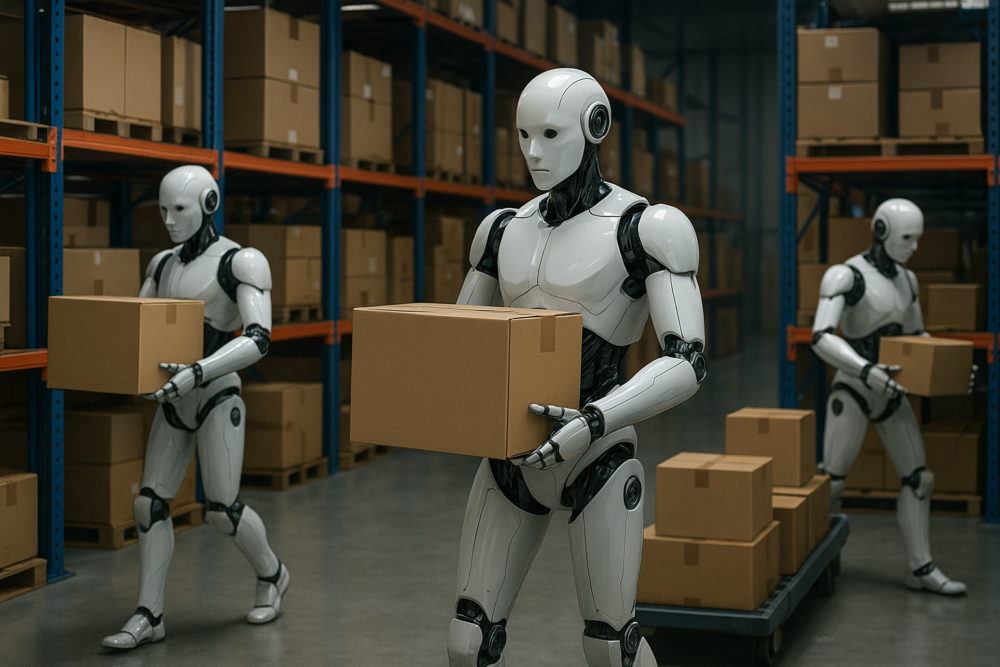

Tether has moved into the humanoid robotics race by backing Italy-based Generative Bionics in a €70 million (USD$81 million) funding round.
The company announced Monday that it joined the raise to help the startup finish industrial tests and prepare its first production site ahead of planned deployments in 2026.
Generative Bionics describes its machines as “Physical AI” systems that merge humanoid robotics with artificial intelligence.
Tether has also pushed into several hardware and infrastructure bets beyond its core stablecoin business. These include artificial intelligence, media tools, agricultural technology, and brain-computer interface research.
Other investors joined the round. They included the Artificial Intelligence Fund of CDP Venture Capital, which led the deal, as well as AMD Ventures of Advanced Micro Devices (NASDAQ: AMD), Duferco, Eni Next of Eni, and RoboIT. Additionally, the raise places Generative Bionics among a small but expanding group of robotics companies that aim to commercialize full-scale humanoid systems.
Tether CEO Paolo Ardoino said the firm supports technologies that expand digital and physical infrastructure worldwide and broaden human capability.
“Humanoid robotics and Physical AI represent a powerful evolution in how intelligence and capability operate in the real world,” said Ardoino.
The startup launched in 2024 after spinning out of the Italian Institute of Technology. Researchers at the institute built more than 60 humanoid prototypes over two decades. Furthermore, seventy of its engineers moved to Generative Bionics. They now aim to convert that research into commercial robots for manufacturing, logistics, healthcare, and retail.
The company says it intends to position humanoid systems as part of the “Made in Italy” technology push. It also plans to reveal its first complete robot at CES 2026 in Las Vegas.
Read more: IMF warns stablecoins could erode Central Banks control
Read more: Malaysia forms taskforce to combat $1.1B in Bitcoin power theft
Robotics industry expected to expand rapidly over 5 years
Generative Bionics CEO Daniele Pucci said the company wants to create a future in which intelligent humanoids work beside people each day. He also noted the firm’s Physical AI approach supports the design of human-inspired robots to deliver measurable value across multiple sectors.
Investment in humanoid robotics surged in 2025. Figure AI raised USD$675 million in February at a USD$2.6 billion valuation. Furthermore, Bedrock Robotics secured USD$80 million in July. In addition, Roundhill Investments filed for a humanoid robotics ETF in April, reflecting growing investor confidence in the sector. Morgan Stanley (NYSE: MS) has projected the global humanoid market could reach USD$5 trillion by 2050.
The robotics industry is forecast to expand rapidly over the next five years as companies accelerate automation plans. According to GlobalData, the global robotics market could rise from about USD$90 billion in 2024 to more than USD$160 billion by 2029. This is supported by a compound annual growth rate (CAGR) of roughly 12 to 15 per cent. Analysts say this momentum reflects rising pressure on manufacturers and logistics operators to improve productivity with automated systems.
Mordor Intelligence projects an even faster trajectory. It estimates that robotics spending could more than double by 2030, reaching close to USD$185 billion. Furthermore, this suggests a CAGR above 20 per cent from 2025. The firm attributes that growth to falling hardware costs, more capable AI-driven control systems, and wider adoption of “robot-as-a-service” subscription models that allow smaller firms to use advanced machines without heavy upfront investment.