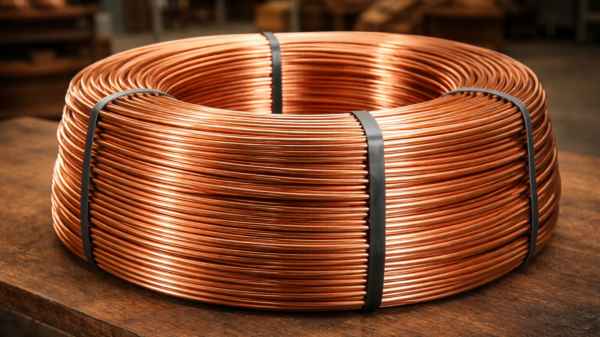

As copper prices continue to reach new all-time highs, surpassing US$13,300 per metric ton in early January amid intense global demand pressures, a new S&P Global Inc (NYSE: SPGI) study has highlighted the growing risk of a major shortfall.
The Thursday report, titled Copper in the Age of AI: The Challenges of Electrification, projects that copper demand will surge by 50 per cent to 42 million metric tons (MMt) by 2040. It says that supply is expected to peak at 33 MMt in 2030 before beginning a decline, resulting in a substantial 10 MMt deficit that represents about 25 per cent of anticipated needs.
S&P Global has outlined several critical drivers behind this demand acceleration, with electrification playing the central role. Traditional economic sectors such as construction and appliances are forecasted to account for 23 MMt, or 53 per cent of total demand by 2040. Meanwhile, energy transition applications — including electric vehicles, renewable energy sources, and electrical grid expansions are projected to contribute more than 7 MMt, bringing their total to 15.7 MMt.
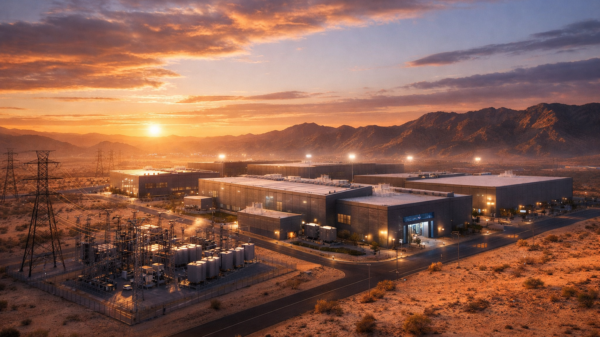
Newer factors are also intensifying the pressure. AI infrastructure and data centres could likely triple in capacity to 550 gigawatts, potentially requiring 2 to 3 MMt of copper. For AI-related demand, the base case anticipates 170 GW of additional capacity by 2040. Copper usage in data centres typically ranges from 30-40 metric tons per megawatt, with Chinese hyperscalers reaching as high as 47 mt/MW because of redundant system designs.
Copper hits fresh ATH amid supply disruptions & strong demand from AI/data centers, renewables. Long-term bull trend intact after breakout – watching $6/lb next! #Copper #Commodities pic.twitter.com/I9ehcotVKF
— Nfoz (@N_fozz) January 8, 2026
Read more: NevGold’s latest discovery represents near-term antimony production potential
Robotic tech emerges as a new driver
Humanoid robots emerge as a potential wildcard, with deployment of 1 billion units possibly demanding up to 1.6 MMt annually. Furthermore, defence spending could double to US$6 trillion, potentially adding 1 to 2 MMt.
Supply-side challenges are equally pronounced in the report, noting ore grades declining from 1.3 per cent to 0.7 per cent in South America since 2000. This has contributed to a 37 per cent rise in marginal costs, compounded by reduced exploration spending of just US$3.3 billion in 2025, half the level seen at the 2012 peak.
Without substantial new investments, primary mined production could fall to 22 MMt by 2040, even as recycling efforts double output to 10 MMt, still covering only 25 per cent of demand.
Additional hurdles include lengthy 17-year timelines for mine development, heavy geopolitical concentration with China controlling 40 to 66 per cent of refining capacity, and limited opportunities for substitution given copper’s superior electrical conductivity compared to alternatives like aluminum.
Copper copper copper copper copper copper copper copper copper… pic.twitter.com/0nCvz8y6cI
— Robert Friedland (@robert_ivanhoe) January 9, 2026
Read more: NevGold expands Limo Butte footprint by staking 90 promising antimony-gold claims
Major miners set to capture substantial gains
Several publicly traded companies stand to gain significantly from this escalating copper demand, including leading miners such as Freeport-McMoRan Inc (NYSE: FCX), BHP Group Ltd (NYSE: BHP) (LON: BHP), and Rio Tinto Group (NYSE: RIO) (FRA: CRA1), which boast vast reserves and high-output operations like Freeport’s Grasberg mine producing over 1 MMt yearly. These resources allow them to capitalize on sustained high prices through improved margins and accelerated expansion projects.
Similarly, Southern Copper Corp (NYSE: SCCO) (FRA: PCU) and Teck Resources Ltd. (TSE: TECK.B) (TSE: TECK.A) (NYSE: TECK) are well-positioned with brownfield developments in the Americas that could increase production amid ongoing deficits, potentially driving 20 to 30 per cent revenue growth should prices remain above US$10,000 per ton.
The S&P Global study aligns well with other recent analyses on AI-driven copper demand, mirroring Reuters’ forecasts of a 50 per cent increase by 2040 and Seeking Alpha’s focus on data centres necessitating a 10 per cent rise in global supply. They share a common emphasis on robotics as an uncertain but impactful factor and persistent themes of supply bottlenecks alongside electrification trends.
Overall, these reports reinforce the consensus that in the absence of major new mining investments, the rapid expansion of AI technologies risks significant constraints.
Copper is another one like silver being squeezed higher by supply problems and panic buying. Tariff threats have forced a massive amount of metal into the US which has effectively taken it out of global reach. Big buyers in China looking to start the year have been panic buying… pic.twitter.com/MvG62JwZkf
— Jeffrey P. Snider (@JeffSnider_EDU) January 8, 2026
Read more: NevGold expands high-grade antimony discovery at Nevada’s Limousine Butte Project
Follow Rowan Dunne on LinkedIn
rowan@mugglehead.com