
Reporting from the South China Morning Post has revealed that the United States may only hold about two months’ worth of rare earths in its stockpiles for defence needs.
Anonymous sources shared this detail with the Hong Kong-based newspaper this week, highlighting the sensitivity of the issue. These critical elements fuel essential military technologies, such as missile guidance systems, fighter jets and radars.
The Americans commenced strikes on Iran on Feb. 28 and used up roughly US$5.6 billion worth of munitions within mere days, according to Pentagon estimates. This shortage means potential limits on sustaining the fight. Without fresh supplies, mostly from China, the U.S. might shorten operations or face higher costs to restock weapons.
President Trump has boasted that his military forces will be capable of bringing a quick end to the conflict, but not everyone agrees with his sentiment. Others argue that the Iranians have spent many years preparing for the current situation and are not to be underestimated.
The nation’s underground stockpiles of munitions may be greater than Washington’s intelligence agencies are aware of, and they know the ground better than anybody.
Chinese-Iranian alliance raises risks for U.S.
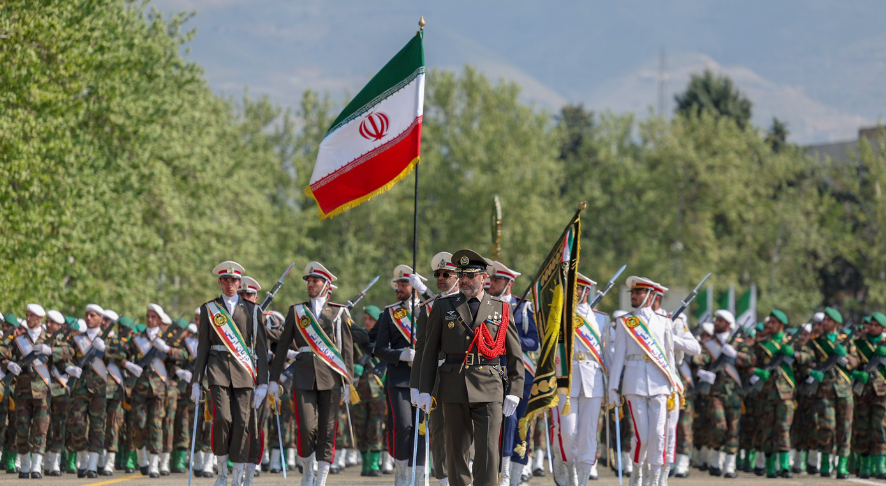
China and Iran stand as allies who challenge Western influence and financial elites. Both have repeatedly condemned military actions taken by the United States-Israeli alliance for many years. These two nations are strongly opposed to NATO as well, viewing it as a relic of the Cold War and an enabler of unjust aggression in the Middle East.
In 2021, China and Iran signed a 25-year strategic partnership to boost trade and security ties.
In consideration of the ongoing strikes, China avoids direct military aid to Iran, focusing instead on diplomacy and calling for ceasefires. However, Beijing could wield its rare earth dominance as indirect leverage, assisting the Iranians without firing a bullet.
By tightening export controls, already in place for key heavy rare earths like dysprosium and terbium, China might slow U.S. weapon production. This tactic would help Iran by forcing the U.S. to ration resources or seek costlier alternatives, extending Tehran’s resistance by non-violent means.
Read more: NevGold’s stock growth secures junior spot on 2026 TSX Venture 50 list
Beijing’s grip extends beyond rare earths
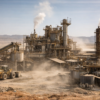
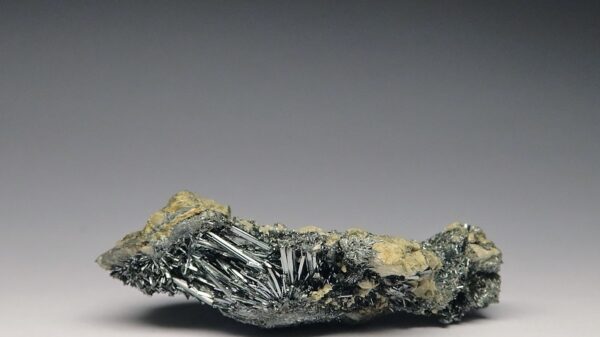
China extends its leverage beyond rare earths to antimony and other critical minerals, threatening the U.S. war machine considerably. Beijing produces 48 per cent of global antimony.
Antimony is a critical mineral used in various military applications, including hardening lead alloys for ammunition and armour-piercing projectiles. It serves as a key component in explosive primers and formulations, providing flame-retardant properties in protective gear, uniforms, vehicle interiors and aircraft. The metalloid is also essential for technologies like night vision goggles, infrared sensors, flares and communication equipment.
Minerals like gallium, tellurium, tungsten and germanium, also largely under Chinese control, appear in over 78 per cent of American weapon systems.
Disruptions with supply of these commodities could halt production of ammunition, sensors and optics, straining the Pentagon’s ability to replenish stockpiles.
China currently prohibits the export of dual-use items (materials and technologies with both civilian and military applications) to U.S. military users or for U.S. military end-uses.
In a drawn-out Iran conflict, this dominance lets China dictate U.S. military endurance to a certain extent, pushing Washington toward urgent diversification or risky dependencies.
Read more: NevGold discovers transformational oxide gold-antimony structure at Limousine Butte
Follow Rowan Dunne on LinkedIn
rowan@mugglehead.com