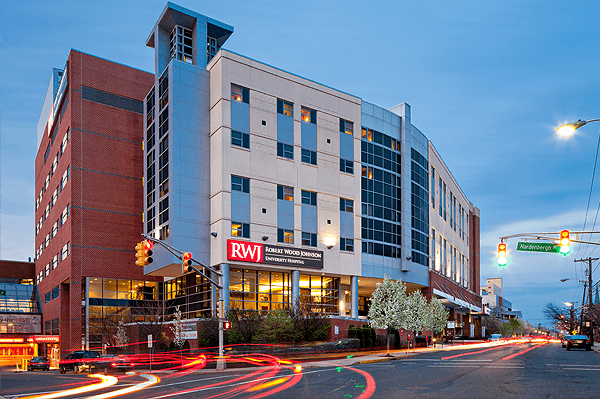

An innovative robotic technology that aims to diagnose lung cancer earlier is now in use at Robert Wood Johnson University Hospital (RWJ) and Rutgers Cancer Institute in New Brunswick.
The Ion robotic bronchoscopy platform allows interventional pulmonologists and thoracic surgeons to reach tiny lung nodules that conventional tools often miss.
The system has arrived as lung cancer continues to rank as the country’s deadliest cancer, responsible for about one in five cancer deaths according to the American Cancer Society.
The ACS estimates that the United States will see about 226,650 new lung cancer cases in 2025 and about 124,730 deaths.
Lung cancer kills more people than colon, breast and prostate cancers combined. In New Jersey, roughly 5,800 residents receive a lung cancer diagnosis each year. Only one out of four patients nationwide discover the disease at an early stage, when survival prospects improve.
RWJ clinicians now use robotic bronchoscopy to perform precise biopsies in peripheral lung regions. More than seven out of ten cancerous nodules form in these outer zones, which are difficult to reach with standard scopes.
The Ion system uses shape sensing technology and robotic guidance to navigate deep into all 18 lung segments. Physicians then remove tissue for biopsy through a minimally invasive approach.
Doctors at RWJ say the system gives teams a better shot at identifying small nodules that could previously evade biopsy. One physician noted that early detection often depends on accessing areas that traditional bronchoscopy cannot reach.
Read more: Breath Diagnostics completes install of advanced mass spectrometry system
Read more: Breath Diagnostics leaders promote their mission at Miami investment conference
Health system promotes early detection through screening
The device’s design helps clinicians examine these regions with greater stability, accuracy and confidence. They said this can matter greatly for patients at high risk, including heavy smokers, people with a prior cancer history and individuals with nodules in complex anatomical locations.
Barnabas Health has deployed the Ion system at several of its hospitals. The health system also promotes early detection through its Lung Cancer Screening Program. The program offers low dose CT scans, a centralized scheduling process, insurance support, smoking cessation services, specialist coordination, interpretation assistance and transportation help.
It follows national screening criteria: individuals aged 50 to80 (or up to 77 for Medicare) who currently smoke or quit within 15 years, show no lung cancer symptoms, and have at least a 20 pack year smoking history.
Eligible patients must not have received a chest CT scan within the past year.
Patients diagnosed at RWJ have access to thoracic oncologists and surgical oncologists at the Jack & Sheryl Morris Cancer Center. The newly opened facility houses infusion suites, exam rooms, private inpatient rooms, operating rooms, imaging resources and advanced radiation technology such as MR-LINAC systems. The center supports clinical trials, cellular therapies and highly specialized surgical care.
While hospitals expand robotic procedures, several companies are pursuing earlier and less invasive cancer detection paths beyond conventional imaging and biopsies. These approaches aim to catch cancer signals before tumours grow large enough to appear on scans.
Read more: Breath Diagnostics leader speaks at lung cancer education event in Louisville
Read more: Breath Diagnostics opens Respiratory Innovation Summit with captivating presentation
Breath Diagnostics offers simple, non-invasive tools
Breath Diagnostics, a Louisville based company, is developing a breath analysis test that searches for volatile organic compounds linked to cancer metabolism.
The technology uses a specialised collection device that captures breath samples and measures chemical signatures. Researchers believe certain cancers release distinctive molecular patterns as cells alter their metabolic activity.
Breath Diagnostics’ system analyzes these patterns to estimate whether cancer may be present. The company states that its process could offer a simple, non-invasive tool that patients complete in minutes. Additionally, the test could help clinicians screen high risk populations more often because it avoids radiation exposure and does not require invasive procedures.
Grail Inc (NASDAQ: GRAL) developed the Galleri blood test, which aims to detect over 50 cancers from a blood draw. The test uses a method known as multi-cancer early detection. It analyzes DNA fragments shed into the bloodstream by tumours.
These fragments carry abnormal chemical markers that differ from healthy DNA. Galleri’s algorithm examines those markers to pinpoint whether a cancer signal exists and where it may originate in the body. Furthermore, the assay seeks to identify cancers that lack routine screening methods and often go unnoticed until late stages.
While both technologies remain under study, they represent a growing push to create scalable early-detection tools. Researchers argue that earlier detection could reduce the number of patients who present with advanced disease. Many clinicians also say these innovations may one day complement imaging and biopsy procedures, rather than replace them.
The oncology sector has also seen investment in radiomics and artificial intelligence, which analyze imaging data to reveal subtle patterns.
Read more: Breath Diagnostics now offering a compelling investment opportunity
Read more: Breath Diagnostics opens Respiratory Innovation Summit with captivating presentation
Robotic bronchoscopy fits alongside innovation push
Consequently, radiomics tools may flag concerning nodules long before a visible mass appears. Some systems evaluate changes in shape, density or texture that human reviewers may overlook. Hospitals adopting these tools aim to support radiologists by giving them predictive data points that guide further testing.
Meanwhile, several pharmaceutical and biotechnology companies continue to explore targeted therapies and immunotherapies that respond to genetic mutations, tumour biology or weakened immune pathways. Researchers say these drugs work best when administered early, creating more urgency for detection technologies that identify cancer at its most treatable stage.
RWJ officials believe robotic bronchoscopy fits alongside this broader innovation push. They say minimally invasive tools reduce risk for certain patients and support earlier decision making. In addition, the system allows physicians to reach locations that older scopes struggled to navigate.
Teams at RWJ report this capability may help decrease the number of inconclusive biopsies, which often lead to repeat procedures.
As research accelerates, hospitals, biotech companies and diagnostics developers continue to search for ways to intervene earlier. Many hope these efforts will shift more patients into the early stage category, where treatment options expand and outcomes often improve.
.