Magic mushroom truffle producer Red Light Holland Corp (CNSX: TRIP) (OTCMKTS: TRUFF) (FRA: 4YX) has agreed to buy economically troubled psilocybin drug developer Filament Health Ord Shs (OTCMKTS: FLHLF) in an all-stock deal.
Announced on Mar. 10, the companies signed a definitive arrangement agreement under which Red Light will acquire Filament through a plan of arrangement. The transaction still requires approval from Filament shareholders, regulatory bodies and the Supreme Court of British Columbia. If all goes as planned, the deal will close by the end of Q2.
Shareholders of Filament will receive Red Light shares at an exchange ratio of roughly 0.075 Red Light shares per Filament share. This will result in Red Light issuing up to 182 million new shares, including some to cover Filament’s debts and certain bonuses. Existing Red Light shareholders will hold around 70 per cent of the combined company after the deal is finalised.
Through the merger, Filament will bring assets like a GMP-certified manufacturing facility in Vancouver, a Health Canada dealer’s licence, FDA and Health Canada authorizations for clinical work, and a portfolio of 76 patents related to natural psilocybin extraction and formulations.
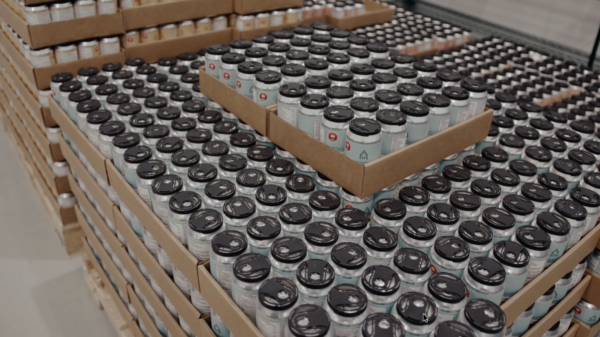
Red Light, on the other hand, contributes its own mushroom cultivation operations, supply chain, packaging capabilities and microdosing data collected through its iMicrodose app.
Filament will nominate one director to Red Light’s board, and restrictions will limit how quickly new shares can be sold. This merger comes at a difficult time for both companies in a sector that has struggled to gain regulatory traction.
In Canada, access to psychedelics remains limited to rare compassionate-use exemptions with no broad approvals. In the U.S., most psilocybin candidates stay stuck in clinical trials without federal rescheduling or widespread medical clearance.
Filament has faced a sharp downturn in recent years. By Q3 of 2025, its cash reserves had fallen to under US$335,000 while operating cash burn exceeded revenues significantly. The company resorted to emergency financing rounds, including nearly US$1 million in convertible debt to avoid running out of money entirely. Revenues stayed low and the firm delisted from the Cboe Canada and Frankfurt stock exchanges to cut costs, signalling ongoing operational and market challenges.
Meanwhile, Red Light Holland, currently trading for one and a half cents on the Canadian Securities Exchange, has been encountering its own headwinds. Sharp declines have been observed in recent financials despite a certain degree of stabilization in fiscal Q3.
In the second quarter of fiscal 2026 ending Sept. 30, revenue declined by 44.9 per cent year-over-year to C$0.75 million. Gross profits slid even more during that quarter, down 40.8 per cent YoY to C$320,700. The company’s cash balance declined by nearly C$1 million in the latest results despite revenue rising 8.3 per cent YoY.
Red Light has also been getting unpleasant comments on social media in recent months. These include “Message to Todd [Shapiro, CEO] — resign, please! You have hammered this company into the ground. Time to put a grownup in charge!” and “How is this not delisted yet?”
The combined entity now inherits these pressures in an industry where progress toward mainstream acceptance remains slow. The deal offers little immediate promise of profitability or strong returns for shareholders.
Read more: Psychedelic retreat organiser charged with manslaughter over 2021 incident
Follow Rowan Dunne on LinkedIn
rowan@mugglehead.com