PowerBank Corporation plans 2 MW Ontario data centre with C$2M rent forecast
The C$10M facility estimate excludes tenant-owned GPUs, while projected annual rent would be shared with its development partner.
 Julian Okafor
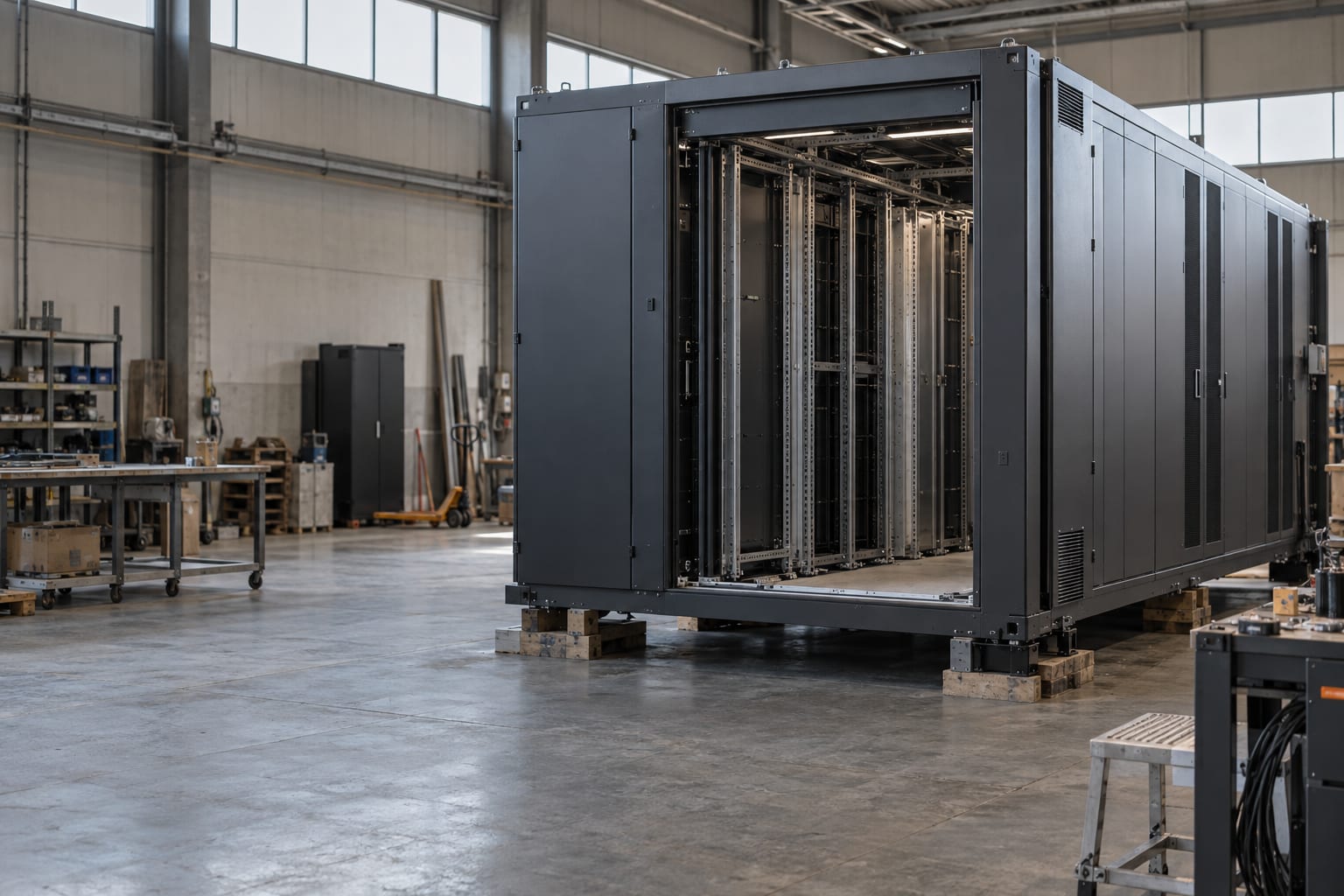
A proposed Ontario data centre could generate approximately C$2 million in annual rent, but no customer has signed for its capacity. PowerBank Corporation NASDAQPBK FRA103, a North American solar and battery-storage developer, announced a 30-year site lease through its development partner on Thursday for a planned 2-megawatt modular facility.
The revenue estimate is for the entire project and would be shared with the partner, rather than accruing wholly to PowerBank. It assumes full occupancy, with rent starting when commercial operation begins and no rent-free or ramp-up period.
PowerBank estimates facility capital costs at approximately C$10 million, excluding the tenant's GPUs, servers and other computing equipment. Its Oct. 29 announcement makes financing, municipal approvals and construction conditions of the forecast, with commercial operation anticipated in fiscal 2028, ending June 30, 2028.
PowerBank's Frankfurt quotation showed €0.13 at 8:15 a.m. CET on Oct. 29, according to FRA103. That timestamp precedes the announcement and cannot establish a market reaction to the project.
The Forecast Assumes Full Occupancy
The proposed business is a powered-shell lease: PowerBank and its partner would supply the facility, while an AI cloud tenant would install and operate its own computing equipment. The tenant would pay electricity costs, leaving the owners responsible for incremental property taxes, insurance and maintenance.
The approximately C$2 million estimate in Thursday's release is gross revenue before those owner expenses. It covers the first full year after commercial operation, so it is neither a current revenue stream nor a forecast of PowerBank's profit.
The calculation assumes a tenant leases all approximately 1.77 megawatts of available IT capacity. That equipment load is distinct from the project's headline 2-megawatt size, and PowerBank says it is discussing the project with several potential tenants.
The lease-rate assumption comes from a publicly reported transaction of significantly greater scale in a different market. PowerBank cautions that achievable rates could differ, making both occupancy and pricing unresolved inputs to the financial outlook.
The partnership predates this site announcement. PowerBank's June 29 development-agreement release identified Nodiac Development, a privately held developer of modular data centres beside energy assets, as its collaborator and established a framework for sharing project cash flow.
"This first lease shows our model at work: an energy site we have already developed now positioned to earn a second revenue stream from AI infrastructure," PowerBank chief executive Richard Lu said in Thursday's release.
The signed site lease provides a location for that proposed second revenue stream. PowerBank explicitly says it has not entered a tenant agreement, so the land commitment and a customer commitment remain separate milestones.
Equipment Spending Falls To The Tenant
PowerBank's Oct. 29 facility estimate includes land, the modular shell, electrical systems, direct-to-chip liquid cooling and fibre connectivity. PowerBank and its partner are expected to fund those costs, while the tenant would purchase computing equipment separately.
The design assumes space for approximately 500 GPUs using current-generation GB300 NVL72 systems. NVIDIA Corporation NASDAQNVDA, the chip and AI-system supplier, describes GB300 NVL72 as a fully liquid-cooled platform integrating 72 GPUs and 36 central processors per rack-scale system.
NVIDIA's specification supports the cooling requirement; it does not establish an equipment order for this Ontario project. PowerBank says its capital-cost, equipment-capacity and rent estimates rely on management's review of public benchmarks, rather than an independent engineering study or binding vendor quotations.
Completed financing elsewhere in the sector illustrates a later stage of investment. IREN Limited NASDAQIREN, an AI cloud provider supplying data centres and computing for training and inference, announced a US$363 million equipment refinancing on Oct. 28.
IREN's joint release describes deployed, revenue-generating equipment and multi-year customer contracts supporting that financing. Mugglehead's earlier coverage of the completed refinancing distinguished capital recovered from operating assets from additional equipment purchases; PowerBank's Ontario project still requires financing and a tenant.
Read more: IREN Limited completes US$363M refinancing for operating AI equipment
Municipal Approvals Precede Construction
PowerBank expects to need a zoning by-law amendment and a municipal building permit. Thursday's release says neither has been obtained and that the parties are coordinating a pre-consultation meeting to confirm those and other requirements.
Construction is expected to take approximately eight to 12 months after the necessary approvals arrive. The financial outlook also assumes facility costs are not materially exceeded and financing is available on acceptable terms.
The Oct. 29 release gives no date for the municipal meeting or a tenant signing. Its dated operating target remains fiscal 2028, ending June 30, 2028, when the proposed rent stream would depend on an approved, financed, completed facility and an equipped tenant.